
- What is B2B Website Development?
- How Much Does B2B Website Development Cost?
- What are the Factors That Affect B2B Website Development Cost?
- What are the Ongoing Costs for B2B Websites?
- B2B Website Development: Build vs Buy vs Partner
- What are the Hidden Costs of B2B Website Development?
- How to Reduce B2B Website Development Costs?
- Build a Scalable, Secure B2B Website With Space-O Technologies
- Frequently Asked Questions About B2B Website Development Cost
B2B Website Development Cost: A Complete Breakdown for Businesses

 Last Updated: February, 13 2026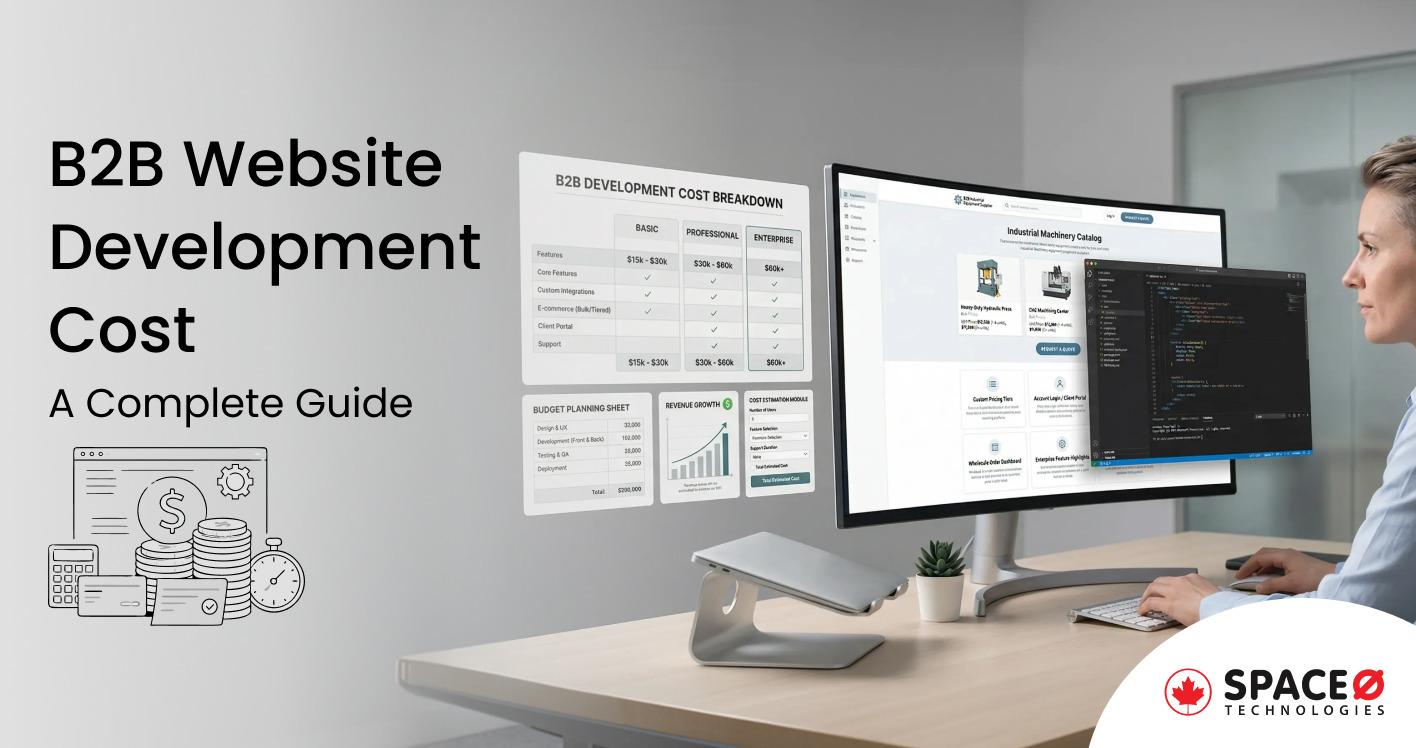
Is your business struggling to budget for a website that supports complex B2B sales cycles and generates qualified leads? Many organizations face the challenge of balancing advanced functionality with limited budgets, as B2B websites require specialized features that directly impact revenue and long-term growth.
According to K.ecommerce, B2B ecommerce was a $19.34 trillion industry in 2024, and projections suggest it will reach $47.54 trillion by 2030. And as it matures, it’s becoming the primary revenue driver for many B2B companies. Yet many organizations either overspend on unnecessary features or underinvest in platforms that fail to convert visitors into leads.
This guide breaks down B2B website development costs in clear, practical terms. You’ll learn realistic pricing ranges by complexity tier, the factors that drive costs up or down, and strategies to maximize your investment.
Whether you’re building a lead generation platform, client portal, or B2B marketplace, understanding these cost drivers helps you avoid budget overruns and scope misalignment. Businesses moving from planning to execution often evaluate structured website development services that align technical decisions with long-term revenue goals.
What is B2B Website Development?
B2B website development is the process of designing, building, and deploying digital platforms specifically tailored for business-to-business interactions.
Unlike B2C websites focused on individual consumers, B2B platforms must support longer sales cycles, multiple decision-makers, complex product configurations, and deep integrations with enterprise systems.
A B2B website does more than present information. It functions as a revenue engine that supports lead qualification, sales enablement, account-based marketing, and ongoing client engagement. These platforms typically handle longer sales cycles, higher transaction values, custom pricing models, and detailed product or service configurations.
In essence, B2B website development creates a structured digital infrastructure that aligns marketing, sales, and operations—turning a website from a simple online presence into a measurable business growth platform.
Pro Tip: Before requesting quotes, document your specific B2B requirements—number of integrations needed, whether you require a client portal, and your lead generation goals. This clarity helps developers provide accurate estimates and prevents scope creep.
With the fundamentals established, let’s examine what B2B website development actually costs across different complexity levels.
How Much Does B2B Website Development Cost?
B2B website development costs range from $15,000 for basic platforms to $250,000+ for enterprise solutions. The wide range reflects the significant variation in features, integrations, and customization that B2B organizations require.
Understanding these tiers helps you identify where your project fits and budget accordingly.
1. Cost by website complexity tier
| Website Type | Cost Range (USD) | Timeline | Features Included |
|---|---|---|---|
| Basic B2B Website | $15K–$30K | 8-12 weeks | 10-15 pages, responsive, forms/SEO/blog |
| Mid-Level Platform | $30K–$60K | 12-16 weeks | Custom design, CRM/leads, gated content, automation |
| Advanced Platform | $60K–$120K | 16-24 weeks | Client portal, analytics, multi-lang, custom integrations |
| Enterprise Solution | $120K–$250K+ | 24-40 weeks | ERP/eCommerce, APIs, white-label, adv. security |
2. Cost breakdown by component
Understanding where your budget goes helps prioritize investments:
| Phase | Cost Range (USD) | Key Activities |
|---|---|---|
| Discovery & Planning | $2K–$10K | Stakeholder interviews, competitor analysis, architecture planning, scope docs |
| UI/UX Design | $5K–$25K | Wireframing, visual design, prototypes, user testing, responsive design |
| Frontend Development | $8K–$35K | React/Vue/Next.js components, interactions, performance, cross-browser |
| Backend Development | $10K–$50K | Database/API, security, and admin panel |
| CRM/Marketing Integration | $5K–$20K | Salesforce/HubSpot connections, lead routing, workflows, data sync |
| Testing & QA | $3K–$12K | Functional/performance/security testing, UAT |
| Content Creation | $3K–$20K | Copywriting, case studies, resources, SEO blog content |
Organizations planning a website redesign should evaluate the full website redesign cost, including content restructuring, information architecture improvements, technical upgrades, and UX enhancements.
Space-O Technologies provides detailed cost breakdowns during the discovery phase, ensuring you understand exactly what your investment includes before development begins.
Quick Insight: The largest cost variables are typically integrations and custom functionality. A basic B2B site with no integrations costs significantly less than one connecting to Salesforce, HubSpot, and an ERP system.
Get Accurate Cost Estimates for Your B2B Platform
Space-O Technologies provides detailed project scoping and transparent pricing. Understand exactly what your investment includes before development begins.
Now that we know the cost of B2B Website Development, let’s examine the specific factors that push B2B website costs higher or lower.
What are the Factors That Affect B2B Website Development Cost?
Multiple variables influence your final B2B website development cost. Understanding these factors helps you make informed trade-offs and prioritize features that deliver the highest business value.
1. Design complexity
Design choices significantly impact development time and cost:
- Template customization ($5,000-$15,000): Adapting premium themes or design frameworks reduces cost but limits uniqueness
- Custom design ($15,000-$40,000): Original designs tailored to your brand require more designer hours but create stronger differentiation
- Number of unique layouts: Each distinct page template adds design and development time
- Interactive elements: Animations, micro-interactions, and dynamic content increase complexity
For B2B companies in competitive markets, custom design often delivers better ROI through improved brand perception and conversion rates.
2. Number of pages and content volume
Page count directly correlates with development effort:
- Small sites (10-20 pages): Core business information, services, and contact
- Medium sites (20-50 pages): Added resource libraries, case studies, and product catalogs
- Large sites (50-100+ pages): Comprehensive documentation, multi-product lines, and extensive content
Content migration from existing systems adds complexity. Restructuring legacy content for new information architecture requires careful planning and execution.
3. Third-party integrations
Integrations represent a major cost driver for B2B websites:
| Integration Type | Cost Range (USD) | Examples & Key Features |
|---|---|---|
| CRM Systems | $3K–$15K | Salesforce/HubSpot/Dynamics/Pipedrive; lead sync, pipeline |
| Marketing Automation | $3K–$12K | Marketo/Pardot/ActiveCampaign; email/lead scoring/analytics |
| ERP Systems | $10K–$30K | SAP/Oracle/Dynamics 365; inventory/orders/financial data |
| Payment Gateways | $2K–$8K | Stripe/Moneris/PayPal; invoicing/credit terms/multi-currency |
4. Client portal and user account features
Self-service capabilities add development complexity but deliver significant value:
- Secure authentication: Multi-factor authentication, SSO integration, password recovery, session management
- Account dashboards: Order history, account status, billing information, saved preferences, activity logs
- Document management: Contracts, invoices, product documentation, secure downloads, version control
- Support ticket systems: Issue tracking, resolution workflows, communication history, priority levels
- Custom pricing displays: Account-specific pricing, catalogs, volume discounts, negotiated rates
A full-featured client portal typically adds $15,000-$40,000 to development costs depending on complexity and integration requirements with existing business systems.
5. Multi-language and localization
For Canadian businesses serving English and French markets, or international companies expanding globally:
- Bilingual implementation: $5,000-$15,000 per additional language depending on site complexity
- Content translation: $0.10-$0.25 per word for professional translation by native speakers
- Localization considerations: Date formats, currency displays, regional content variations, cultural nuances
- CMS configuration: Multi-language content management workflows enabling efficient editorial processes
- SEO optimization: Language-specific URLs, hreflang tags, localized keywords, regional search strategies
Proper localization expands market reach and demonstrates commitment to serving diverse customer bases effectively.
6. Development team location
Geographic factors influence hourly rates and overall project dynamics significantly:
- Toronto/North American agencies: $80-$150/hour with strong communication and accountability
- European agencies: $60-$120/hour offering quality work with moderate timezone differences
- Offshore teams: $25-$60/hour with potential cost savings but variable quality levels
Consider total project value rather than hourly rates alone when selecting development partners for optimal outcomes.
While offshore rates appear attractive, communication challenges, time zone differences, and quality variations often result in higher total project costs. Many organizations find that partnering with Canadian-based teams like Space-O Technologies delivers better value through efficient communication and consistent quality.
If you’re considering team augmentation, learn more about how to hire web developers who understand B2B requirements.
Understanding ongoing expenses is equally important as initial development costs. Let’s examine what you’ll budget annually.
What are the Ongoing Costs for B2B Websites?
Initial development represents only part of your total B2B website investment. Ongoing costs for hosting, maintenance, software, and optimization significantly impact your total cost of ownership. Budget for these recurring expenses from the start.
1. Hosting and infrastructure
Your hosting choice affects performance, security, and scalability:
| Hosting Type | Monthly Cost (CAD) | Best For |
|---|---|---|
| Shared Hosting | $20–$100 | Small B2B sites, low traffic |
| VPS Hosting | $100–$300 | Growing businesses, moderate traffic |
| Cloud (AWS/GCP) | $200–$1.5K | Scalable platforms, variable traffic |
| Managed Enterprise | $1K–$5K | Mission-critical B2B platforms |
For B2B platforms with client portals or eCommerce functionality, cloud hosting provides the reliability and scalability that business clients expect.
2. Maintenance and support
Regular maintenance protects your investment and ensures optimal performance:
| Plan | Monthly Range (CAD) | Key Features |
|---|---|---|
| Essential Maintenance | $500–$2K | Security patches, updates, monitoring, backups |
| Comprehensive Support | $2K–$5K | Bug fixes, content changes, enhancements, reports |
Space-O Technologies includes 3 months of free post-launch maintenance with every project, ensuring your B2B platform operates smoothly after go-live.
3. Software and license fees
Third-party tools and platforms add recurring costs:
| Category | Monthly Range (CAD) | Examples |
|---|---|---|
| CRM Subscriptions | $50–$300/user | Salesforce, HubSpot |
| Marketing Automation | $200–$2K (by contacts) | Marketo, ActiveCampaign |
| Analytics Platforms | $0–$500 | Google Analytics (free), enterprise tools |
| Security Tools | $100–$500 | WAF, scanning, monitoring |
| SSL Certificates | $0–$500/year | Often included with hosting |
4. Content updates and SEO
B2B websites require ongoing content investment to maintain search visibility and lead generation:
- Content marketing: $2,000-$10,000/month for blog posts, case studies, and resources
- SEO optimization: $1,500-$5,000/month for technical SEO and content optimization
- Conversion optimization: $1,000-$3,000/month for A/B testing and improvement
Organizations that plan long-term growth evaluate total website development cost beyond the initial build. They factor in content, SEO, performance optimization, and maintenance to reduce unexpected expenses and maximize long-term ROI.
Pro Tip: Budget 15-25% of your initial development cost annually for maintenance and improvements. This ensures your B2B platform remains competitive and continues generating leads effectively.
Turn B2B Website Cost Estimates Into a Clear Execution Plan
Space-O helps translate budget ranges into phased development roadmaps with predictable timelines and measurable outcomes.
With costs understood, let’s compare different approaches to building your B2B website.
B2B Website Development: Build vs Buy vs Partner
Organizations have three primary approaches to B2B website development. Each offers distinct advantages and trade-offs that impact cost, timeline, and long-term value.
| Approach | Cost Structure | Key Advantages | Key Disadvantages | Best For |
|---|---|---|---|---|
| DIY Builders(Wix, Squarespace, basic WordPress) | $0–$500/monthLow upfront | – Low initial investment- Quick setup (days)- No technical skills needed | – Limited customization- No complex integrations (CRM, etc.)- Scalability limits- Generic templates | Early-stage businesses testing online presence |
| In-House Teams | $80K–$150K+ per developer/yearPlus 25-40% overhead | – Full control over priorities- Deep business knowledge- Immediate availability | – High ongoing salaries- Recruitment/retention challenges- Limited skill diversity- Management overhead | Large enterprises with steady dev needs |
| Development Partners(e.g., Space-O Technologies) | Predictable fixed-price contracts | – Diverse expertise (design/backend/security)- Faster via proven processes- Scalable resources- Post-launch support | – Requires strong communication- Vendor selection time | Most mid-market B2B firms seeking quality |
Let’s examine costs that often surprise organizations during B2B website projects.
What are the Hidden Costs of B2B Website Development?
Even well-planned B2B website projects encounter unexpected expenses. Awareness of these hidden costs helps you budget realistically and avoid unpleasant surprises.
1. Scope creep causes most budget overruns
The most common sources of budget overruns come from stakeholders requesting just one more feature during development, unclear initial requirements leading to mid-project changes, and changing business priorities affecting project direction. Invest in thorough discovery and documentation before development begins ,and establish clear change request processes with clearly associated costs.
2. Data migration takes longer than expected
Moving content and data from existing systems often takes longer than expected due to legacy data formats requiring transformation, content cleanup and restructuring needs, URL mapping and redirect implementation, and testing data integrity after migration. Budget an additional 10-20% to estimates for data migration, especially when migrating from older systems.
3. Third-party APIs incur ongoing costs
Some integrations incur ongoing usage costs beyond initial development investment including CRM API call limits and overage charges, marketing automation contact tier upgrades, payment gateway transaction fees, and data enrichment services like Clearbit or ZoomInfo. Research API pricing models thoroughly before committing to any integrations to avoid unexpected recurring expenses.
4. Training requires dedicated budget allocation
Your team needs to learn the new platform effectively through content editor training sessions, admin user documentation, sales team orientation on lead management, and ongoing training for new employees. Budget $2,000-$8,000 for comprehensive training programs to ensure your team can fully maximize the platform’s capabilities and maintain website content effectively.
5. Post-launch fixes may incur extra charges
Distinguish between maintenance and enhancements when reviewing service agreements. Bug fixes are typically covered under maintenance, but new features or changes are often billed separately. Performance issues from unexpected traffic patterns may also incur additional costs. Clarify exactly what maintenance agreements include before signing any contracts with your development partner.
6. Legal compliance adds necessary costs
Legal and compliance requirements are especially relevant for Canadian B2B organizations and include PIPEDA compliance implementation, accessibility requirements like AODA in Ontario, cookie consent and privacy policy development, and terms of service documentation. These requirements protect your business and customers while ensuring your website meets all applicable regulatory obligations properly.
Quick Tip: Budget a 15-20% contingency fund for unexpected requirements. Projects that don’t use this contingency can redirect funds to post-launch optimization.
After having a look at the hidden costs, now let’s explore strategies to maximize value from your B2B website investment.
How to Reduce B2B Website Development Costs?
Strategic decisions can significantly reduce B2B website development costs without sacrificing quality or functionality. These approaches help you maximize value from every dollar invested.
1. Start with an MVP to reduce costs
Launch with core functionality and expand based on real user feedback. Identify minimum features needed to generate leads and serve clients, defer nice-to-have features to later phases, and validate assumptions before investing in complex functionality. Whether you’re a growing company figuring out how to build a website for your business or scaling an existing platform, launching with core features first often reduces initial costs by 30-40%.
2. Spread investment through phased development
Following a structured website development process across multiple releases helps align spending with revenue growth. Phase one covers the core website with lead capture. Phase two adds CRM integration and marketing automation. Phase three includes the client portal and self-service features. Phase four delivers advanced analytics. This approach provides opportunities to adjust based on early results
3. Choose the right technology stack
Balance custom development with proven platforms to optimize costs effectively. Use established frameworks like React, Laravel, or WordPress rather than building from scratch. Leverage existing plugins and components where appropriate. Reserve custom development for differentiating features only. Space-O Technologies helps clients identify an optimal technology approach based on requirements and budget.
4. Document requirements clearly upfront
Invest time upfront in thorough documentation to save money during development. Document all features and functionality in detail, create wireframes or mockups before development begins, and get stakeholder sign-off on requirements before starting. Establish clear decision-making processes to avoid delays. Every hour spent planning saves multiple hours during actual development.
5. Optimize content before development begins
Prepare content in parallel with development to avoid costly delays. Write and approve all content before design finalization, optimize images and media before handoff, establish content governance processes, and create content templates for ongoing updates. Late content often delays launches and increases costs significantly through rushed last-minute revisions and rework.
Now let’s examine how to evaluate whether your B2B website investment delivers appropriate returns.
Avoid Overbuilding When Estimating B2B Website Development Costs
Space-O guides B2B teams in defining the right scope, features, and tech stack to control costs without limiting future growth.
Build a Scalable, Secure B2B Website With Space-O Technologies
B2B website development requires balancing sophisticated functionality with realistic budgets. From CRM integration and lead tracking to client portals and enterprise security, every element must work together to support your sales process and serve your clients effectively.
Since 2018, Space-O Technologies has been building custom B2B platforms for businesses across North America. Our team has delivered 300+ successful projects for 100+ clients, including Fortune 500 companies, with 65% of our business coming from repeat clients and referrals—a testament to the lasting value we create.
Space-O Technologies delivers end-to-end B2B website development tailored to your sales workflows and client expectations. We build custom B2B platforms with secure client portals, CRM and marketing automation integrations, and seamless ERP connectivity using modern technologies like React, Vue.js, Laravel, and Node.js.
Our solutions ensure PIPEDA compliance, include a dedicated project manager, provide three months of free post-launch maintenance, and grant full source code ownership for complete long-term control.
Ready to discuss your B2B website project? Schedule a free consultation to explore how Space-O Technologies can build the platform your business needs.
Frequently Asked Questions About B2B Website Development Cost
How much does a basic B2B website cost?
A basic B2B website typically costs $15,000-$30,000 and includes 10-15 pages, responsive design, contact forms, basic SEO optimization, and blog integration. This level suits organizations with straightforward requirements and no complex integrations. Development takes 8-12 weeks.
What is the difference between B2B and B2C website development costs?
B2B websites generally cost more due to complex integration requirements (CRM, marketing automation, ERP), longer content addressing multiple decision-makers, client portal functionality, and account-based features like custom pricing. B2C sites focus more on individual transactions, while B2B platforms support relationship-based sales processes.
How long does B2B website development take?
Development timelines range from 8-12 weeks for basic B2B websites to 24-40 weeks for enterprise platforms. Key factors include design complexity, number of integrations, content volume, and client portal requirements. Phased approaches allow faster initial launches with subsequent feature additions.
What ongoing costs should I budget for a B2B website?
Budget for hosting ($200-$1,500/month), maintenance and support ($500-$3,000/month), software subscriptions (CRM, marketing automation), and content/SEO services ($2,000-$10,000/month). Total ongoing costs typically range from $3,000-$15,000 monthly, depending on platform complexity and growth objectives.
Is it better to use WordPress or custom development for a B2B website?
WordPress suits B2B organizations with standard requirements and limited integration needs, offering lower costs and faster development. Custom development is preferable for complex integrations, unique functionality, high-performance requirements, or enterprise security standards. Many organizations start with WordPress and migrate to custom platforms as they scale.


Get Accurate Cost Estimates for Your B2B Platform
What to read next

 All our projects are secured by NDA
100% Secure. Zero Spam
*All your data will remain strictly confidential.
Trusted by


Bashar Anabtawi 
Canada
“I was mostly happy with the high level of experience and professionalism of the various teams that worked on my project. Not only they clearly understood my exact technical requirements but even suggested better ways in doing them. The Communication tools that were used were excellent and easy. And finally and most importantly, the interaction, follow up and support from the top management was great. Space-O not delivered a high quality product but exceeded my expectations! I would definitely hire them again for future jobs!”

Canada Office
2 County Court Blvd., Suite 400,
Brampton, Ontario L6W 3W8
Phone: +1 (602) 737-0187
Email: sales@spaceo.ca