

Doctor on Demand App Development: Features, Cost, and Step-by-Step Guide
Struggling to connect patients with healthcare providers instantly without the barriers of long wait times and limited accessibility? You’re addressing a real gap in healthcare delivery. That demand is exactly why doctor on demand app development has become a priority for healthcare entrepreneurs and organizations looking to deliver care faster, more conveniently, and at scale.
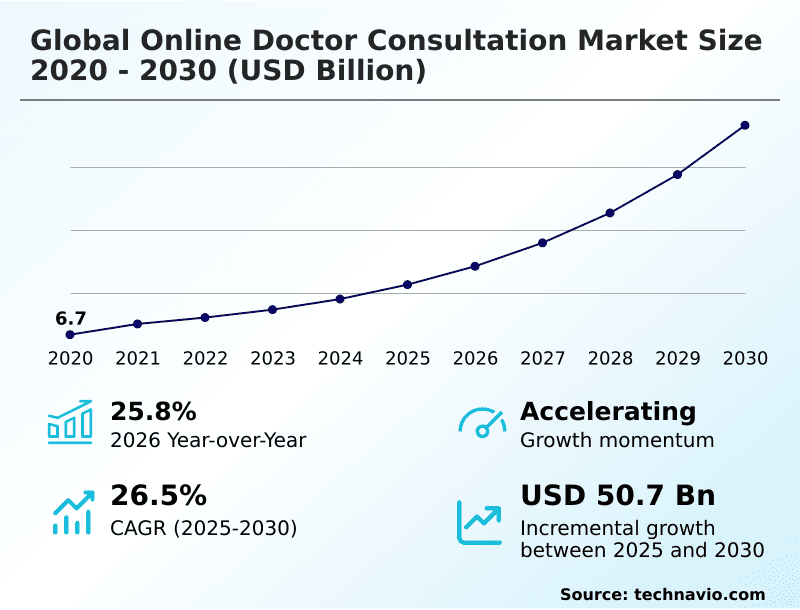
The market reflects this shift clearly. According to Technavio, the global online doctor consultation market anticipates USD 50.7 billion growth from 2025-2030 at a 26.5% CAGR, driven by increasing smartphone penetration and patient preference for virtual healthcare access.
From startups building healthcare apps to established providers expanding virtual care offerings, on-demand doctor apps are fundamentally changing how patients access medical consultations. However, success depends on building the right features, implementing sustainable monetization, and partnering with an experienced telemedicine app development company that understands healthcare complexities.
This guide breaks down doctor-on-demand app development in practical terms. You’ll learn what features to include, how much it costs, the step-by-step development process, monetization strategies, and how to choose the right development partner to bring your vision to life.
What is a Doctor on Demand App?
A doctor on demand app is a mobile or web-based platform that connects patients with licensed physicians for instant or same-day virtual consultations. Unlike traditional telemedicine that often requires appointments scheduled days in advance, on-demand healthcare applications provide real-time access to medical professionals—similar to how Uber connects riders with drivers instantly.
These platforms enable patients to describe symptoms, get matched with available doctors based on specialty and urgency, and receive consultations via video, audio, or chat within minutes. The 24/7 physician access model eliminates traditional healthcare barriers like geographic distance, limited clinic hours, and appointment backlogs that frustrate patients seeking timely care.
Types of doctor on demand apps
On-demand healthcare applications vary by specialty focus and target audience:
- General urgent care apps: Address common ailments like cold, flu, allergies, skin rashes, minor infections, and injuries that don’t require emergency room visits but need prompt attention.
- Specialty-focused apps: Concentrate on specific medical areas where virtual consultations are particularly effective—mental health counseling, dermatology consultations, pediatric care, women’s health, and chronic disease management.
- 24/7 physician access apps: Provide round-the-clock availability for any non-emergency medical concern, particularly valuable for parents with sick children at night or professionals with demanding schedules.
Space-O Technologies has helped healthcare startups and enterprises build various types of on-demand app solutions across industries, bringing proven development expertise and user experience best practices to the healthcare sector.
With the core concept established, let’s explore the strategic motivations—discover why investing in doctor on demand app development makes business sense in today’s healthcare landscape.
Why Invest in Doctor on Demand App Development?
The decision to build a doctor-on-demand app isn’t just about following healthcare technology trends—it’s about addressing genuine healthcare delivery gaps while capturing significant market opportunity. Here are the key reasons driving investment in on-demand healthcare applications.
1. Addressing critical healthcare access gaps
On-demand doctor apps solve real problems affecting millions of patients:
Physician shortage crisis: The US is projected to lack 46,900-121,900 physicians by 2032, creating access problems that virtual care helps address by enabling doctors to see more patients efficiently.
Rural healthcare desert: 22% of rural Americans lack adequate healthcare connectivity, and many live hours from the nearest specialist. Doctor on demand apps eliminate geographic barriers entirely.
Appointment wait time frustration: Average wait times for new patient appointments exceed 20 days in many specialties, and urgent care clinics often have multi-hour waits. On-demand apps provide same-day or immediate access.
After-hours care needs: Traditional clinics operate limited hours while medical concerns don’t follow schedules. Parents with sick children at 2 AM or professionals noticing symptoms on weekends need accessible care options.
2. Changing patient expectations and preferences
Today’s patients expect healthcare to work like other on-demand services they use daily. 74% of millennials prefer telehealth over in-person visits for appropriate conditions. They want instant access, transparent pricing, mobile-first experiences, and the ability to read provider reviews before selecting a doctor.
This generational shift is permanent. Building an on-demand healthcare app positions you to serve this growing demographic expecting convenient, technology-enabled care delivery. Organizations that fail to offer virtual options risk losing patients to competitors who do.
4. Revenue potential and business scalability
Doctor on demand apps create fundamentally scalable business models compared to traditional healthcare delivery:
Geographic scalability: Unlike physical clinics limited by location and capacity, virtual platforms can serve patients across states, provinces, or countries (subject to licensing requirements).
Provider network flexibility: Scale your physician network based on demand without the overhead of physical facilities, equipment, and administrative staff at each location.
Multiple revenue streams: Consultation fees, subscription plans, enterprise contracts, and insurance reimbursements provide business model diversification that physical practices can’t easily replicate.
4. Competitive differentiation opportunity
The on-demand healthcare space, while growing, still has room for differentiation. Many existing platforms offer generic “see any doctor” experiences without specialization. Entrepreneurs who identify specific patient populations—college students needing mental health support, parents seeking pediatric consultations, professionals with dermatology concerns—can build targeted platforms that serve defined audiences better than generic alternatives.
Pro Tip: Focus on a specific niche or specialty when entering the market. Apps serving defined audiences build stronger brand recognition, attract specialized providers, and create defensible market positions. “24/7 mental health support for college students” is a more compelling value proposition than “talk to any doctor anytime.”
These market drivers create substantial opportunity, but execution depends on building the right features. Here’s what your doctor on demand app needs to include for success.
What are the Essential Features for Doctor on Demand App Development?
Feature selection determines whether your on-demand healthcare app delivers genuine value or frustrates users into abandoning the platform. The goal is to identify the minimum feature set that enables seamless instant consultations while providing room for future expansion.
Space-O Technologies approaches feature planning through user-centered design, ensuring every feature directly supports the core patient journey from symptom to treatment.
1. Patient-side features drive core value delivery
Patient features like user registration, symptom checkers, real-time doctor availability, and instant video consultations form the foundation of your on-demand healthcare app. These capabilities enable patients to find doctors, describe symptoms, and receive care instantly.
2. Provider experience determines platform success
If doctors find your platform frustrating, they won’t use it. Provider dashboards, patient queue management, e-prescribing capabilities, and availability controls ensure physicians can manage their virtual practice efficiently while maintaining work-life balance.
3. Admin panel enables operational control
Administrative features like user management, provider verification workflows, analytics dashboards, and dispute resolution systems give you the tools to operate, monitor, and scale your platform effectively without constant developer involvement.
4. Geolocation ensures legal compliance
Automatic state or province-based doctor matching ensures your platform meets telehealth licensing requirements. This feature prevents legal complications by connecting patients only with physicians licensed to practice in their jurisdiction.
5. Payment integration completes the care loop
Secure payment processing, insurance verification, and copay calculation remove friction from the patient experience. Combined with e-prescription delivery to preferred pharmacies, these features ensure consultations result in actionable healthcare outcomes.
6. Advanced features create competitive differentiation
After validating your core platform, consider AI-powered symptom assessment, EHR integration using HL7 FHIR standards, remote patient monitoring connectivity, and family account management to differentiate from competitors and expand your service offerings.
For deeper guidance on healthcare app features and architecture, Space-O’s comprehensive healthcare app development guide covers the full spectrum of clinical and technical considerations across various healthcare verticals.
Scale On-Demand Healthcare Services With the Right App Foundation
Implement a doctor-on-demand app that supports high consultation volumes, flexible provider scheduling, and long-term growth.
Features determine functionality, but budget determines feasibility. Here’s what doctor on demand app development actually costs and where your investment goes.
How Much Does Doctor on Demand App Development Cost?
Telemedicine app development costs range from $40,000-$80,000 for a basic MVP with core features like video consultations and scheduling, $80,000-$150,000 for mid-range apps adding e-prescribing and analytics, up to $150,000-$400,000+ for advanced enterprise platforms with AI and full integrations.
While every project is unique based on specific requirements, here’s what you can expect when building a doctor-on-demand app.
1. Cost breakdown by app complexity
Development costs vary significantly based on feature scope, platform requirements, and project complexity:
| App Complexity | Features Included | Development Timeline | Cost Range |
|---|---|---|---|
| Basic MVP | Video consults, scheduling, messaging, payments, profiles | 3-4 months | $40K-$80K |
| Mid-Range Application | + E-prescribing, symptom checker, ratings, analytics, insurance verification | 5-8 months | $80K-$150K |
| Advanced Enterprise | Full + AI triage, EHR integration, multi-specialty, white-label, adv. reporting | 9-18 months | $150K-$400K+ |
These ranges assume development with an experienced healthcare-focused team. Significantly lower quotes often indicate teams lacking healthcare domain expertise or cutting corners on security and compliance requirements.
2. Factors that impact development cost
Several variables determine your final investment beyond base feature sets:
- Feature complexity and custom requirements: A basic symptom checker with decision-tree logic costs significantly less than an AI-powered triage system using machine learning. Each integration—pharmacy networks, insurance verification APIs, EHR systems—adds development effort and third-party costs.
- Development team location and expertise: Rates vary significantly by region and specialization. North American healthcare-focused developers command $100-$180/hour, while experienced teams in other regions offer competitive quality at different price points. However, healthcare apps require specialized knowledge—choosing partners solely on hourly rate often proves more expensive long-term.
- Third-party integrations and APIs: Video consultation APIs (Twilio, Agora) have usage-based pricing. Payment processors charge transaction fees. E-prescribing networks have licensing costs. Budget for these ongoing operational expenses beyond initial development.
- Security and compliance implementation: Building healthcare apps with proper security architecture, encryption, access controls, and audit logging adds approximately 30-40% to base development costs. This investment is non-negotiable for healthcare applications handling patient data.
3. Cost breakdown by development component
Understanding where your budget goes helps prioritize spending:
| Component | Cost Range | What’s Included |
|---|---|---|
| UI/UX Design | $10K-$30K | User research, wireframes, prototypes, visual design |
| Patient Mobile App | $15K-$40K | iOS/Android patient app development |
| Provider App/Portal | $15K-$35K | Doctor interface for consults and management |
| Backend Development | $25K-$80K | Servers, APIs, DB, business logic, real-time |
| Video Integration | $15K-$40K | Video API, optimization, fallbacks |
| Admin Panel | $10K-$25K | Operations management dashboard |
| Security Implementation | $15K-$40K | Encryption, access controls, audits, pen testing |
| Testing & QA | $10K-$30K | Functional, security, performance, device testing |
4. Ongoing costs to budget beyond development
Initial development is just the beginning. Plan for these recurring operational expenses:
- Cloud Hosting: $500-$5,000/month depending on user volume, data storage needs, and redundancy requirements. Healthcare applications require HIPAA-eligible hosting configurations.
- Video API Usage: $0.004-$0.01 per minute of video consultation. A platform facilitating 10,000 consultations monthly averaging 15 minutes each would incur $600-$1,500 in video API costs alone.
- Maintenance & Updates: Budget 15-20% of initial development cost annually for bug fixes, security patches, OS updates, and minor enhancements.
- Security Audits: $5,000-$15,000 annually for penetration testing and compliance verification.
- App Store Fees: $99/year for Apple Developer Program, $25 one-time for Google Play Console.
- Customer Support: Depending on user volume, budget for support staff or help desk software to handle patient and provider inquiries.
Pro Tip: Start with an MVP to validate your concept before investing in advanced features. A $60,000 MVP that proves market demand and generates early revenue is far better than a $300,000 full platform that misses user needs. Space-O Technologies helps healthcare startups define optimal MVP scope that balances essential functionality with budget constraints—ensuring you build what matters first.
For preliminary project estimates tailored to your specific requirements, Space-O’s App Cost Calculator provides initial budgeting guidance to help you plan effectively.
Cost clarity enables planning—now let’s walk through the step-by-step process to build your doctor on demand app from concept to launch.
How to Develop a Demand App Development: A Step-by-StepProcess
Building a doctor on demand app follows a structured process where each phase builds on the previous one. Skipping phases or rushing through them creates problems that compound expensively later. Here’s how experienced teams like Space-O Technologies approach each development stage to ensure successful outcomes.
Step 1: Discovery and planning (2-4 Weeks)
This foundational phase spans two to four weeks and establishes everything that follows. You’ll define your specific value proposition, conduct thorough competitor research by analyzing app store reviews, and document detailed requirements with ruthless prioritization. Creating detailed personas for both patients and providers helps identify pain points with current healthcare options.
Assessing compliance requirements early ensures HIPAA, PIPEDA, or provincial health privacy laws are built into architecture from the start rather than retrofitted expensively.
Phase 2: UI/UX Design (3-5 Weeks)
Great design matters especially in healthcare where users may be stressed, unwell, or unfamiliar with technology when seeking care. This three to five week phase involves mapping complete user flows, creating wireframes and clickable prototypes, and conducting user testing with five to ten target users before writing code.
The visual design should convey trust, professionalism, and accessibility while feeling clean and calming rather than overly trendy or gimmicky for medical contexts.
Phase 3: Development (8-16 Weeks)
Development spans eight to sixteen weeks using sprint-based methodology with two-week cycles producing functional increments for stakeholder review.
Backend infrastructure including server architecture, database schema, and security controls should be established first. Frontend applications can leverage cross-platform frameworks like React Native or Flutter for efficiency.
Video consultation integration requires careful attention to connection handling, quality optimization, and automatic audio fallback since it serves as your core service delivery mechanism.
Step 4: Testing prevents embarrassing failures at launch
Healthcare applications require particularly rigorous quality assurance over three to four weeks given the sensitive nature of medical consultations.
Functional testing covers every feature across all supported devices, operating systems, and browsers. Security testing through penetration testing identifies vulnerabilities before malicious actors do.
Performance testing ensures video quality remains acceptable under load. User acceptance testing with real users rather than developers catches usability issues that internal testing misses before wider release.
Step 5: Beta launch reveals issues testing cannot catch
Releasing to a controlled group of twenty to fifty real users before public launch allows close monitoring for issues and structured feedback gathering through surveys and interviews.
App store submission requires one to two weeks since healthcare apps often receive additional scrutiny and documentation requests about medical content and privacy practices.
Post-launch monitoring of error rates, performance metrics, user feedback, and support tickets during the first weeks remains critical for rapid issue resolution.
Build a Doctor-on-Demand App Patients Can Access Instantly
Develop an on-demand healthcare app that enables real-time doctor availability, seamless consultations, and secure patient interactions.
Development process complete—but you also need a sustainable business model. Here’s how successful doctor on demand apps generate revenue.
What are the Different Business Models and Monetization Strategies?
Building a great doctor on demand app is one challenge. Making it financially sustainable is another. Here are proven monetization models for on-demand healthcare platforms, with guidance on selecting the right approach for your target market.
1. Commission-based model
Take a percentage of each consultation fee as platform revenue.
How it works: Doctors set their own consultation rates or you establish standard pricing. You collect payment from patients and retain 10-25% as commission before paying providers their share.
Advantages: Aligns platform and provider incentives—you earn when consultations happen. Low barrier for provider adoption since they pay nothing upfront. Revenue scales automatically with consultation volume.
Challenges: Requires high transaction volume for meaningful revenue. Providers may resist high commission rates, especially established physicians with existing patient bases.
Best for: Marketplace-style platforms connecting patients with independent providers.
Examples: Zocdoc, Practo, many regional telemedicine marketplaces.
2. Subscription model
Charge patients recurring fees for unlimited or discounted consultation access.
How it works: Patients pay $29-$99/month or $199-$599/year for membership including a set number of consultations, unlimited messaging with providers, or priority access to appointments.
Advantages: Predictable recurring revenue enables better financial planning. Higher customer lifetime value than one-time transactions. Encourages patient engagement and preventive care utilization.
Challenges: Requires compelling value proposition to justify ongoing payment commitment. Must balance consultation limits to remain profitable while delivering perceived value.
Best for: Mental health platforms, chronic care management, family healthcare plans, concierge medicine services.
Examples: Teladoc membership plans, Cerebral, many employer-sponsored telehealth programs.
3. Pay-per-visit model
Charge a fixed fee for each individual consultation.
How it works: Patients pay $50-$150 per consultation depending on specialty, urgency, and consultation length. Straightforward pricing with no ongoing commitment required.
Advantages: Simple for patients to understand and budget. Works well for episodic urgent care use cases. Lower commitment barrier than subscriptions.
Challenges: Less predictable revenue than subscriptions. May discourage patients from seeking care for minor issues due to per-visit cost.
Best for: Urgent care apps, specialty consultations, patients who need occasional rather than ongoing care.
Examples: Doctor on Demand, MDLive, Amwell.
4. B2B/enterprise model
License your platform to healthcare organizations, employers, or insurance companies.
How it works: Hospitals, clinic networks, employers, or insurers pay licensing fees to offer your platform to their patients, employees, or members as a branded or white-label solution.
Advantages: Large contract values with predictable revenue. Sticky enterprise relationships. Employer benefits market is growing rapidly as organizations seek healthcare cost control.
Challenges: Longer sales cycles requiring enterprise sales capabilities. May require significant customization for each client. Support and SLA expectations are higher.
Best for: Platform operators targeting enterprise healthcare rather than direct-to-consumer markets.
5. Freemium model
Offer basic access free while charging for premium features or services.
How it works: Basic symptom checking, health information, or limited messaging is free. Premium features—video consultations, specialist access, priority scheduling—require payment.
Advantages: Maximizes user acquisition by removing payment barrier. Allows patients to experience platform value before committing financially.
Challenges: Conversion rates from free to paid are typically low (2-5%). Must carefully balance free vs. paid features to drive conversions without frustrating free users.
Best for: Platforms prioritizing rapid user growth and market share before aggressive monetization.
6. Insurance integration model
Bill insurance companies directly for covered telehealth services.
How it works: Verify patient insurance eligibility before consultations. Conduct visits. Submit claims using appropriate CPT codes. Receive reimbursement from payers.
Advantages: Familiar payment model for patients—many pay only copays. Often higher reimbursement rates than direct patient payments. Aligns with how traditional healthcare operates.
Challenges: Complex integration with multiple insurance systems. Requires provider credentialing with payers. Claims processing and denial management add operational complexity.
Best for: Platforms targeting mainstream healthcare consumers who expect insurance coverage.
Quick Tip: Many successful platforms combine multiple monetization models. Offer pay-per-visit for occasional users, subscription plans for frequent users, and enterprise contracts for organizations. Diversified revenue streams reduce risk and expand addressable market.
Business model defined—now you need the right development partner to build it successfully. Here’s what to look for.
What to Look for in a Doctor on Demand App Development Partner?
Building a doctor on demand app requires specialized healthcare technology expertise, compliance knowledge, and proven telemedicine development experience.
Choosing the right development partner can mean the difference between a successful launch and an expensive failure.
1. Healthcare domain expertise separates qualified partners
General software developers often underestimate healthcare complexity. Look for partners who have built healthcare applications before and understand clinical workflows, patient privacy expectations, regulatory requirements, and unique UX considerations for users who may be unwell or stressed when seeking medical care.
2. Proven compliance experience protects your platform
Ask specifically about security and compliance implementation approaches. Have they built applications that passed security audits? Do they understand healthcare data protection requirements?
Can they explain the difference between secure hosting and a secure application? These distinctions matter significantly for regulatory compliance.
3. Review the telemedicine portfolio before committing
Examine their previous healthcare projects carefully. Can they demonstrate live telemedicine applications they’ve built? Request to test them yourself.
What outcomes did those projects achieve for clients? Speaking with references from healthcare clients provides invaluable insight into their actual delivery capabilities.
4. End-to-end capabilities reduce coordination complexity
Partners offering UI/UX design, frontend and backend development, security implementation, testing, deployment, and post-launch support from a single team reduce coordination complexity.
This integrated approach eliminates finger-pointing when issues arise and ensures accountability throughout the entire development lifecycle.
5. Communication quality predicts project success
Healthcare projects require close collaboration throughout development. Evaluate responsiveness during initial conversations.
Do they explain technical concepts clearly? What project management tools and methodologies do they use? Time zone alignment matters significantly for real-time collaboration and rapid issue resolution.
6. Post-launch support ensures long-term platform health
Your app needs ongoing maintenance, security updates, feature additions, and bug fixes after launch. Understand their support model clearly before signing contracts.
What’s included in base pricing? What costs extra? What are guaranteed response times for critical issues?
For most healthcare startups and organizations entering the telemedicine space, partnering with experienced developers offers faster time-to-market, lower risk, and better outcomes than building in-house teams from scratch.
Our guide on healthcare app development companies provides detailed evaluation criteria and comparisons to help you assess potential partners effectively.
If you’re considering augmenting existing capabilities rather than full outsourcing, explore when to hire app developers as dedicated team extensions versus building permanent in-house teams.
Partner selection significantly impacts project success—here’s why Space-O Technologies is the right choice for your doctor on demand app development.
Develop Secure and Compliant Doctor-on-Demand Apps With Space-O
Partner with Space-O to build PIPEDA-compliant doctor-on-demand applications with reliable performance and future-ready architecture.
Launch a Secure Doctor on Demand App with Space-O Technologies
Doctor on demand app development presents a powerful opportunity to close critical healthcare access gaps while creating a scalable, revenue-generating digital platform. Patients increasingly expect instant access to medical care, and providers need efficient ways to extend their reach beyond traditional clinical settings.
Success depends on prioritizing the right features, following a structured and security-first development process.
Just as importantly, choosing the right development partner significantly influences speed, quality, and long-term success.
Space-O Technologies helps healthcare organizations turn on-demand care concepts into fully functional platforms.
We bring hands-on experience in telemedicine app development, video consultation implementation, HIPAA and PIPEDA compliance, and clinical workflow alignment.
Our teams build doctor on demand apps that are secure, scalable, and ready for real patient use.
Whether you are launching a healthcare startup, expanding hospital virtual care services, or building employer health benefits, Space-O Technologies provides the expertise to execute effectively.
Contact us for a free consultation to start building your doctor on demand app with confidence.
Ready to build your doctor-on-demand app? Schedule a free consultation to discuss your project requirements, explore feature prioritization, get preliminary cost estimates, and learn how Space-O Technologies can help bring your healthcare vision to life.
Frequently Asked Questions about Doctor on Demand App Development
How much does it cost to build a doctor on demand app?
Doctor on demand app development costs range from $40,000-$80,000 for a basic MVP with core features (video consultation, scheduling, payments, messaging) to $150,000-$400,000+ for advanced enterprise platforms with AI-powered features, EHR integrations, and multi-specialty support.
How long does it take to develop a doctor on demand app?
Development timelines vary based on scope and complexity. A basic MVP typically takes 3-4 months from kickoff to launch. Mid-range applications with additional features like e-prescribing, symptom checkers, and provider ratings require 5-8 months. Advanced enterprise platforms with AI capabilities, EHR integration, and extensive customization take 9-18 months. These timelines include discovery/planning (2-4 weeks), UI/UX design (3-5 weeks), development (8-16 weeks), testing (3-4 weeks), and launch preparation (2-4 weeks).
What is the difference between a doctor on demand app and a regular telemedicine app?
Doctor on demand apps emphasize instant access—patients connect with available physicians within minutes without scheduling appointments days in advance. The core value proposition is immediacy, similar to ride-sharing apps. Traditional telemedicine apps often involve scheduled appointments resembling digital versions of clinic scheduling systems. On-demand apps require sophisticated real-time availability management, intelligent queue systems, and instant matching algorithms. Regular telemedicine apps can operate with simpler appointment booking workflows. Both may offer video consultations, but the patient expectation and underlying architecture differ significantly.
What technology is used to build doctor on demand apps?
Doctor on demand apps typically use cross-platform frameworks like React Native or Flutter for mobile development (reducing cost while covering iOS and Android), Node.js or Python for backend services requiring real-time capabilities, PostgreSQL or MongoDB for database management, video APIs like Twilio or Agora for HIPAA-compliant consultations, and cloud infrastructure from AWS, Azure, or Google Cloud configured for healthcare compliance. Payment processing integrates Stripe or similar processors, while push notifications use Firebase or similar services.
How do I ensure my doctor on demand app is secure?
Healthcare app security requires multiple layers: encryption for data in transit (TLS 1.2+) and at rest (AES-256), role-based access controls ensuring patients only see their data and providers only access their patients, multi-factor authentication especially for provider accounts, comprehensive audit logging of all data access, automatic session timeouts, secure coding practices to prevent common vulnerabilities, and regular penetration testing by security professionals.


Want to Develop a Doctor-on-Demand App With Space-O?
 All our projects are secured by NDA
100% Secure. Zero Spam
*All your data will remain strictly confidential.
Trusted by


Bashar Anabtawi 
Canada
“I was mostly happy with the high level of experience and professionalism of the various teams that worked on my project. Not only they clearly understood my exact technical requirements but even suggested better ways in doing them. The Communication tools that were used were excellent and easy. And finally and most importantly, the interaction, follow up and support from the top management was great. Space-O not delivered a high quality product but exceeded my expectations! I would definitely hire them again for future jobs!”

Canada Office
2 County Court Blvd., Suite 400,
Brampton, Ontario L6W 3W8
Phone: +1 (602) 737-0187
Email: sales@spaceo.ca