
- Why Your Hotel Needs a Professional Website?
- What are the Essential Features of a Hotel Website?
- Hotel Website Development Process: Step-by-Step Guide
- Step 1 – Define your hotel website goals and requirements
- Step 2 – Choose the right development approach
- Step 3 – Select your technology stack
- Step 4 – Design your hotel website user experience
- Step 5 – Develop core booking functionality
- Step 6 – Integrate the property management system
- Step 7 – Implement SEO best practices
- Step 8 – Test thoroughly before launch
- Step 9 – Launch and monitor performance
- What is the Hotel Website Development Cost in Canada?
- What are the Common Mistakes to Avoid in Hotel Website Development
- How to Choose the Right Hotel Website Development Company in 5 Ways
- Why Choose Space-O Technologies for Hotel Website Development
- Frequently Asked Questions About Hotel Website Development
Hotel Website Development: Your Complete Guide

 Last Updated: March, 31 2026
If your hotel still relies heavily on third-party platforms for reservations, you could be losing significant revenue every day. Travelers today don’t just browse online — they expect to discover, compare, and complete bookings directly on your website.
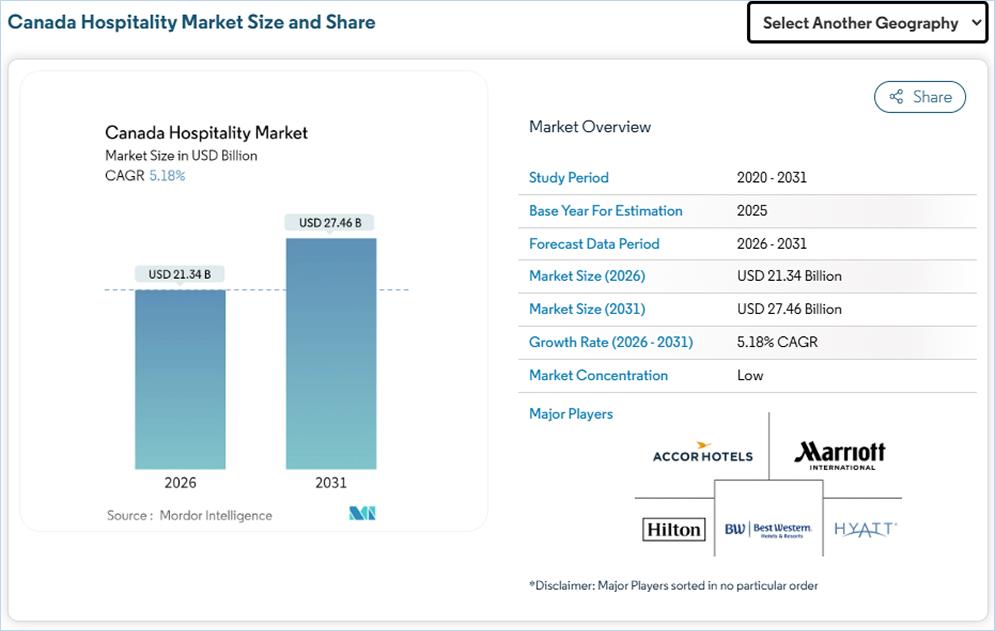
In fact, the Canada Hospitality Market was valued at USD 20.29 billion in 2025 and estimated to grow from USD 21.34 billion in 2026 to reach USD 27.46 billion by 2031, at a CAGR of 5.18% during the forecast period (2026-2031).
A well-built hotel website is no longer just an online flyer — it’s a revenue engine. With professional hotel website development, you can:
- Capture direct bookings and reduce costly commissions paid to OTAs.
- Optimize the user experience from discovery to checkout.
- Build your brand identity and loyalty with first-party guest data.
- Increase conversion rates with faster, mobile-friendly booking flows.
At Space-O Technologies, we help Canadian hotels transform their websites into powerful booking platforms. Our hotel website development approach focuses on conversion-driven design, seamless booking and PMS integrations, and mobile-first performance.
We build custom hotel websites that reduce OTA dependency, improve guest experience, and give you full control over bookings and customer data. This guide covers everything you need to know—from essential features and costs in Canada to choosing the right development partner.
This guide shows you how to create a hotel website that attracts travelers, earns their trust, and turns visits into confirmed bookings.
Why Your Hotel Needs a Professional Website?
Your hotel website serves as the digital front door to your property, working 24/7 to attract guests and generate revenue. Beyond being an online brochure, a well-developed website becomes a strategic business asset that transforms how you connect with potential guests and manage your booking operations.
1. Reduce dependency on third-party booking platforms
Third-party booking platforms charge commission rates between 15% to 30% per reservation, significantly reducing your profit margins. A professional hotel website with integrated booking functionality allows you to capture direct reservations without paying these commissions. You gain complete control over the guest journey, implement your own cancellation policies, offer exclusive packages, and maintain direct communication with guests from booking to checkout.
2. Increase direct bookings and revenue
When guests book directly through your website, you retain the full value of each reservation and can upsell additional services like room upgrades, spa treatments, or dining experiences. Direct booking websites allow you to implement dynamic pricing strategies, seasonal promotions, and loyalty programs that encourage repeat visits. You have complete flexibility to adjust rates in real-time based on demand, local events, or competitor pricing.
3. Build your hotel brand identity
Your website is often the first impression potential guests have of your property. A custom-designed hotel website allows you to tell your unique story, showcase distinctive features, and communicate your brand values. Professional website development ensures consistent branding across all touchpoints, from visual design to content tone, reinforcing what makes your property special and why guests should choose you.
4. Provide a better guest experience
Modern travelers expect seamless digital experiences throughout their booking journey. A professionally developed hotel website offers intuitive navigation, fast booking processes, and mobile-friendly interfaces that work perfectly on any device. Expert UI/UX design ensures features like virtual tours, detailed room descriptions, and instant booking confirmation create confidence in potential guests
5. Gain valuable guest data and insights
When guests book through your own website, you collect valuable first-party data about their preferences, booking patterns, and behavior. This information helps you create personalized marketing campaigns, tailor special offers, and improve your services based on actual guest needs. Unlike third-party platforms that own the customer relationship, your website allows you to build a direct email list for remarketing campaigns and nurture long-term guest relationships.
Pro Tip: Offer exclusive perks like free breakfast, room upgrades, or flexible cancellation policies only available through direct website bookings. This incentivizes guests to book directly rather than through third-party platforms.
The business case is clear, but success requires the right functionality—discover the essential features that drive hotel bookings and guest satisfaction.
Planning a Hotel Website Upgrade?
Talk to our experts to understand what features, integrations, and design elements your property needs to drive more direct bookings.
What are the Essential Features of a Hotel Website?
Creating a successful hotel website requires more than an attractive design—it needs powerful functionality that supports the entire guest journey. From initial browsing to post-stay engagement, these essential features work together to create a seamless experience that drives bookings and builds guest loyalty.
1. Online booking and reservation system
An integrated booking engine is the cornerstone of any hotel website. It should display real-time room availability, allow guests to select check-in and check-out dates, compare room types, and complete reservations in just a few clicks. The system must sync with your property management system to prevent overbookings and provide instant confirmation emails to guests upon successful reservation.
2. Secure payment gateway integration
Payment security is non-negotiable for hotel websites, especially in Canada where strict data protection and accessibility standards apply. Your hotel website must be PCI-DSS compliant and support multiple payment options, including credit cards, debit cards, and digital wallets. Integrating trusted payment gateways ensures all guest payment data is encrypted and processed securely, reducing fraud risks and building guest confidence.
In addition to secure payments, Canadian hotel websites must meet key compliance and data privacy requirements, including:
- PIPEDA compliance to protect guest personal information and booking data
- PCI-DSS standards for secure online payment processing
- Secure hosting environments, preferably on Canadian or North American servers, to ensure data reliability and performance
- SSL certificates, data encryption, and automated backups to safeguard sensitive information
- Accessibility compliance (AODA) for hotels operating in Ontario, ensuring websites are usable for guests with disabilities
3. Property management system (PMS) integration
Connecting your website to a property management system creates centralized control over inventory, rates, and reservations. Real-time synchronization ensures that room availability updates automatically across all channels when bookings are made. This integration streamlines operations, reduces manual work, and minimizes errors. Your front desk team can manage reservations efficiently with all information accessible from one dashboard.
4. Mobile-responsive design
Mobile devices account for over 60% of hotel website traffic, making responsive design essential. Your hotel website must load quickly and function flawlessly on smartphones and tablets. Touch-friendly buttons, easy-to-read text, and simplified navigation ensure mobile users can browse rooms and complete bookings without frustration. Google also prioritizes mobile-friendly websites in search rankings.
5. Multi-language and currency support
If your hotel welcomes international guests, offering content in multiple languages and currency conversion features is crucial. Visitors should be able to switch between languages easily and view prices in their preferred currency. This localization demonstrates cultural awareness and makes the booking process comfortable for travelers from different countries, significantly improving your global reach.
6. High-quality visual gallery
Professional photography is one of the most powerful tools for convincing potential guests to book. Your website should feature high-resolution images of rooms, amenities, dining areas, and surrounding attractions. Consider adding 360-degree virtual tours that allow visitors to explore rooms interactively. Video content showcasing your property’s atmosphere can significantly increase engagement and booking rates.
With features identified, effective execution is crucial—follow this proven step-by-step guide to hotel website development.
Hotel Website Development Process: Step-by-Step Guide
Building a hotel website requires careful planning and execution across multiple phases. Understanding the website development process helps you make informed decisions, set realistic timelines, and ensure your final product meets both your business goals and guest expectations.
Step 1 – Define your hotel website goals and requirements
Start by identifying your target audience and understanding their booking preferences and pain points. List must-have features like online booking, payment processing, and room galleries. Set clear goals such as increasing direct bookings by a specific percentage, reducing dependency on OTAs, or improving mobile conversion rates. Document these requirements to guide your development team effectively.
Step 2 – Choose the right development approach
Decide between custom development, website builders, or content management systems based on your specific needs. Custom development offers complete flexibility and unique features, but requires a larger investment. Website builders like Wix provide quick setup with limited customization. CMS platforms like WordPress offer a middle ground with extensive plugin options for booking functionality.
Step 3 – Select your technology stack
Choose frontend technologies like React or Vue.js for dynamic, interactive user interfaces. Select robust backend frameworks such as Laravel, Node.js, or Ruby on Rails to handle booking logic, payment processing, and database management. Consider hosting requirements, including server capacity, backup solutions, and content delivery networks for fast global performance.
Step 4 – Design your hotel website user experience
Create user journey maps showing how guests move from the landing page to the booking confirmation. Develop wireframes outlining page layouts and navigation structure. Design high-fidelity mockups that incorporate your brand colors, typography, and imagery. Professional web design focuses on creating an intuitive booking flow with minimal steps. Test designs with real users to identify and fix usability issues.
Step 5 – Develop core booking functionality
Build a booking engine that handles date selection, room availability checks, rate calculations, and reservation confirmations. Integrate payment gateway APIs to process transactions securely. Develop automated email systems for booking confirmations, pre-arrival reminders, and post-stay follow-ups. Ensure the booking system handles special requests, promotional codes, and package deals seamlessly.
Step 6 – Integrate the property management system
Select a PMS that fits your operational needs and budget. Connect your website to the PMS through API integration for real-time data synchronization. Ensure that when guests book through your website, reservations appear instantly in your PMS. Set up two-way communication so that rate changes, availability updates, and cancellations sync automatically across all systems.
Step 7 – Implement SEO best practices
Optimize page titles, meta descriptions, and headers with relevant keywords for local search. Create location-specific landing pages for different types of travelers or events. Implement hotel schema markup to help search engines understand your property details. Build quality backlinks through partnerships with local tourism sites. Create valuable content about nearby attractions to improve organic search rankings.
Step 8 – Test thoroughly before launch
Conduct comprehensive testing across all browsers, including Chrome, Safari, Firefox, and Edge. Test mobile responsiveness on various devices with different screen sizes. Verify that the booking process works flawlessly from room selection through payment confirmation. Test payment gateway integration with real transactions in sandbox mode. Check all forms, links, and interactive elements for proper functionality.
Step 9 – Launch and monitor performance
Complete a pre-launch checklist including SSL certificate installation, Google Analytics setup, and Search Console verification. Announce your new website through email marketing, social media, and your existing guest database. Monitor key metrics like traffic sources, booking conversion rates, and page load speeds. Collect user feedback and make iterative improvements based on actual guest behavior and preferences.
Understanding the process leads to budgeting; here’s what Canadian hotels can expect to invest in professional website development.
Modernize Your Hotel’s Digital Presence With Expert Developers
Create a visually compelling, SEO-ready hotel website that showcases your property and delivers seamless booking experiences across devices.
What is the Hotel Website Development Cost in Canada?
The cost of developing a hotel website ranges between $25,000 – $100,000+. Understanding the financial investment required to create a hotel website helps you budget appropriately and make informed decisions about features and functionality.
The cost of web application development varies significantly based on your specific requirements and chosen approach.
1. Factors affecting hotel website development cost
Several variables influence the total website development cost. Key factors include:
- Website complexity & features
Advanced booking systems, dynamic pricing, multi-property management, and custom dashboards increase development effort and cost. - Design & branding requirements
Custom UI/UX design tailored to your hotel brand costs more than template-based layouts but delivers stronger differentiation and higher conversions. - Number of room types & properties
Multiple room categories, seasonal pricing rules, or multi-location setups require additional development and testing. - Language & currency support
Multi-language content and currency conversion add localization complexity. - Third-party integrations
Integrations with booking engines, PMS systems, channel managers, and payment gateways significantly impact pricing.
2. Typical cost breakdown for hotel websites
| Website Type | Estimated Cost |
| Basic hotel website (gallery, contact, static pages) | $5,000 – $15,000 |
| Mid-level website with booking & PMS integration | $25,000 – $40,000 |
| Enterprise or multi-property hotel website | $50,000 – $100,000+ |
Enterprise solutions are common for luxury hotels and hotel chains requiring advanced integrations, custom workflows, and centralized management.
3. Ongoing Maintenance & Support Costs
Beyond initial development, hotels should budget for ongoing website maintenance to ensure optimal performance and security:
- Monthly cost: $500 – $2,000
- Includes:
- Hosting & server management
- Security updates & monitoring
- Content updates
- Technical support & performance optimization
Regular maintenance ensures your website stays secure, fast, and compliant with evolving web standards.
Custom development vs. website builders comparison
| Feature | Website Builders | Custom Development |
|---|---|---|
| Initial Cost | $500 – $3,000 | $25,000 – $100,000+ |
| Development Time | 1-2 weeks | 2-6 months |
| Customization | Limited templates | Fully customized |
| Scalability | Limited | Highly scalable |
| Unique Features | Template-dependent | Unlimited possibilities |
| Technical Expertise Required | Minimal | Professional team |
| Long-term Flexibility | Restricted by platform | Complete control |
| Booking Integration | Third-party plugins | Custom-built solutions |
Cost Planning Tip: If your goal is to increase direct bookings, reduce OTA dependency, and scale operations, investing in custom hotel website development delivers significantly higher long-term value than low-cost website builders.
Launch a Hotel Website Designed to Increase Direct Reservations
Partner with experienced developers to build secure, scalable hotel websites that support growth and long-term revenue goals.
Cost awareness must include avoiding expensive errors, learn the most common pitfalls Canadian hotels encounter, and how to prevent them.
What are the Common Mistakes to Avoid in Hotel Website Development
Learning from common pitfalls can save you time, money, and lost bookings. Many hotels make avoidable mistakes during their website development that negatively impact user experience and conversion rates. Understanding these issues helps you create a more effective booking platform from the start.
1. Overcomplicating the booking process
Complex booking processes with too many steps cause potential guests to abandon reservations before completion. Requiring account creation before booking creates unnecessary friction that drives users to competitor websites. Simplify your booking flow to essential steps: room selection, dates, guest information, and payment. Offer guest checkout options that allow bookings without mandatory registration while still capturing essential contact information.
2. Neglecting mobile optimization
Ignoring mobile users means losing a significant portion of potential bookings since most travel research happens on smartphones. Websites that don’t load properly on mobile devices frustrate users and damage your property’s reputation. Implement mobile-first design principles, ensuring buttons are easily tappable, text is readable without zooming, and images load quickly even on slower connections.
3. Poor website performance and loading speed
Slow-loading websites cause visitors to leave before seeing your rooms or amenities, directly impacting booking rates. Large, unoptimized images are the primary culprit behind sluggish performance. Compress images without sacrificing quality, implement lazy loading for below-the-fold content, and use content delivery networks to serve files from servers closest to your visitors’ locations.
4. Inadequate security measures
Security breaches compromise guest payment information and destroy trust in your brand permanently. Failing to implement SSL certificates, maintain PCI-DSS compliance, or update security patches leaves your website vulnerable to attacks. Invest in robust security measures including regular security audits, secure hosting environments, encrypted data transmission, and automatic backups to protect both your business and guests.
5. Lacking clear calls-to-action and contact information
Websites without prominent booking buttons or clear contact information confuse visitors and result in lost reservation opportunities. Hiding phone numbers, email addresses, or live chat options forces frustrated guests to search for alternative properties. Place strategic calls-to-action on every page, display contact information in headers or footers, and offer multiple communication channels, including live chat for immediate assistance during the booking process.
Sidestepping mistakes requires selecting the right partner—here’s your guide to choosing a hotel website development company that delivers results.
How to Choose the Right Hotel Website Development Company in 5 Ways
Selecting the right development partner is one of the most critical decisions in your hotel website project. The right team brings technical expertise, industry knowledge, and ongoing support that transforms your vision into a revenue-generating digital platform. Understanding how to choose a software development company helps you evaluate potential partners effectively.
1. Key factors to evaluate development partners
Review the portfolio of potential development companies to assess their design quality and technical capabilities. Look for hospitality industry experience specifically, as hotel websites have unique requirements compared to other industries. Check client testimonials and case studies to understand their track record of delivering projects on time and within budget. Verify their technical expertise in relevant technologies like booking systems and payment integrations.
2. Questions to ask potential developers
Ask about their development process from initial consultation through post-launch support to understand project timelines and communication methods. Inquire about their experience with property management system integrations and which PMS platforms they’ve worked with previously. Question their approach to scalability if you plan to expand or add properties in the future. Request information about ongoing maintenance packages and how they handle urgent technical issues.
3. Check their technical expertise in hotel-specific features
Evaluate whether the development company has experience building booking engines, payment gateway integrations, and PMS connections specifically for hotels. Ask for examples of dynamic pricing systems, inventory management solutions, and channel manager integrations they’ve implemented. Verify their understanding of hospitality-specific requirements like room type management, seasonal rate adjustments, and multi-property booking capabilities for hotel chains.
4. Assess their post-launch support and maintenance services
Understand what level of ongoing technical support is included after your website launches and what additional services cost extra. Inquire about response times for bug fixes, security updates, and emergency technical issues that could affect bookings. Ask about content management training for your staff and whether they provide documentation or video tutorials. Confirm their availability for future feature additions as your hotel’s needs evolve.
5. Verify transparent pricing and contract terms
Request detailed project proposals with itemized costs for design, development, integrations, testing, and post-launch support to avoid hidden fees. Understand payment schedules whether they require deposits, milestone payments, or different arrangements that fit your budget planning. Review contract terms regarding intellectual property ownership, source code access, and your rights to move the website to another host if needed.
Deliver a Seamless Guest Experience With Space-O’s Web Expertise
Space-O helps hotels design and develop conversion-focused websites that improve guest engagement from first visit to final booking.
Among qualified providers, Space-O Technologies excels for Canadian hotels—discover why we’re the trusted choice for hospitality website development.
Why Choose Space-O Technologies for Hotel Website Development
In Canada’s competitive hospitality market, a professional hotel website is no longer optional—it’s a critical revenue channel. A strategically designed website with seamless booking functionality helps Canadian hotels reduce reliance on high-commission OTAs, increase direct reservations, and maintain full control over guest relationships.
Space-O Technologies Canada specializes in hotel website development for Canadian hotels, resorts, and hospitality businesses. Based in Toronto, we understand the regional market, traveler behavior, and local SEO requirements that influence booking decisions across Canada.
Since 2018, our team has delivered scalable, secure, and conversion-focused web solutions for enterprises and Fortune 500 companies, applying the same standards of quality to every hotel project we undertake.
We build custom hotel websites designed to:
- Increase direct bookings through optimized user journeys
- Integrate seamlessly with booking engines, PMS systems, and payment gateways
- Deliver fast, mobile-first performance across all devices
- Support long-term scalability for growing hotel businesses
With 100+ satisfied clients worldwide and 65% repeat and referral business, Space-O’s proven delivery model reflects our commitment to measurable results and long-term partnerships.Ready to build a high-performing hotel website tailored for the Canadian market?
Schedule a free consultation to discuss your hotel website development goals with our experts.
Frequently Asked Questions About Hotel Website Development
How much does it cost to build a website for a hotel?
The cost to build a hotel website typically ranges from $5,000 to $100,000+, depending on complexity and features. Basic informational websites with contact forms and photo galleries usually cost between $5,000 and $15,000, while websites with integrated booking systems and secure payment processing range from $25,000 to $40,000. Enterprise solutions for luxury hotels or hotel chains with advanced features and custom integrations can exceed $50,000 to $100,000+.
How long does it take to develop a hotel website?
Hotel website development typically takes between 2 weeks and 6 months, depending on project scope and complexity. Simple template-based websites can be launched in 2–4 weeks with minimal customization. Mid-level custom hotel websites with booking system integration usually take 2–3 months, while complex enterprise solutions with multiple properties, custom features, and advanced integrations may require 4–6 months to complete.
How do I accept payments online safely?
Implement PCI-DSS-compliant payment gateways that encrypt sensitive financial information during transactions. Use established payment processors like Stripe, Moneris, or PayPal that handle security requirements on your behalf. Ensure your website has an SSL certificate creating secure HTTPS connections. Never store complete credit card details on your servers. Regular security audits and compliance checks protect both your business and guests. Check our guide on payment processing software for more details.
How often should I update my hotel website?
Update promotional offers, seasonal rates, and special packages at least monthly to keep content fresh and relevant. Perform security updates and plugin patches immediately when available to protect against vulnerabilities. Refresh room photos and property images annually or whenever you complete renovations. If your site looks outdated, review the website redesign cost to plan your upgrade budget.
Do I need a separate mobile app for my hotel?
A mobile app makes sense if you want to offer loyalty programs, push notifications for special offers, or in-stay services like digital room keys and concierge features. However, a well-designed responsive website often suffices for booking and information purposes at lower costs. Consider your target audience and whether they would download and regularly use an app. Small to mid-size properties typically benefit more from investing in an excellent responsive website.
What payment methods should a Canadian hotel website support?
A Canadian hotel website should support secure and widely used payment methods to meet guest expectations and ensure compliance. Commonly recommended options include Moneris, Stripe (Canada), and PayPal for credit and debit card payments, along with Interac Online for bank-based transactions. Your website should also handle CAD currency pricing accurately and apply applicable Canadian taxes such as GST or HST automatically during checkout to ensure transparent and compliant billing.


Is Your Hotel Website Failing to Convert Visitors into Bookings?
 All our projects are secured by NDA
100% Secure. Zero Spam
*All your data will remain strictly confidential.
Trusted by


Bashar Anabtawi 
Canada
“I was mostly happy with the high level of experience and professionalism of the various teams that worked on my project. Not only they clearly understood my exact technical requirements but even suggested better ways in doing them. The Communication tools that were used were excellent and easy. And finally and most importantly, the interaction, follow up and support from the top management was great. Space-O not delivered a high quality product but exceeded my expectations! I would definitely hire them again for future jobs!”

Canada Office
2 County Court Blvd., Suite 400,
Brampton, Ontario L6W 3W8
Phone: +1 (602) 737-0187
Email: sales@spaceo.ca