
- What is Insurance App Development?
- Why Your Insurance Business Needs a Mobile App?
- What are the Different Types of Insurance Apps You Can Build?
- What are the Essential Features of a Successful Insurance App?
- A Step-by-Step Insurance App Development Process
- What is the Cost of Insurance App Development?
- What are the Challenges in Insurance App Development (And Solutions)
- What are the Best Practices for Insurance App Development?
- How to Choose the Right Insurance App Development Partner?
- Accelerating Insurance App Development With Space-O Technologies
- Frequently Asked Questions About Insurance App Development
Insurance App Development: Features, Costs & Best Practices for Businesses

 Last Updated: April, 1 2026
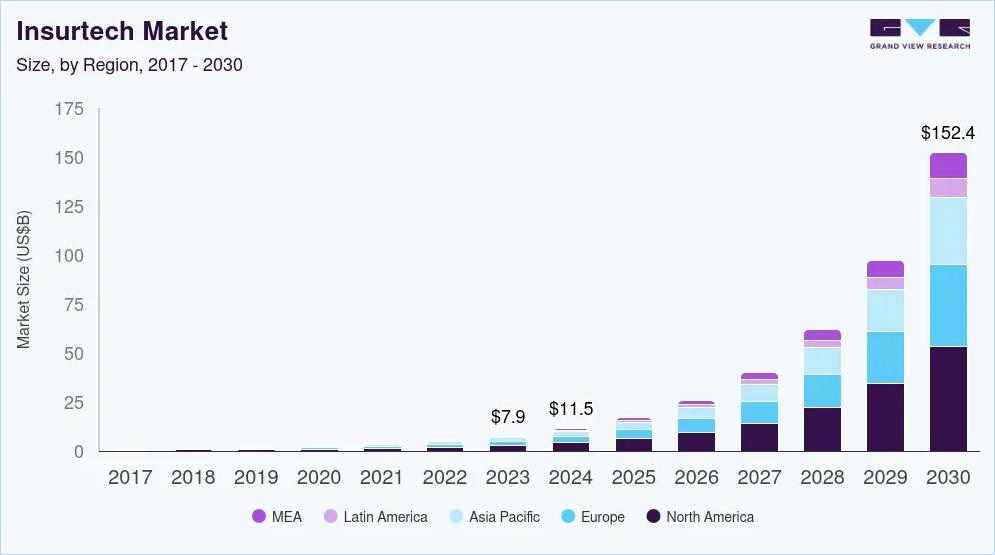
Are you planning to build an insurance app that delivers real business impact—not just another digital interface? The global insurtech market highlights why now is the right time to act. According to Grand View Research, valued at $5.45 billion in 2022, the market is projected to reach $152.43 billion by 2030, growing at a CAGR of 51.7%.
This rapid expansion reflects the strong shift by insurers toward digital-first, mobile-driven models.
As a trusted custom app development partner, Space-O Technologies applies proven experience from fintech projects to help insurers modernize systems, improve efficiency, and launch scalable, secure insurance applications with confidence.
What is Insurance App Development?
Insurance app development creates mobile applications enabling insurers, agents, and policyholders to manage insurance products digitally. These applications streamline policy management, quote generation, premium payments, and claims processing.
For insurance companies, insurance mobile app development provides competitive advantages by meeting modern consumer expectations for instant access, self-service capabilities, and seamless digital experiences across all insurance touchpoints and provincial requirements.
Tip: Start with an MVP (Minimum Viable Product) to test market fit before investing in full-scale insurance application development.
With the core concept established, let’s explore the compelling business case—discover why insurance companies are rapidly adopting mobile apps to stay competitive.
Why Your Insurance Business Needs a Mobile App?
Insurance customers no longer judge insurers only by coverage—they judge them by experience. From policy onboarding to claims resolution, mobile access has become the primary touchpoint for customer interactions.
This shift makes a mobile app a strategic necessity for insurers aiming to improve customer satisfaction, streamline operations, and stay competitive in an increasingly digital insurance ecosystem.
1. Enhanced customer experience and engagement
Insurance for app developers focuses on creating exceptional user experiences that consumers expect. Modern insurance mobile app development enables 24/7 policy access, instant quotes, and simplified claims filing. Features like policy comparison, digital insurance cards, and real-time claims tracking transform customer interactions, making insurance for mobile apps essential for competitive insurers.
2. Operational efficiency and cost reduction
Insurance app development services significantly reduce operational costs for insurers. Business process automation eliminates manual paperwork, decreasing processing time by up to 60%. Digital claims submission reduces administrative overhead while accelerating settlements. Application developer insurance streamlines workflows, reducing dependency on intermediaries.
3. Competitive advantage in the marketplace
App development insurance solutions provide insurers with crucial market differentiation. Data-driven insights enable personalized policy recommendations and improved retention. Insurance for mobile app developers incorporates analytics, tracking user behavior, and engagement patterns. This intelligence helps insurers refine offerings and predict customer needs. Companies investing in insurance mobile app development report 35% higher customer loyalty compared to traditional-only approaches.
4. Increased revenue opportunities
Strategic insurance application development unlocks multiple revenue streams for insurers. Cross-selling features suggest relevant coverage based on customer profiles. Premium payment convenience through mobile wallets increases conversion rates by 45%. Referral program integration turns satisfied customers into advocates. Analytics-driven targeting improves marketing ROI. Insurance app development companies like Space-O Technologies design revenue-optimizing features that drive growth sustainably.
These strategic advantages apply across various app categories—here are the main types of insurance apps you can develop to meet diverse customer needs.
What are the Different Types of Insurance Apps You Can Build?
Insurers can develop various specialized applications depending on their target market. Each type serves distinct customer needs while adhering to provincial and federal regulations.
1. Life insurance apps
Life insurance mobile app development in Canada focuses on policy selection, beneficiary management, and premium calculations. Applications allow users to browse term life, whole life, and universal life policies digitally. Key functionalities include automated premium calculators, beneficiary updates, policy performance tracking, and secure document storage. Insurers require insurance app development companies to ensure provincial compliance while providing personalized recommendations and e-signature capabilities.
2. Health insurance apps
Health insurance application development integrates with provincial healthcare systems while offering private coverage management. Apps display digital insurance cards, provider directories, coverage verification, and claims submission. Health insurance for apps must comply with PIPEDA privacy regulations while enabling wellness tracking and virtual care access. Mobile app developer insurance expertise ensures standards for protecting sensitive health information across provinces.
3. Auto/vehicle insurance apps
Auto insurance app development services for the Canadian market include telematics integration, roadside assistance, and instant photo-based claims. Applications enable usage-based insurance models that track driving behavior through smartphones. Key features include digital pink slips, accident documentation, repair shop locators, and collision reporting. Insurance for mobile app developers must incorporate provincial-specific requirements, winter driving considerations, and integration with collision reporting centers.
4. Property and home insurance apps
Property insurance mobile app development helps homeowners and renters protect assets digitally. Applications feature home inventory management with photo documentation, property maintenance reminders, and weather alert integration relevant to Canadian climates. Claims documentation becomes streamlined with video walkthroughs and real-time damage reporting. Insurance app development companies integrate features for flood risk assessment, winter weather preparations, and wildfire alerts specific to specific regions.
5. Travel insurance apps
Travel insurance application development serves travelers with on-demand coverage activation and multi-country support. Apps enable policy purchases at airports, emergency medical assistance contact, and trip cancellation management. Canada-specific features include provincial healthcare coverage coordination, winter sports protection, and currency conversion. Applications facilitate emergency assistance worldwide, document uploads for medical claims, and real-time travel advisories for passport holders.
6. Business insurance apps
Commercial insurance mobile app development addresses business owners’ complex needs. Applications manage general liability, professional liability, commercial property, and workers’ compensation policies. Features include multi-location coverage management, certificate generation, risk assessment tools, and regulatory compliance tracking. General liability insurance for app developers represents one policy type managed through these platforms. Business apps accommodate federal and provincial regulations with bilingual functionality.
Build Secure and Scalable Insurance Apps With Space-O
Work with Space-O’s insurance app developers who understand policy management, claims automation, and data security requirements.
Regardless of type, certain features drive user engagement—discover the essential functionalities that make insurance apps successful.
What are the Essential Features of a Successful Insurance App?
Insurance application development must serve policyholders, agents, and administrators. Insurance app development companies prioritize user-centric design, balancing comprehensive features with intuitive navigation.
1. Core features for policyholders
User registration and profile management form the foundation of insurance mobile app development. policyholders need secure login with biometric authentication, digital insurance cards, and policy comparison tools. Instant quote generation considers provincial variations. Premium payment gateways support methods including Interac and pre-authorized debits. Claims filing with photo/video upload, OCR scanning, real-time tracking, and push notifications for renewals creates seamless insurance for mobile app users.
Key policyholder features list:
- Multi-language support (English/French)
- Document storage vault with cloud backup
- AI chatbot and live customer support
- FAQ and knowledge base
- Policy renewal reminders
- Virtual insurance advisor
- Emergency contact information
2. Features for insurance agents and brokers
Application developer insurance tools for agents include comprehensive CRM capabilities, lead management with automatic scoring, and needs analysis calculators. Insurance app development services provide proposal generation with e-signatures compliant with provincial regulations, pipeline dashboards tracking conversions, and commission tracking. Mobile policy binding enables field agents to complete sales on-site. Client communication tools integrate email, SMS, and in-app messaging while ensuring licensing compliance.
Key agent features list:
- Calendar integration for appointments
- Task management and follow-up reminders
- Product comparison tools
- Performance analytics and goal tracking
- Document templates
- Multi-carrier policy management
- Offline mode capability
3. Admin panel features
Insurance app development companies build robust admin panels with user management dashboards supporting role-based access control. Policy administration handles issuance, endorsements, and cancellations across provinces. Claims management includes fraud detection algorithms, adjuster assignment, and settlement tracking. Analytics provide insights into customer acquisition costs and regional trends. Content management enables marketing updates. Audit logs ensure compliance with regulatory requirements and data protection standards.
Key admin features list:
- Underwriting rules engine
- Premium rate management by province
- Agent commission structure management
- Compliance reporting for regulators
- Customer segmentation tools
- System health monitoring
- Multi-tenant architecture support
Tip: Implement advanced features in phases rather than all at once to manage development costs and gather user feedback.
With features defined, successful execution requires structure—follow this proven step-by-step roadmap for insurance app development.
A Step-by-Step Insurance App Development Process
A structured development approach ensures on-time, on-budget delivery. Insurance app development companies follow proven methodologies adapted for insurance-specific requirements and regulatory compliance.
Phase 1 – Discovery and planning
Insurance application development begins with comprehensive market and competitor research. This phase identifies target audiences, prioritizes features, and assesses technical feasibility. Budget and timeline estimation consider regulatory compliance requirements across provinces. Team assembly includes developers experienced in developing insurance apps. Deliverables include project roadmap, technical documentation, and wireframes. Timeline: 2-4 weeks. This foundation ensures app development insurance projects align with business objectives and market needs.
Phase 2 – UI/UX design
User journey mapping creates intuitive insurance mobile app development experiences. Wireframing and prototyping visualize user flows before development. Visual design incorporates branding while ensuring accessibility for all users. Design systems maintain consistency across screens. User testing gathers feedback from actual policyholders and agents. Deliverables include high-fidelity designs, interactive prototypes, and design specifications. Timeline: 4-6 weeks. Mobile app developer insurance expertise ensures designs meet industry standards.
Phase 3 – Development and integration
Sprint planning using agile methodology structures insurance app development services delivery. Frontend development creates user interfaces while backend development builds server logic. API development enables integration with core insurance systems, payment gateways, and third-party services. Database setup ensures secure data storage compliant with PIPEDA. Continuous integration maintains code quality. Deliverables include a functional app with core features. Timeline: 12-20 weeks, depending on complexity, features, and application developer insurance requirements.
Phase 4 – Quality assurance and testing
Comprehensive QA ensures insurance for mobile apps meets quality standards. Functional testing verifies that all features work correctly. Security testing and penetration testing protect sensitive customer data. Performance testing optimizes load times and server response. Compatibility testing ensures functionality across devices and OS versions. User acceptance testing validates real-world scenarios. Bug fixing refines the application. Timeline: 4-6 weeks parallel with development. App development insurance necessitates thorough testing protocols.
Phase 5 – Deployment and launch
App store submission to Apple App Store and Google Play requires meeting platform guidelines. App store optimization (ASO) improves discoverability for users searching for insurance mobile app development solutions. Regulatory compliance verification ensures provincial requirements are met. Server deployment establishes production infrastructure with monitoring. Soft launch strategy tests with limited users before full rollout. Timeline: 2-3 weeks. Deliverables: Live app accessible to customers nationwide.
Phase 6 – Post-launch support and maintenance
Ongoing performance monitoring identifies issues quickly. User feedback collection and analysis drives improvements for insurance application development. Regular updates add features based on customer requests and market trends. Bug fixes and security patches maintain app integrity. Compliance updates address changing regulations across provinces. Analytics review optimizes user experience. This continuous improvement cycle ensures that the need for insurance protection remains relevant, secure, and competitive in Canada’s evolving insurance landscape.
Tip: Allocate 15-20% of your initial development budget annually for maintenance, updates, and compliance adjustments.
Understanding the process leads to realistic budgeting—here’s a comprehensive cost breakdown for building your insurance app.
What is the Cost of Insurance App Development?
Insurance app development costs vary based on scope and complexity. Basic apps with policy viewing and claims tracking typically cost $50,000–$100,000. Mid-range apps with AI-driven quotes and payment processing range from $100,000–$200,000. Enterprise-grade platforms with end-to-end insurance workflows often exceed $200,000.
1. Factors affecting development cost
App complexity drives application development costs significantly. Feature set and customization requirements vary by insurance type and target users. Platform choice between iOS, Android, or cross-platform impacts the budget. Design requirements, including custom illustrations and animation,s add costs.
Third-party integrations with payment gateways, telematics, and core systems require development time. Development team location affects rates. Compliance with regulations adds specialized expertise costs. Do apps need insurance beyond development? Yes—maintenance continues.
2. Cost estimates by app complexity
Simple insurance app ($40,000 – $70,000)
Basic policy viewing and management, simple quote calculator, payment integration, basic claims filing, and push notifications. Timeline: 3-4 months. Suitable for insurers testing mobile presence or small agencies.
Moderately complex app ($70,000 – $150,000)
All simple features plus advanced quote engine, document scanning with OCR, agent portal, basic analytics, chatbot integration, and multiple payment methods. Timeline: 5-7 months. Ideal for established insurance companies.
Highly complex app ($150,000 – $300,000+)
All moderate features plus AI-powered recommendations, telematics integration, advanced fraud detection, blockchain features, multi-language support, and advanced analytics. Timeline: 8-12 months. Enterprise-level solution for major insurers.
3. Hidden costs to consider
Beyond initial development, insurance app development services require ongoing investment. App store fees include $99/year for iOS and a $25 one-time fee for Android. Third-party service subscriptions for payment processing, analytics, and cloud hosting add monthly costs. Compliance audits and certifications ensure regulatory adherence. Marketing and app store optimization drive user acquisition. Ongoing maintenance typically costs 15-20% of the initial insurance mobile app development investment annually for updates and support.
Tip: Negotiate fixed-price contracts with insurance app development companies to avoid budget overruns and ensure cost predictability.
Cost planning must include industry-specific hurdles—learn the key challenges and proven solutions for insurance app success.
What are the Challenges in Insurance App Development (And Solutions)
Building an insurance mobile app involves far more than UI design and feature selection. Insurers must manage regulatory compliance, protect sensitive customer data, integrate legacy systems, and ensure consistent performance at scale.
Understanding these challenges upfront helps organizations avoid costly delays and design solutions that support long-term growth and reliability.
1. Complex regulatory landscape
Challenge: Navigating multiple Canadian provincial and federal compliance requirements creates complexity for insurance application development. Each province has unique regulations governing insurance products, data protection, and consumer rights.
Solution: Partner with insurance app development companies experienced in compliance. Build a flexible architecture accommodating regulatory variations. Implement regular compliance audits. Engage legal experts familiar with provincial insurance regulations. Application developer insurance expertise ensures adherence to evolving standards.
2. Legacy system integration
Challenge: Connecting new insurance mobile app development with outdated core insurance systems poses technical difficulties. Legacy platforms often lack modern APIs and documentation.
Solution: Use middleware and API gateways, creating bridges between old and new systems. Implement gradual migration strategies rather than complete replacement. Partner with insurance for app developers experienced in legacy modernization. Consider a microservices architecture isolating integration points. App development insurance projects require patience and phased approaches for successful legacy integration.
3. Data security and privacy concerns
Challenge: Protecting sensitive customer and policy data from breaches and unauthorized access remains paramount. Do apps need insurance against security failures? Absolutely.
Solution: Implement multi-layered security, including encryption, authentication, and access controls. Conduct regular security audits and penetration testing. Follow a security-first development approach from day one. Train development teams on secure coding practices. Partner with mobile app developer insurance experts who prioritize data protection and understand privacy laws comprehensively.
4. User adoption and engagement
Challenge: Convincing customers to switch from traditional insurance management methods to mobile apps requires overcoming resistance and building trust.
Solution: Design ian ntuitive UX minimizing learning curves. Provide value-added features beyond basic policy management. Create comprehensive onboarding education explaining the benefits. Offer incentives for app adoption. Insurance for mobile app developers should incorporate gamification and personalized experiences. Regular communication highlighting convenience and time savings drives adoption among policyholders gradually.
Launch High-Performance Insurance Apps Without Compliance Gaps
Partner with Space-O to build insurance apps aligned with regulatory standards, secure architectures, and evolving user expectations.
Overcoming challenges requires following proven methodologies—here are the best practices that ensure compliance and user satisfaction.
What are the Best Practices for Insurance App Development?
Successful insurance apps follow disciplined development practices that balance compliance, security, and usability.
This section outlines the principles that help insurers build reliable, user-centric mobile applications without compromising regulatory or technical standards.
1. Prioritize user experience
Simple onboarding processes with minimal required fields reduce abandonment during insurance mobile app development and user acquisition. Intuitive navigation ensures policyholders find features quickly without training. Clear information architecture organizes policies, claims, and payments logically. Accessible design following WCAG compliance accommodates users with disabilities. Fast load times under three seconds maintain engagement. Insurance app development companies must test with actual users regularly, iterating designs based on feedback for optimal experiences.
2. Build security from day one
Security-by-design approach integrates protection throughout insurance application development rather than adding it later. Regular vulnerability assessments identify weaknesses before exploitation. Staff security training ensures development teams understand threats and countermeasures. Incident response planning prepares for potential breaches. Application developer insurance protocols include code reviews focused on security. Mobile app developer insurance expertise implements encryption, authentication, and access controls as foundational elements rather than afterthoughts in insurance apps.
3. Plan for scalability
Cloud-native architecture enables insurance for apps to handle growing user bases efficiently. The microservices approach allows independent scaling of app components based on demand. Database optimization ensures fast queries as data volumes increase. Content delivery networks (CDN) provide fast performance across regions from British Columbia to Newfoundland. Load balancing distributes traffic, preventing slowdowns. Insurance app development services must design for peak times like open enrollment periods when usage spikes significantly.
4. Implement robust analytics
User behavior tracking reveals how policyholders interact with insurance mobile app development features. Conversion funnel analysis identifies drop-off points in the quote and purchase processes. Feature usage metrics guide roadmap prioritization. Performance monitoring detects slowdowns and crashes immediately. A/B testing capabilities optimize messaging, layouts, and user flows. Insurance for mobile app developers should track key metrics, including policy conversions, claims completion rates, customer satisfaction scores, and retention rates for data-driven decision making.
5. Maintain regulatory compliance
Regular compliance audits ensure insurance application development continues meeting provincial and federal requirements as regulations evolve. Documentation and record-keeping provide evidence of compliance during regulatory reviews. Stay updated on regulation changes through industry associations and legal counsel. Build flexibility enabling quick compliance updates without complete app redesigns. App development insurance projects require dedicated compliance roles overseeing provincial variations, PIPEDA requirements, and insurance-specific regulations protecting consumers comprehensively.
Tip: Create a compliance calendar tracking provincial regulatory deadlines and update schedules to stay ahead of requirements.
Even with best practices, execution depends on expertise—here’s your guide to selecting the ideal insurance app development partner.
How to Choose the Right Insurance App Development Partner?
The success of an insurance app depends heavily on the development partner’s industry expertise and execution approach. Insurers must evaluate more than technical skills—they need proven experience with compliance, integrations, and long-term support.
Here are the top 3 ways to assess potential partners and select a team that aligns with your business goals and risk profile.
1. Essential criteria for evaluation
Insurance industry experience ensures insurance app development companies understand unique sector requirements beyond generic mobile development. Technical expertise in your chosen tech stack (React Native, Flutter, native) matters significantly. Compliance knowledge specific to provincial regulations prevents costly mistakes. Portfolio and case studies demonstrate successful insurance for mobile app projects. Client testimonials verify reliability. The development process and agile methodology ensure transparency. Communication and project management capabilities maintain alignment. Post-launch support sustains long-term success.
2. Key questions to ask potential partners
- How many insurance app development projects have you completed?
- Do you have experience with [specific insurance type] applications?
- How do you ensure compliance with provincial regulations?
- What is your approach to data security and privacy?
- Can you integrate with legacy insurance systems?
- What is your typical timeline for [MVP/full app] development?
- How do you handle cost overruns and scope changes?
- What post-launch support and maintenance do you provide?
- Can you provide references from insurance clients?
- How do you stay current with insurance industry trends?
3. Red flags to watch out for
Lack of insurance industry experience indicates a learning curve at your expense. No compliance expertise risks regulatory violations for insurance mobile app development. Unrealistic timelines or budgets suggest poor project estimation. Poor communication patterns predict collaboration difficulties. Absence of post-launch support leaves you stranded. No security best practices expose sensitive data. Reluctance to provide references raises concerns. Do apps need insurance developers with proven track records? Absolutely—choose carefully.
Turn Your Insurance App Idea Into a Market-Ready Product
Design and develop insurance applications with Space-O that enhance customer experience and improve operational efficiency.
Among qualified partners, Space-O Technologies delivers results—discover how we accelerate insurance app development with proven expertise.
Accelerating Insurance App Development With Space-O Technologies
Insurance mobile app development now plays a critical role in helping insurers compete in a digital-first market. Mobile-first policyholders expect fast onboarding, real-time policy access, seamless claims processing, and secure digital payments. Insurers that fail to meet these expectations risk losing customers to more agile and tech-enabled competitors.
At Space-O Technologies, we help insurance companies develop an insurance app with clarity, control, and confidence. Our teams define precise technical requirements, align mobile architecture with business and compliance goals, and establish measurable quality benchmarks from day one.
Do insurance apps require industry-specific expertise? Absolutely. Specialized insurance app development expertise prevents costly compliance gaps, data security risks, and poor user experiences. Whether you’re building an InsurTech product or modernizing legacy insurance systems, the right outsourcing partner accelerates time-to-market while reducing execution risk.
Ready to build an insurance mobile app that delivers measurable results? Let’s discuss your goals and map a mobile strategy designed for growth, security, and long-term success.
Frequently Asked Questions About Insurance App Development
How long does it take to develop an insurance app?
App development timelines range from 3-4 months for simple insurance mobile app development to 8-12 months for complex solutions with advanced features like AI and telematics. Timeline depends on app complexity, feature set, platform choice, and integration requirements. Insurance app development companies provide detailed timelines after the discovery phase, analyzing your specific needs.
What is the cost to develop an insurance app in Canada?
Costs typically range from $40,000 for basic apps to $300,000+ for enterprise-level insurance application development solutions. Factors affecting price include complexity, features, platform (iOS/Android/cross-platform), design requirements, integrations, and compliance needs. Insurance app development services companies provide detailed quotes after understanding your requirements, target users, and business objectives for accurate budget planning.
What security measures are essential for insurance apps?
Essential security includes end-to-end encryption, multi-factor authentication, biometric security, regular security audits, penetration testing, and compliance with data protection regulations. Application developer insurance protocols implement secure API design, encrypted data storage, and role-based access controls. Mobile app developer insurance expertise ensures protection against common vulnerabilities while meeting PIPEDA and provincial insurance regulatory security standards.
How do insurance apps comply with regulations?
Insurance for apps must comply with PIPEDA for data protection, provincial insurance regulations varying by territory, PCI DSS for payments, and HIPAA-equivalent standards for health insurance. Insurance app development companies experienced with market build flexible architectures accommodating provincial variations. Bilingual support in Quebec is mandatory. Regular compliance audits ensure ongoing adherence.
What’s the difference between native and cross-platform development?
Native apps built separately for iOS (Swift) and Android (Kotlin) offer optimal performance but cost more for insurance application development. Cross-platform development using React Native or Flutter shares a codebase between platforms, reducing costs and development time while providing near-native performance. Most insurance for mobile apps projects choose cross-platform for cost-effectiveness and faster market entry.
How often should insurance apps be updated?
Regular updates are recommended quarterly for new features, monthly for security patches, and immediately for compliance changes. App development insurance requires ongoing maintenance addressing bugs, optimizing performance, and adding features based on user feedback. Provincial regulation changes may necessitate urgent updates. Budget 15-20% of the initial development cost annually for maintenance.
What analytics should an insurance app track?
Key metrics include user acquisition and activation rates, policy quote-to-purchase conversion, claims completion rates, user engagement and session duration, feature usage patterns, customer satisfaction scores (NPS), retention rates, and churn analysis. Mobile app developer insurance expertise implements analytics dashboards providing insights for data-driven decisions. Track provincial performance variations and demographic patterns for targeted improvements across markets.


Still Relying on Outdated Insurance Systems?
 All our projects are secured by NDA
100% Secure. Zero Spam
*All your data will remain strictly confidential.
Trusted by


Bashar Anabtawi 
Canada
“I was mostly happy with the high level of experience and professionalism of the various teams that worked on my project. Not only they clearly understood my exact technical requirements but even suggested better ways in doing them. The Communication tools that were used were excellent and easy. And finally and most importantly, the interaction, follow up and support from the top management was great. Space-O not delivered a high quality product but exceeded my expectations! I would definitely hire them again for future jobs!”

Canada Office
2 County Court Blvd., Suite 400,
Brampton, Ontario L6W 3W8
Phone: +1 (602) 737-0187
Email: sales@spaceo.ca