
- How Much Does Telehealth Platform Development Cost? Quick Overview?
- What are the Key Factors That Affect Telehealth Platform Development Cost?
- A Detailed Telehealth Platform Development Cost Breakdown
- What is the Cost of a Telehealth Platform Based on Complexity Level?
- What are the Hidden and Ongoing Costs of Telehealth Platform Development?
- How to Reduce Telehealth Platform Development Costs
- Partner with Space-O Technologies to Build a Secure Telehealth Platform
- Frequently Asked Questions About Telehealth Platform Development Cost
Telehealth Platform Development Cost: Complete Breakdown for Healthcare Startups and Enterprises

 Last Updated: February, 5 2026
You’ve identified the opportunity. The telehealth market is expanding rapidly, patient demand for virtual care continues to grow, and your healthcare organization needs a platform to deliver remote consultations.
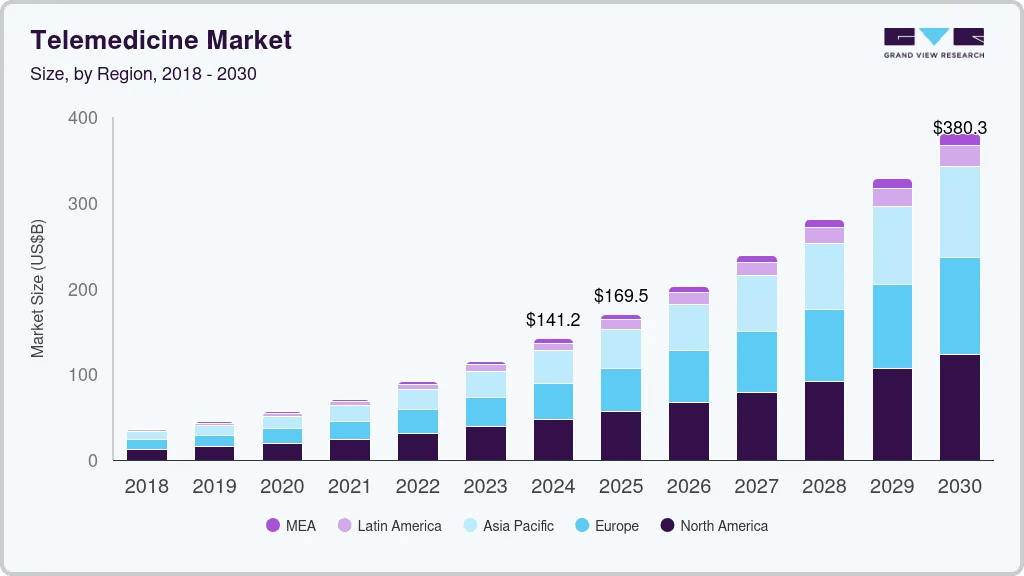
According to Grand View Research, the global telemedicine market was valued at USD 141.19 billion in 2024 and is projected to reach USD 380.33 billion by 2030, growing at a CAGR of 17.55%. This growth creates massive opportunities for healthcare providers, but capitalizing on it requires understanding what you’re actually paying for when you invest in telehealth development.
The reality is that telehealth platform development costs depend on multiple factors, including feature complexity, compliance requirements, development team location, third-party integrations, and whether you are building an MVP or an enterprise-grade solution.
Many organizations turn to a healthcare software development company at this stage to evaluate these variables realistically and avoid budget overruns or quality compromises.
This guide provides a complete breakdown of telehealth platform development costs. You’ll learn exactly what drives pricing, how costs differ by platform complexity, what ongoing expenses to expect, and how to optimize your investment for maximum value.
How Much Does Telehealth Platform Development Cost? Quick Overview?
Telehealth platform development ranges from $40K-$80K for basic MVPs suited to startups and clinics, $80K-$150K for mid-range platforms for established organizations, to $150K-$400K+ for enterprise solutions for hospitals and networks.
Before diving into detailed breakdowns, here’s a quick overview of what you can expect to invest in telehealth platform development based on complexity level.
| Platform Type | Cost Range | Timeline | Best For |
|---|---|---|---|
| Basic Telehealth MVP | $40K-$80K | 3-4 months | Startups, single-specialty clinics |
| Mid-Range Platform | $80K-$150K | 5-8 months | Established orgs, multi-specialty practices |
| Enterprise Platform | $150K-$400K+ | 9-18 months | Hospitals, health networks, insurers |
These ranges assume development with an experienced healthcare development partner. Costs can vary significantly based on your specific requirements, geographic location of your development team, and compliance needs.
Key factors that influence where you fall within these ranges:
- Feature scope: Core video consultations vs. advanced AI-powered features
- Compliance requirements: HIPAA compliance adds 30-40% to base development costs
- Integration complexity: Connecting with EHR systems, payment gateways, and pharmacy networks
- Platform coverage: Web-only, mobile-only, or cross-platform development
- Development team location: North American rates vs. offshore development
Pro Tip: Don’t let sticker shock push you toward the lowest bidder. In healthcare development, cutting corners on security and compliance creates far more expensive problems later—regulatory fines, data breaches, and platform rebuilds cost significantly more than doing it right the first time.
Understanding the overall cost ranges is helpful, but the real insights come from examining what drives these costs. Let’s break down the factors that determine your telehealth platform investment.
What are the Key Factors That Affect Telehealth Platform Development Cost?
Multiple variables influence your final telehealth development budget. Understanding each factor helps you make informed decisions about where to invest and where to economize.
1. Feature complexity and scope
The features you include directly impact development hours and cost. Core features like video consultation, appointment scheduling, secure messaging, and payment processing form the foundation of any telehealth platform. Advanced capabilities such as EHR integration, AI symptom checkers, and remote patient monitoring add significant value but increase development time and budget.
Starting with essential features and expanding based on user demand is a practical approach. For organizations exploring comprehensive healthcare app development, Space-O Technologies recommends starting with core features and adding advanced capabilities based on validated user demand.
2. Platform type selection
Your choice between web, mobile, or both platforms significantly affects development cost. A web-only application offers the lowest base cost and easy updates. Cross-platform mobile development using React Native or Flutter adds 20-30% to costs while covering both iOS and Android users. Native apps for both platforms deliver the best performance but nearly double the investment and require ongoing dual maintenance.
For most telehealth startups, Space-O Technologies recommends cross-platform development using React Native or Flutter. This approach delivers near-native performance while covering both iOS and Android users with a single development effort.
3. Development team location
Geographic location dramatically affects your budget. US-based teams charge $120-$180 per hour, while Canadian developers range from $100-$150 hourly. Eastern European teams offer a strong quality-to-cost ratio at $50-$80 per hour. When selecting partners for healthcare projects, prioritize teams with HIPAA or PIPEDA expertise over those with the lowest hourly rates to ensure compliance knowledge.
When evaluating development partners, consider that healthcare projects require specialized compliance knowledge. A lower hourly rate doesn’t translate to savings if the team lacks HIPAA or PIPEDA expertise.
Organizations looking to hire app developers should prioritize healthcare experience alongside cost considerations.
4. Compliance requirements
Regulatory compliance is non-negotiable and adds substantial costs. HIPAA compliance for US markets increases base development costs by 30-40%, requiring encryption, access controls, audit logging, and security testing.
Canadian compliance under PIPEDA and provincial laws like PHIPA adds 10-15% to costs, with potential data residency requirements necessitating Canadian cloud hosting.
5. Third-party integrations
Modern telehealth platforms require multiple integrations that impact overall cost. Video APIs like Twilio or Agora, payment gateways, and insurance verification systems represent medium complexity integrations.
EHR and EMR system integrations with platforms like Epic or Cerner are highly complex and among the most expensive components, often ranging from $20,000 to $50,000 depending on implementation requirements.
Get Clear, Realistic Cost Estimates for Telehealth Platform Development
Understand how features, compliance requirements, integrations, and scalability choices directly impact your telehealth development budget.
Now that you understand what drives costs, let’s examine the detailed cost breakdown by each component of telehealth platform development.
A Detailed Telehealth Platform Development Cost Breakdown
Understanding how costs distribute across development phases helps you plan budgets and identify areas for optimization.
1. UI/UX design costs: $10,000 – $30,000
Design is critical in healthcare applications where users may be stressed, unwell, or unfamiliar with technology. Good design improves adoption and reduces support costs.
Design phase components:
- User Research & Analysis: $2,000 – $5,000 — Understanding patient and provider needs
- Wireframing: $2,000 – $6,000 — Creating low-fidelity layouts for all screens
- Prototyping: $2,000 – $5,000 — Building clickable prototypes for testing
- Visual Design: $3,000 – $10,000 — Final UI design with branding
- Design System Creation: $1,000 – $4,000 — Component library for consistency
Space-O Technologies emphasizes user-centered design in all healthcare app design projects, ensuring interfaces that patients and providers actually want to use.
2. Frontend development costs: $20,000 – $60,000
Frontend development creates the interfaces users interact with—patient apps, provider dashboards, and admin panels.
Cost Drivers:
- Number of unique screens and user flows
- Animation and interaction complexity
- Offline functionality requirements
- Accessibility compliance (WCAG standards)
- Real-time features (chat, notifications)
Platform-Specific Considerations:
- React Native/Flutter: $20,000 – $45,000 for cross-platform mobile
- Native iOS (Swift): $25,000 – $50,000 for iPhone/iPad
- Native Android (Kotlin): $20,000 – $45,000 for Android devices
- Web Application (React.js): $15,000 – $35,000 for browser-based access
3. Backend development costs: $25,000 – $80,000
Backend development creates the server infrastructure, databases, and APIs that power your telehealth platform.
Backend Components:
| Component | Cost Range | Cost Range |
|---|---|---|
| Server Architecture | $5K-$15K | Cloud setup, load balancing |
| Database Design | $4K-$12K | Schema, optimization, HIPAA config |
| API Development | $10K-$30K | RESTful APIs for mobile/web clients |
| Authentication System | $3K-$8K | Secure login, MFA, session mgmt |
| Business Logic | $8K-$20K | Scheduling algos, notifications, workflows |
For organizations requiring robust backend architecture, Space-O’s team of experienced backend developers brings deep expertise in healthcare-specific requirements.
4. Video integration costs: $15,000 – $45,000
Video consultation is the core of telehealth. This is where you cannot compromise on quality.
Video Development Components:
- Video API Integration (Twilio/Agora): $8,000 – $25,000
- Quality Optimization: $3,000 – $8,000 — Bandwidth adaptation, fallback to audio
- Recording & Storage: $2,000 – $6,000 — Session recording, secure storage
- Virtual Waiting Room: $2,000 – $5,000 — Pre-consultation experience
Video API Provider Comparison:
| Provider | Pricing Model | HIPAA BAA | Best For |
|---|---|---|---|
| Twilio | Per-minute | Yes | Reliable, well-documented |
| Agora | Per-minute | Yes | Low latency, global |
| Vonage | Per-minute | Yes | Enterprise features |
| Daily.co | Per-minute | Yes | Developer-friendly |
5. Security & compliance implementation: $15,000 – $40,000
Security is not optional in healthcare. This investment protects your patients and your organization.
Security Implementation Breakdown:
| Component | Cost Range |
|---|---|
| Data Encryption (transit/rest) | $4K-$10K |
| Access Controls & RBAC | $3K-$8K |
| Audit Logging | $3K-$7K |
| Multi-Factor Auth | $2K-$5K |
| Penetration Testing | $5K-$15K |
| Security Documentation | $2K-$5K |
6. Testing & QA Costs: $10,000 – $30,000
Testing costs for telehealth applications vary based on scope and complexity, with each testing type addressing a specific risk area. Functional testing typically costs between $4,000 and $10,000 and ensures all features operate as intended.
Security testing ranges from $3,000 to $8,000 and focuses on identifying vulnerabilities beyond standard penetration testing. Performance testing usually costs $2,000 to $6,000 and evaluates system stability, load handling, and video quality under peak usage.
Compatibility testing, priced between $1,000 and $3,000, verifies consistent performance across devices and browsers. User acceptance testing costs approximately $2,000 to $5,000 and validates the application with real users before launch.
Component costs give you the building blocks, but your total investment depends on which level of platform you’re building. Let’s explore the cost differences by platform complexity.
What is the Cost of a Telehealth Platform Based on Complexity Level?
The cost to develop a telehealth platform starts from $40,000. Different organizations need different levels of platform sophistication. Here’s what each level includes and costs.
1. Basic telehealth MVP: $40,000 – $80,000
An MVP includes essential features to deliver core value and validate your concept with real users. This tier covers user registration, provider search, appointment scheduling with calendar integration, HD video consultations, HIPAA-compliant messaging, basic payment processing, and push notifications. Development typically takes 3-4 months.
This option suits healthcare startups testing market fit, single-specialty clinics, and organizations with limited budgets seeking proof-of-concept before larger investments.
For detailed guidance on MVP development, Space-O’s comprehensive guide on telemedicine MVP development covers feature prioritization, compliance shortcuts, and scaling strategies.
Pro Tip: An MVP isn’t a “cheap” version of your platform—it’s a strategic approach to validating assumptions before major investment. Focus on perfecting the video consultation experience rather than adding peripheral features.
2. Mid-range telehealth platform: $80,000 – $150,000
A mid-range platform builds upon MVP features with integrations needed for established healthcare operations. This tier adds EHR/EMR integration using HL7/FHIR standards, e-prescribing with pharmacy network connections, insurance verification, advanced multi-provider scheduling, clinical documentation tools, patient intake forms, analytics dashboards, and multi-language support.
Development spans 5-8 months. This investment suits established healthcare organizations, multi-specialty practices, and regional health networks.
3. Enterprise telehealth platform: $150,000 – $400,000+
Enterprise platforms serve large healthcare systems with complex requirements and high user volumes. This comprehensive tier includes AI-powered symptom checkers, remote patient monitoring, multi-party video consultations, advanced insurance billing, population health analytics, custom reporting, white-label capabilities, enterprise security with SSO, and API access.
Development requires 9-18 months. Hospital systems, insurance providers, government healthcare programs, and multi-location organizations benefit most from this investment level. For enterprise healthcare solutions, Space-O Technologies brings extensive experience building scalable platforms that serve thousands of concurrent users while maintaining compliance and performance.
Turn Cost Estimates Into a Practical Telehealth Development Roadmap
Space-O helps healthcare organizations translate telehealth cost breakdowns into phased development plans with predictable investments.
The initial development cost is just the beginning. Understanding ongoing expenses helps you plan a realistic total budget for your telehealth platform.
What are the Hidden and Ongoing Costs of Telehealth Platform Development?
Many organizations focus solely on development costs and are surprised by ongoing expenses. Planning for the total cost of ownership (TCO) ensures long-term sustainability.
1. Cloud hosting and infrastructure: $500 – $5,000/month
Your telehealth platform needs reliable, HIPAA-compliant cloud hosting.
Monthly Hosting Costs by Scale:
| User Base | Monthly Hosting Cost | Recommended Provider |
|---|---|---|
| Startup (<1K users) | $500-$1,000 | AWS, Google Cloud |
| Growth (1K-10K users) | $1,000-$2,500 | AWS, Azure |
| Scale (10K+ users) | $2,500-$5,000+ | AWS, Azure w/ enterprise |
The hosting and infrastructure package includes HIPAA-compliant servers, secure database hosting, and encrypted file storage for medical documents and consultation recordings.
It also covers CDN support for reliable global content delivery, automated backup and disaster recovery mechanisms, and SSL certificates to ensure secure data transmission across the platform.
2. Video API usage costs: $0.004 – $0.01/minute
Video APIs charge based on usage, which scales with your consultation volume.
Example Monthly Video Costs:
| Monthly Consultations | Avg. Duration | Estimated Video Cost |
|---|---|---|
| 500 | 15 minutes | $38-$75 |
| 2,000 | 15 minutes | $150-$300 |
| 10,000 | 15 minutes | $750-$1,500 |
| 50,000 | 15 minutes | $3,750-$7,500 |
3. Maintenance and updates: 15-20% of initial cost annually
Software requires ongoing maintenance to remain secure, functional, and competitive.
Annual maintenance covers ongoing bug fixes and performance optimization to keep the platform stable and responsive. It also includes regular security patches, operating system and library updates, and required app store compliance updates for iOS and Android.
In addition, maintenance supports minor feature enhancements and provides continuous technical support to ensure reliable day-to-day operations.
Estimated Annual Maintenance:
| Initial Development Cost | Annual Maintenance (15-20%) |
|---|---|
| $60K (MVP) | $9K-$12K |
| $120K (Mid-Range) | $18K-$24K |
| $250K (Enterprise) | $37.5K-$50K |
4. Security Audits and Compliance: $5,000 – $15,000 Annually
Maintaining compliance requires ongoing investment. Annual compliance costs include penetration testing, which typically ranges from $5,000 to $15,000 and is conducted annually or biannually. Compliance audits usually cost between $3,000 and $8,000, while risk assessment updates add approximately $2,000 to $5,000 each year.
Organizations should also budget $1,000 to $3,000 annually for staff training and $1,000 to $2,000 for regular policy updates to maintain regulatory readiness.
5. Customer Support: $2,000 – $10,000/month
Supporting both patients and providers requires dedicated operational resources. Support costs typically include internal support team salaries or outsourced helpdesk services, along with expenses for customer support software such as Zendesk or Intercom. Additional costs come from creating training materials and documentation, as well as managing escalation workflows to resolve complex or critical issues efficiently.
With a clear understanding of costs, you can make informed decisions about how to optimize your telehealth development investment.
How to Reduce Telehealth Platform Development Costs
Strategic decisions during planning and development can significantly reduce costs without compromising quality.
1. Start with the MVP approach
Launching with a Minimum Viable Product saves 40-60% on initial investment while validating your concept with real users. This approach offers faster time-to-market within 3-4 months, lower initial costs between $40,000-$80,000, and earlier revenue generation. Real user feedback guides feature development, reducing the risk of building unwanted capabilities before scaling.
2. MVP to full platform roadmap
Begin by launching your MVP with core video consultation features, then gather user feedback and usage analytics. Prioritize Phase 2 features based on actual demand rather than assumptions. Scale your infrastructure as the user base grows and add advanced features incrementally. This systematic approach ensures sustainable growth while minimizing wasted development resources.
3. Choose cross-platform development
Cross-platform frameworks like React Native or Flutter reduce costs by 30-40% compared to building separate native apps. You maintain a single codebase for both iOS and Android, enabling faster development timelines and easier maintenance. These frameworks deliver near-native performance suitable for telehealth use cases while benefiting from large developer communities.
4. Use pre-built APIs and SDKs
Leveraging proven third-party services significantly reduces development time and risk. Recommended services include Twilio or Agora for video, Stripe for payments, Auth0 for authentication, and Mixpanel for analytics. Building custom video infrastructure costs $100,000+ and takes 6+ months, while using Twilio costs $15,000-$30,000 and takes 4-6 weeks.
5. Partner with experienced healthcare developers
Working with developers who understand healthcare saves money by avoiding compliance rework and eliminating the learning curve. Teams with healthcare domain knowledge deliver better architecture with proper security design from day one. Understanding clinical workflows reduces revision cycles, preventing costly retrofitting and ensuring your platform meets regulatory requirements efficiently.
When evaluating partners, our guide on how to choose a software development company provides a comprehensive evaluation framework.
6. Plan for scalability from day one
Proper architecture planning prevents expensive rewrites as your platform grows. Invest in a microservices architecture to scale components independently and adopt cloud-native design for automatic scaling. Database optimization handles growth without costly migration, while an API-first approach enables easier integrations later. These upfront investments deliver significant long-term savings.
Pro Tip: The cheapest option isn’t always the most economical. A $50,000 platform that requires $100,000 in fixes and rebuilds costs more than a $100,000 platform built correctly the first time. Invest in quality architecture and experienced partners.
Estimate Telehealth Platform Development Costs With Space-O
Work with Space-O to assess cost drivers, technical trade-offs, and delivery models for building a secure, scalable telehealth platform.
Having a clear roadmap and the right development partner significantly impacts both cost and success. Here’s how Space-O Technologies helps healthcare organizations build telehealth platforms efficiently.
Partner with Space-O Technologies to Build a Secure Telehealth Platform
Understanding the telehealth platform development cost is the first step toward making informed investment decisions. Whether you’re a startup launching an MVP or an enterprise building a comprehensive virtual care ecosystem, accurate cost planning enables strategic resource allocation and realistic timeline expectations.
Space-O Technologies delivers secure and scalable telehealth platforms with deep healthcare expertise. We embed HIPAA and PIPEDA compliance from day one and bring proven experience in building video consultation apps, patient portals, and provider management systems.
With a dedicated team model, agile development approach, and strong understanding of Canadian healthcare regulations, we ensure predictable delivery, continuous feedback, and reliable post-launch support.
Ready to get an accurate cost estimate for your telehealth platform? Schedule a free consultation with our healthcare development experts. We’ll discuss your specific requirements, target market, compliance needs, and budget constraints.
Frequently Asked Questions About Telehealth Platform Development Cost
How much does a basic telehealth app cost to develop?
A basic telehealth app with core features (video consultations, scheduling, messaging, payments) costs $40,000-$80,000 with an experienced development partner. This includes HIPAA-compliant architecture, security implementation, and testing. The timeline is typically 3-4 months from project kickoff to launch.
What’s the difference between telehealth MVP and full platform costs?
An MVP costs $40,000-$80,000 and includes only essential features needed to deliver video consultations and validate your concept. A full platform costs $150,000-$400,000+ and includes advanced features like EHR integration, e-prescribing, AI capabilities, and enterprise-grade infrastructure. The MVP approach lets you validate market fit before committing to full platform investment.
What ongoing costs should I budget for after launch?
Annual ongoing costs typically include: cloud hosting ($6,000-$60,000), video API usage ($1,000-$50,000 based on volume), maintenance and updates (15-20% of initial development cost), security audits ($5,000-$15,000), and customer support ($24,000-$120,000). Total ongoing costs usually range from 25-40% of initial development cost annually.
How long does telehealth platform development take?
Timeline depends on complexity: MVP takes 3-4 months, mid-range platforms take 5-8 months, and enterprise platforms take 9-18 months. These timelines include discovery, design, development, compliance implementation, testing, and launch. Rushing development typically leads to security vulnerabilities and compliance issues that cost more to fix later.
Is it cheaper to build or buy a telehealth platform?
Building custom costs more upfront ($40,000-$400,000) but provides complete control, customization, and no recurring licensing fees. Off-the-shelf platforms cost less initially but charge ongoing subscription fees ($500-$5,000/month) and limit customization. For organizations with specific workflows or differentiation needs, custom development typically provides better long-term value.
What’s the ROI of telehealth platform development?
ROI varies by use case, but telehealth typically delivers value through: increased patient volume (providers can see 20-30% more patients virtually), reduced no-show rates (virtual appointments have 50% lower no-show rates), expanded geographic reach, improved patient satisfaction, and reduced overhead costs. Most organizations achieve positive ROI within 12-24 months of launch.


Estimate Telehealth Platform Development Costs With Space-O
What to read next

 All our projects are secured by NDA
100% Secure. Zero Spam
*All your data will remain strictly confidential.
Trusted by


Bashar Anabtawi 
Canada
“I was mostly happy with the high level of experience and professionalism of the various teams that worked on my project. Not only they clearly understood my exact technical requirements but even suggested better ways in doing them. The Communication tools that were used were excellent and easy. And finally and most importantly, the interaction, follow up and support from the top management was great. Space-O not delivered a high quality product but exceeded my expectations! I would definitely hire them again for future jobs!”

Canada Office
2 County Court Blvd., Suite 400,
Brampton, Ontario L6W 3W8
Phone: +1 (602) 737-0187
Email: sales@spaceo.ca