


Telemedicine MVP Development: Features, Cost, and Step-by-Step Guide for Healthcare Startups
You have a telemedicine idea that could transform how patients access care. But here’s the challenge: building a full-scale telehealth platform requires significant time, budget, and technical commitment. Most healthcare startups struggle to justify such a heavy investment before validating whether their concept truly resonates with real users.
That’s where a telemedicine MVP changes the equation.
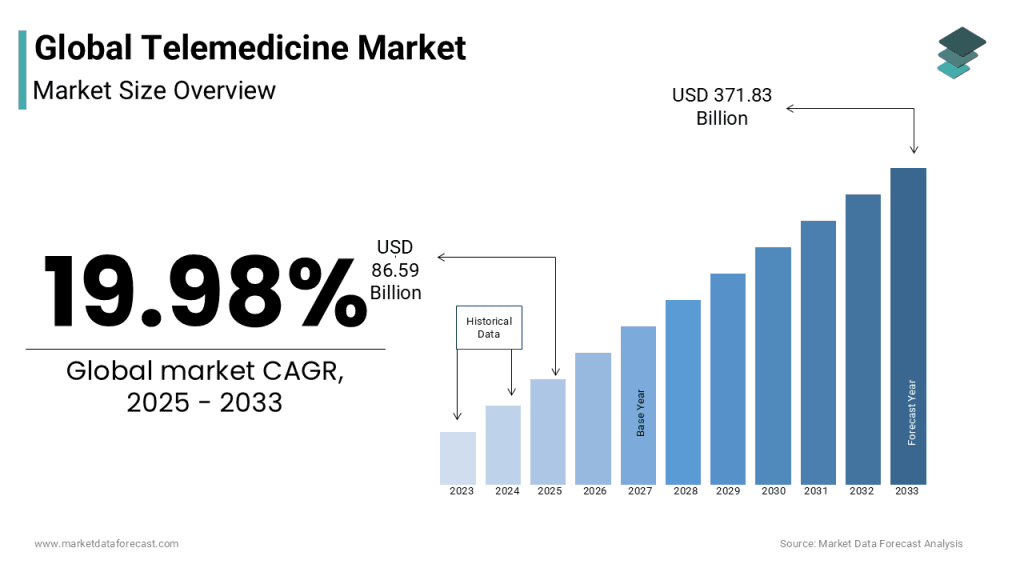
According to Market Data Forecast, the global telemedicine market reached USD 72.17 billion in 2024 and is projected to grow to USD 371.83 billion by 2033 at a CAGR of 19.98%. This growth creates massive opportunities for healthcare entrepreneurs, but only for those who can move fast and validate smart.
A telemedicine MVP lets you launch with core features, test your assumptions with real patients and providers, gather feedback, and iterate before committing to a full platform build. It’s the difference between spending a year building something nobody wants versus spending a few months proving your concept works.
As a telemedicine app development company, Space-O helps you:
- Define the right MVP feature set for patients, providers, and admins
- Build HIPAA-compliant and Canada-ready telehealth solutions
- Follow a proven, step-by-step MVP development process
- Scale seamlessly from MVP to an enterprise-grade telemedicine platform
This guide draws from our hands-on experience building secure, scalable healthcare applications. It covers everything you need to know to move from idea validation to a production-ready telemedicine platform—with speed, compliance, and long-term growth in mind.
What is a Telemedicine MVP and Why Does It Matter?
A telemedicine MVP (Minimum Viable Product) is a functional healthcare application built with only the essential features needed to deliver core value to patients and providers. It’s not a demo or a prototype. It’s a working product that real users can use to conduct actual video consultations, schedule appointments, and communicate securely.
The MVP approach comes from lean startup methodology. Instead of spending months building every feature you imagine users might want, you launch quickly with core functionality. Real users interact with your product. You collect data on what works and what doesn’t. Then you iterate based on evidence rather than assumptions.
For telemedicine, this typically means launching with video consultations, basic scheduling, secure messaging, and payment processing. Features like AI symptom checkers, EHR integration, and e-prescribing come later, after you’ve validated that users actually want your core service.
Why telemedicine healthcare startups should start with an mvp
- Market validation before major investment. The healthcare technology space is littered with products that solved problems nobody actually had. An MVP lets you test whether patients will actually use your platform, whether providers find it valuable, and whether your business model works before you’ve spent hundreds of thousands of dollars.
- Faster time-to-market. The telemedicine market is competitive and growing rapidly. A startup that launches in 4 months and iterates based on feedback will outpace one that spends 18 months building the “perfect” platform. First-mover advantage matters, especially in geographic or specialty niches.
- Investor confidence through traction. Investors increasingly want to see real users and real revenue before writing cheques. An MVP with 500 active users and growing is far more compelling than a pitch deck describing what you plan to build. Traction proves execution ability.
Pro Tip: Focus your MVP on solving one core problem exceptionally well. For telemedicine, this typically means perfecting the video consultation experience before adding peripheral features. A flawless 15-minute video consultation beats a buggy platform with 50 features.
With the MVP concept clear, let’s examine the essential features that should make it into your telemedicine MVP and which ones to save for later.
What are the Essential Features for Your Telemedicine MVP?
Feature prioritization separates successful MVPs from failed ones. Include too few features and users can’t accomplish basic tasks. Include too many and you’ll blow your budget and timeline while diluting focus. The goal is identifying the minimum feature set that delivers genuine value.
Core patient-side features
These features enable patients to find providers, book appointments, and receive care. Without any of these, your MVP can’t function as a viable telehealth solution.
1. User registration and authentication
Secure signup with email and phone verification forms the foundation of any telemedicine platform. This feature includes password management and optional multi-factor authentication for enhanced security. Patients need dedicated accounts to book consultations and access their medical history. Strong authentication also ensures compliance with healthcare data protection requirements.
2. Provider search and selection
Patients must easily browse available healthcare providers and filter results by specialty, location, and availability. This feature includes detailed provider profiles with credentials and patient reviews. Finding the right provider quickly improves patient satisfaction and consultation outcomes. A well-designed search system reduces appointment abandonment rates significantly.
3. Appointment scheduling
This feature allows patients to view real-time provider availability and select convenient time slots. The system sends automatic confirmation emails and reminder notifications before scheduled consultations. The booking workflow directly connects patients to care and represents your app’s core functionality. Seamless scheduling reduces administrative overhead and improves the patient experience.
Core provider-side features
Providers represent your supply side in the telemedicine marketplace. If the provider experience proves frustrating, healthcare professionals won’t use your platform, leaving you with no consultations to offer patients.
1. Provider dashboard
A centralized overview displays upcoming appointments, patient queues, and daily schedules at a glance. Providers can quickly assess their workload and prepare for consultations.Healthcare professionals need a command centre for managing their virtual practice efficiently. An intuitive dashboard reduces administrative burden and improves provider satisfaction.
2. Patient information access
Providers can view patient profiles, intake forms, and previous consultation notes before each appointment. This feature ensures healthcare professionals have complete context for informed care decisions. Access to patient history improves consultation quality and reduces redundant questioning. Comprehensive information access supports better clinical outcomes.
3. Video consultation interface
Providers join calls easily through a streamlined interface with screen sharing and basic annotation tools. The interface includes virtual waiting room management and call quality indicators. A smooth consultation experience is non-negotiable for provider adoption. Technical reliability during video calls directly impacts care quality and provider retention.
Admin features for MVP
You need basic administrative capabilities to operate and monitor your telemedicine platform effectively. These features enable platform management without requiring extensive technical expertise.
1. User management
Create, edit, and deactivate patient and provider accounts through a centralized admin panel. This feature includes role assignment and permission management for staff members. Efficient user management maintains platform security and supports smooth operations. Administrative controls help resolve account issues quickly and maintain data integrity.
2. Basic compliance dashboard
View consent records, access audit logs, and monitor data access patterns through compliance reporting tools. This feature supports HIPAA audit requirements and regulatory inspections. Healthcare platforms must demonstrate compliance with privacy regulations continuously. A compliance dashboard simplifies regulatory reporting and identifies potential security issues.
3. Content management
Update FAQs, terms of service, and privacy policy documents without requiring developer assistance. This feature includes version control and scheduled publishing options. Dynamic content management ensures patients and providers always access current information. Self-service content updates reduce operational costs and improve response times.
For comprehensive guidance on healthcare app development, including feature planning for various healthcare verticals, Space-O’s guide covers the full spectrum.
Launch a Telemedicine MVP That Validates Your Idea Quickly
Build a focused telemedicine MVP that delivers core features, supports real patient-provider interactions, and helps you validate demand before scaling.
Features are important, but compliance is non-negotiable. Here’s what you need to know about HIPAA and Canadian regulations for your telemedicine MVP.
What are the Compliance Requirements for Telemedicine MVP?
Compliance isn’t optional in healthcare. Building a telemedicine MVP without proper security and privacy controls exposes you to regulatory penalties, lawsuits, and reputational damage that can destroy your startup before it gains traction. The good news: compliance can be built in from day one without excessive cost if you plan properly.
1. HIPAA compliance essentials for US market
If your telemedicine MVP serves patients in the United States or handles Protected Health Information (PHI) of US residents, HIPAA compliance is mandatory. HIPAA consists of several rules that work together.
- Privacy Rule: Establishes standards for how PHI can be used and disclosed. Patients have rights to access their records, request corrections, and know how their information is used. Your MVP must support these rights through appropriate user interfaces and backend processes.
- Security Rule: Mandates administrative, physical, and technical safeguards to protect electronic PHI (ePHI). This is where most of the technical implementation work happens.
Key Technical Safeguards for Your MVP:
- Encryption in Transit: All data transmission must use TLS 1.2 or higher. This includes API calls, video streams, and messaging.
- Encryption at Rest: Stored data must be encrypted using AES-256 or equivalent. This applies to databases, file storage, and backups.
- Access Controls: Implement role-based access control (RBAC). Patients see only their data. Providers see only their patients’ data. Admins have appropriate elevated access with audit trails.
Business Associate Agreements (BAAs): Any third-party vendor that handles PHI on your behalf must sign a BAA. This includes:
- Cloud hosting providers (AWS, Azure, Google Cloud)
- Video API providers (Twilio, Agora, Vonage)
- Payment processors
- Email/SMS notification services
- Analytics tools that might access PHI
Quick Tip: Choose vendors that already offer HIPAA-compliant configurations and BAAs. Twilio, AWS, and Stripe all provide BAAs. Using HIPAA-ready vendors dramatically simplifies your compliance journey.
2. Canadian regulations (PIPEDA/PHIPA)
Canadian healthcare data privacy operates under federal and provincial frameworks. Understanding both is essential for serving Canadian patients.
PIPEDA (Personal Information Protection and Electronic Documents Act): The federal privacy law governing private-sector organizations. PIPEDA’s 10 Fair Information Principles require:
- Accountability: Designate a privacy officer responsible for compliance
- Identifying Purposes: Clearly state why you’re collecting information before or at collection time
- Consent: Obtain meaningful consent for collection, use, and disclosure
- Limiting Collection: Collect only information necessary for stated purposes
- Limiting Use, Disclosure, Retention: Use data only for stated purposes, retain only as long as necessary
- Accuracy: Keep personal information accurate and up-to-date
- Safeguards: Protect information with appropriate security measures
- Openness: Make privacy policies readily available and understandable
- Individual Access: Allow individuals to access and correct their information
- Challenging Compliance: Provide mechanisms for individuals to challenge your compliance
Provincial Health Privacy Laws: Several provinces have specific health information legislation that may apply:
- Ontario: Personal Health Information Protection Act (PHIPA) governs health information custodians
- Alberta: Health Information Act (HIA)
- British Columbia: Personal Information Protection Act (PIPA)
Virtual Care Licensing: Physicians providing telemedicine must typically be licensed in the province where the patient is located. Each province has different requirements for out-of-province practitioners. This affects your provider onboarding and verification processes.
Data Residency: Some Canadian healthcare organizations require that patient data remain within Canada. If serving Canadian patients, consider Canadian cloud regions (AWS Canada, Azure Canada) for data storage.
3. Compliance cost considerations
Building compliance into your MVP from the start is far more cost-effective than retrofitting it later. Budget for these compliance-related costs:
| Component | Cost Range | Notes |
|---|---|---|
| HIPAA-compliant architecture | $10,000-$25,000 | Built into development, not separate |
| Security & pen testing | $5,000-$15,000 | Essential before launch |
| Compliance docs & policies | $3,000-$8,000 | Privacy policy, BAA templates, procedures |
| Risk assessment | $5,000-$10,000 | Required under HIPAA Security Rule |
| Annual compliance maintenance | $4,000-$12,000 | Ongoing monitoring, updates, audits |
Overall, HIPAA compliance adds approximately 30-40% to base development costs. This is a necessary investment, not an optional expense.
For detailed cost breakdowns across different telemedicine platform types, see our guide on telemedicine app development cost.
Pro Tip: Start with a compliant architecture from day one. Retrofitting HIPAA compliance into an existing system costs 2-3x more than building it correctly from the start. Security and privacy should be foundational, not afterthoughts.
Now that you understand what to build and the compliance constraints, let’s walk through the step-by-step process to bring your telemedicine MVP from idea to launch.
A Step-by-Step Guide to Build a Telemedicine MVP
Building a telemedicine MVP follows a structured process. Each phase builds on the previous one. Skipping phases or rushing through them creates problems that compound later. Here’s how to approach each stage.
Phase 1: Discovery & Planning (2-4 Weeks)
This phase establishes the foundation for everything that follows, and investing time here prevents expensive pivots later. Start by defining a specific value proposition that identifies exactly who you serve and why they’ll choose you over competitors. Create detailed patient and provider personas to understand their pain points and technology preferences.
Conduct thorough market research to analyze competitors, identify gaps, and differentiate your offering. Define your MVP scope ruthlessly, cutting features that don’t support your primary use case. Complete a compliance assessment to determine HIPAA, PIPEDA, or other regulatory requirements based on your target markets. Finally, create a project roadmap with milestones, deliverables, and realistic timelines.
Phase 2: UI/UX Design (3-4 Weeks)
Great design directly impacts user adoption and satisfaction, especially for healthcare users who may be stressed or unfamiliar with technology. Begin by mapping user flows for registration, appointment booking, consultations, and post-visit processes to identify friction points. Create low-fidelity wireframes focusing on layout and information hierarchy before building clickable prototypes in tools like Figma.
Conduct user testing with 5-10 target users to catch usability problems before they become expensive to fix. Develop final visual designs that convey trust and professionalism through clean, calming aesthetics. Create a design system with reusable components to ensure consistency across screens and accelerate development.
Phase 3: MVP Development (8-12 Weeks)
With designs approved, development begins. Using agile software development methodology allows for iterative progress and regular feedback. Break work into 2-week sprints, prioritizing features that enable end-to-end user journeys early so you can demonstrate a complete consultation flow by sprint 3 or 4. Establish backend infrastructure including server architecture, database schema, and HIPAA-compliant cloud configuration with appropriate encryption and access controls.
Use cross-platform frameworks like React Native or Flutter to cover iOS, Android, and web efficiently. Integrate video APIs such as Twilio or Agora with quality optimization and fallback handling. Connect payment gateways that offer HIPAA BAAs and build remaining features sprint by sprint with continuous stakeholder communication.
For teams unfamiliar with healthcare development, understanding the complete software development life cycle helps set appropriate expectations for each phase.
Phase 4: Compliance & Security Implementation (3-4 Weeks)
While security should be built throughout development, this phase focuses on hardening, testing, and documentation. Review all code for vulnerabilities and implement protections against common attacks including SQL injection, XSS, and CSRF. Verify that all data in transit uses TLS 1.2+ and data at rest is encrypted with AES-256.
Audit role-based access controls to ensure patients cannot access other patients’ data and providers only see their own patients. Implement comprehensive audit logging for all PHI access with timestamps and user identification. Collect signed Business Associate Agreements from all vendors handling PHI and create required compliance documentation including privacy policies and incident response plans.
Phase 5: Testing & Launch (2-3 Weeks)
Thorough testing prevents failures and ensures a smooth launch experience for your users. Conduct functional testing across all supported devices and browsers, covering normal usage, edge cases, and error conditions. Perform security testing through penetration testing using both automated tools and manual professional review.
Execute performance testing to ensure video quality remains acceptable with multiple concurrent consultations. Complete user acceptance testing with real users following realistic scenarios to gather usability feedback. Launch a beta with 10-20 real users while monitoring closely for issues. Deploy to production with monitoring and alerting configured, submit to app stores allowing 1-2 weeks for review, and watch metrics closely during the critical post-launch period.
Quick Tip: Run a closed beta with 10-20 real users before public launch. Their feedback will reveal issues you never anticipated and validate your core assumptions. Pay beta users with gift cards or free consultations. Their insights are invaluable.
Reduce Time-to-Market With a Purpose-Built Telemedicine MVP
Create a lean telemedicine product that enables faster launches, early feedback collection, and informed product iterations.
Your MVP is built and launched. But launch is just the beginning. Here’s how to measure success and scale from MVP to full platform.
From MVP to Full Telemedicine Platform: Scaling Roadmap
Launching your MVP is a milestone, not the finish line. The real work begins as you gather data, learn from users, and evolve your product. Here’s how to approach the post-launch phase strategically.
1. Measuring MVP success: key metrics
Define success metrics before launch so you know what to track. These metrics validate whether your core assumptions are correct.
- Look for healthcare industry experience: Your partner needs live telemedicine applications in their portfolio, healthcare client references, clinical workflow knowledge, and proven HIPAA/PIPEDA compliance.
- Verify compliance certifications: Require BAA capability, SOC 2 or HITRUST certifications, documented PHI handling procedures, and successful healthcare audit history before partnering.
- Assess scalability and long-term partnership potential: Consider team depth for scaling, post-launch maintenance offerings, awareness of emerging telemedicine technologies, and developer retention for continuity.
- Demand transparent pricing and favorable contract terms: Request detailed line-item quotes, clear change management processes, full intellectual property ownership, and defined exit provisions.
2.Gathering and implementing user feedback
User feedback is your most valuable asset for product evolution. Create multiple channels to capture it.
- In-App Feedback: Simple thumbs up/down after consultations. Optional comment field for elaboration. Make it easy and unobtrusive.
- Post-Consultation Surveys: Send email surveys 24 hours after consultations. Ask about satisfaction, likelihood to recommend, and suggestions for improvement. Keep surveys short (3-5 questions maximum).
- Provider Feedback Sessions: Schedule monthly calls with active providers. Ask about pain points, feature requests, and patient feedback they’ve received. Providers have unique insights into what’s working and what isn’t.
- Analytics-Driven Insights: Study user behaviour data. Where do users drop off in the booking flow? Which features are used most and least? Where do users spend the most time?
- Support Ticket Analysis: Categorize support requests. High volumes of similar questions indicate UX problems or missing features. Support data reveals what documentation and interface improvements are needed.
3. Features to add post-MVP
Once you’ve validated core assumptions and have a stable user base, consider adding these features:
- EHR/EMR Integration: Connect with Epic, Cerner, Meditech, or other EHR systems using HL7 FHIR standards. This enables seamless health record access and is often required for enterprise and health system sales.
- E-Prescribing: Integrate with prescription networks to allow providers to send prescriptions directly to pharmacies. Requires additional regulatory compliance and partnership agreements.
- AI-Powered Symptom Checker: Implement intelligent triage to help patients describe symptoms and route them to appropriate providers. Requires careful design to avoid providing medical advice inappropriately.
- Remote Patient Monitoring: Connect with wearable devices and home monitoring equipment. Enable chronic disease management programs with continuous data collection.
- Insurance Verification and Billing: Verify patient insurance eligibility in real-time. Submit claims electronically. Handle EOBs and payment reconciliation.
- Multi-Language Support: Expand to serve non-English speaking populations. Implement proper localization (not just translation) for different markets.
For comprehensive guidance on scaling from MVP to full platform, our telemedicine software development guide covers advanced architecture and feature considerations.
4. Scaling architecture considerations
As your user base grows, your technical architecture must evolve.
- Horizontal Scaling: Design your backend to scale horizontally by adding more servers rather than upgrading existing ones. Use load balancers to distribute traffic.
- Database Optimization: Implement read replicas for database queries. Add caching layers (Redis) to reduce database load. Consider database sharding if data volume becomes massive.
- Video Infrastructure: Work with your video API provider to optimize for scale. Consider multiple regions for reduced latency. Implement quality adaptation based on network conditions.
- Microservices Migration: If your monolithic architecture becomes unwieldy, consider migrating to microservices for independent scaling and deployment of different system components.
Building in-house is an option, but many startups partner with experienced development teams. Here’s how to choose the right partner for your telemedicine MVP.
How to Choose a Telemedicine MVP Development Partner?
Building a telemedicine MVP platform requires specialized expertise in healthcare technology, compliance, and user experience. Few startups have this expertise in-house. Choosing the right development partner can mean the difference between successful launch and expensive failure.
1. Healthcare domain expertise matters most
General software developers often underestimate healthcare complexity. Look for partners who have built healthcare applications before and understand clinical workflows, patient privacy expectations, and regulatory requirements.
2. Compliance experience is non-negotiable
Ask specifically about their compliance implementation approach. Have they been through PIPEDA audits with previous clients? Do they understand the difference between “PIPEDA-compliant hosting” and “a PIPEDA-compliant application”?
3. A strong portfolio demonstrates capability
Review their previous telemedicine projects. Can they show you live applications they’ve built? What outcomes did those projects achieve? Speaking with references from healthcare clients provides valuable insight.
4. Technology stack alignment prevents rework
Ensure their preferred technologies match your needs. If you want a React Native mobile app, don’t hire a team of telemedicine app developers whose expertise iOS and Android. Misaligned technology choices lead to suboptimal solutions.
5. Communication practices determine success
Healthcare projects require close collaboration. How do they communicate? What project management tools do they use? What’s their approach to handling scope changes? Time zone alignment matters for real-time collaboration.
6. Post-launch support affects longevity
Your MVP needs ongoing maintenance, bug fixes, and feature additions. Understand their support model. Do they offer maintenance contracts? What’s their response time for critical issues
Most early-stage healthcare startups benefit from partnering for MVP development. Once the product is validated and funding secured, building an in-house team often makes sense for long-term development.
If you’re comparing multiple vendors, our analysis of healthcare app development companies provides evaluation criteria and market landscape insights.
Turn Your Telemedicine Concept Into a Testable, Market-Ready MVP
Space-O helps healthcare startups and providers develop MVPs that balance speed, compliance, and long-term product vision.
Space-O Technologies has helped healthcare startups across North America build compliant, scalable telemedicine MVPs. Here’s how we can help you launch faster.
Build Your Telemedicine MVP with Space-O Technologies
Building a telemedicine MVP is about validating your healthcare idea quickly and cost-effectively. By focusing on core features, ensuring compliance from day one, and following a structured development process, you can launch faster, learn from real users, and scale with confidence.
Space-O Technologies provides end-to-end telemedicine MVP development services, helping healthcare startups and enterprises validate ideas faster with secure, scalable solutions. Backed by years of software development experience and a strong healthcare technology portfolio, our team has delivered hundreds of software solutions and thousands of mobile applications across global markets.
We design and build lean, production-ready telemedicine MVPs with essential features, rapid iteration cycles, and built-in compliance with HIPAA and PIPEDA, ensuring your product is market-ready from day one—without unnecessary development overhead.
With hands-on experience in telemedicine platforms, a dedicated team model, and deep understanding of the Canadian healthcare landscape, Space-O Technologies uses agile development to build, validate, and scale telemedicine MVPs efficiently.
Ready to turn your telemedicine idea into a market-ready MVP? Schedule a free consultation with our healthcare development experts. We’ll discuss your project requirements, outline how Space-O can help you launch faster while maintaining the compliance and quality standards healthcare demands.
Frequently Asked Questions about Telemedicine MVP Development
How long does it take to build a telemedicine MVP?
A basic telemedicine MVP takes 3-4 months from project kickoff to launch. This includes discovery, design, development, compliance implementation, and testing. More comprehensive MVPs with additional features typically require 4-6 months. Timeline depends on feature scope, team size, and decision-making speed during the project.
What is the minimum budget needed for a telemedicine MVP?
A basic telemedicine MVP with core features (video consultations, scheduling, messaging, payments) starts at $40,000-$60,000. With full HIPAA compliance implementation, security testing, and a polished user experience, expect $60,000-$80,000. Enterprise-oriented MVPs with additional features can reach $80,000-$120,000.
What’s the difference between a telemedicine MVP and a prototype?
A prototype demonstrates the concept visually through clickable mockups but isn’t fully functional. Users can’t conduct real consultations or make real payments. An MVP is a working product with core features that real patients and providers can use. MVPs generate actual revenue and provide market validation that prototypes cannot.
What video API is best for telemedicine MVP development?
Twilio and Agora are the most popular choices for telemedicine MVPs. Both offer HIPAA-compliant video APIs with Business Associate Agreements available, reliable global infrastructure, and reasonable pricing for startups. Daily.co and Vonage (formerly TokBox) are solid alternatives. Selection depends on specific requirements around latency, recording, and pricing structure.
How do I validate my telemedicine MVP idea before building?
Start with user research: interview 15-20 potential patients and providers about their current telemedicine experiences and pain points. Analyze competitors to identify gaps. Create a landing page describing your solution and measure interest through signups. Build a clickable prototype for user testing before committing to full development. These validation steps cost a fraction of MVP development and dramatically reduce risk.

 All our projects are secured by NDA
100% Secure. Zero Spam
*All your data will remain strictly confidential.
Trusted by


Bashar Anabtawi 
Canada
“I was mostly happy with the high level of experience and professionalism of the various teams that worked on my project. Not only they clearly understood my exact technical requirements but even suggested better ways in doing them. The Communication tools that were used were excellent and easy. And finally and most importantly, the interaction, follow up and support from the top management was great. Space-O not delivered a high quality product but exceeded my expectations! I would definitely hire them again for future jobs!”

Canada Office
2 County Court Blvd., Suite 400,
Brampton, Ontario L6W 3W8
Phone: +1 (602) 737-0187
Email: sales@spaceo.ca