
Home > Case-study > Stock Trading App Development
Stock Trading App Development
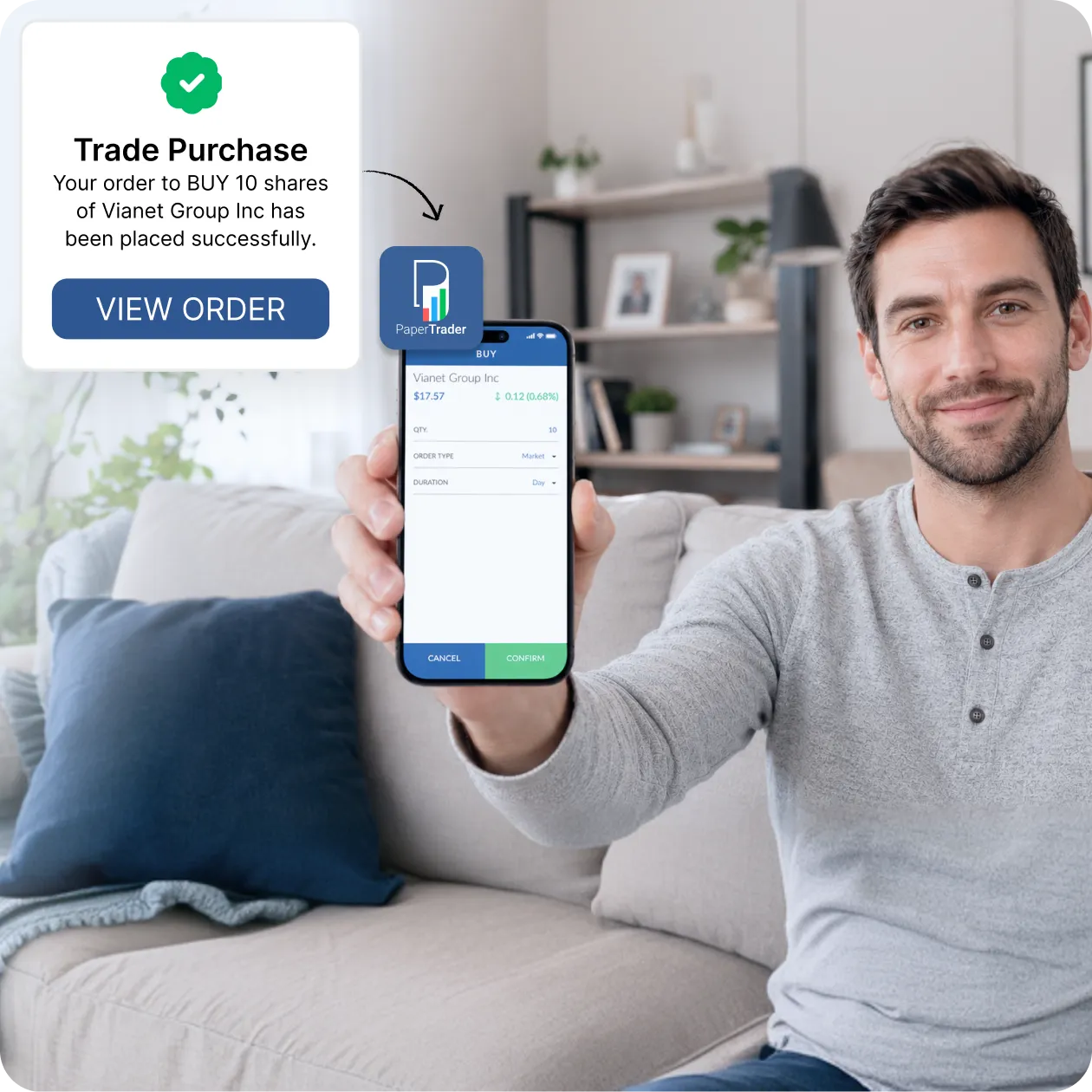
Paper Trader is a virtual stock trading app designed and developed by Space-O Canada that lets people practice trading real stocks in real time with virtual money, so there is zero risk of losing actual cash. Users search stocks, buy and sell, track profit and loss, follow professional analysts, and learn the market with confidence.
Built for iOS and Android, Paper Trader works as a complete stock trading app, virtual stock trading app, paper trading app, trading simulator app, stock simulator app, stock market app, investment app, and trading practice app, combining real-time stock prices, portfolio analysis, and a watch list in one place.
About Paper Trader
Learning to trade usually means risking real money, which keeps would-be investors on the sidelines. Our client wanted a realistic stock trading app where people trade real stocks at real prices with virtual money, so the only thing at stake is experience.
Paper Trader pulls active market data, lets users follow investors and professional analysts, and turns practice into a low-pressure way to learn. The client partnered with Space-O Canada to design, develop, and QA the virtual stock trading app for iOS and Android.
How We Built the Stock
Trading App
This stock trading app development project covered UX/UI design, native iOS and Android builds, and QA. Our app development team built Paper Trader around six core modules, each with a clear requirement and the solution we shipped.
Real-Time Stock Search & Listing
1
Requirement
Users needed to find any stock quickly and see accurate, up-to-date prices.
Solution
We built a fast stock search and listing module backed by a live market data feed, so users look up real stocks, view real-time stock prices, and open any ticker to start a virtual trade.
Virtual Buy & Sell Trading
2
Requirement
A paper trading app must place real-feeling trades without risking actual money.
Solution
We built a buy and sell flow that executes trades at real-time prices using virtual money, so users build positions exactly as they would in a live stock trading app, with zero financial risk.
Profit & Loss Analysis
3
Requirement
Practice only helps if users can see how their decisions played out across holdings.
Solution
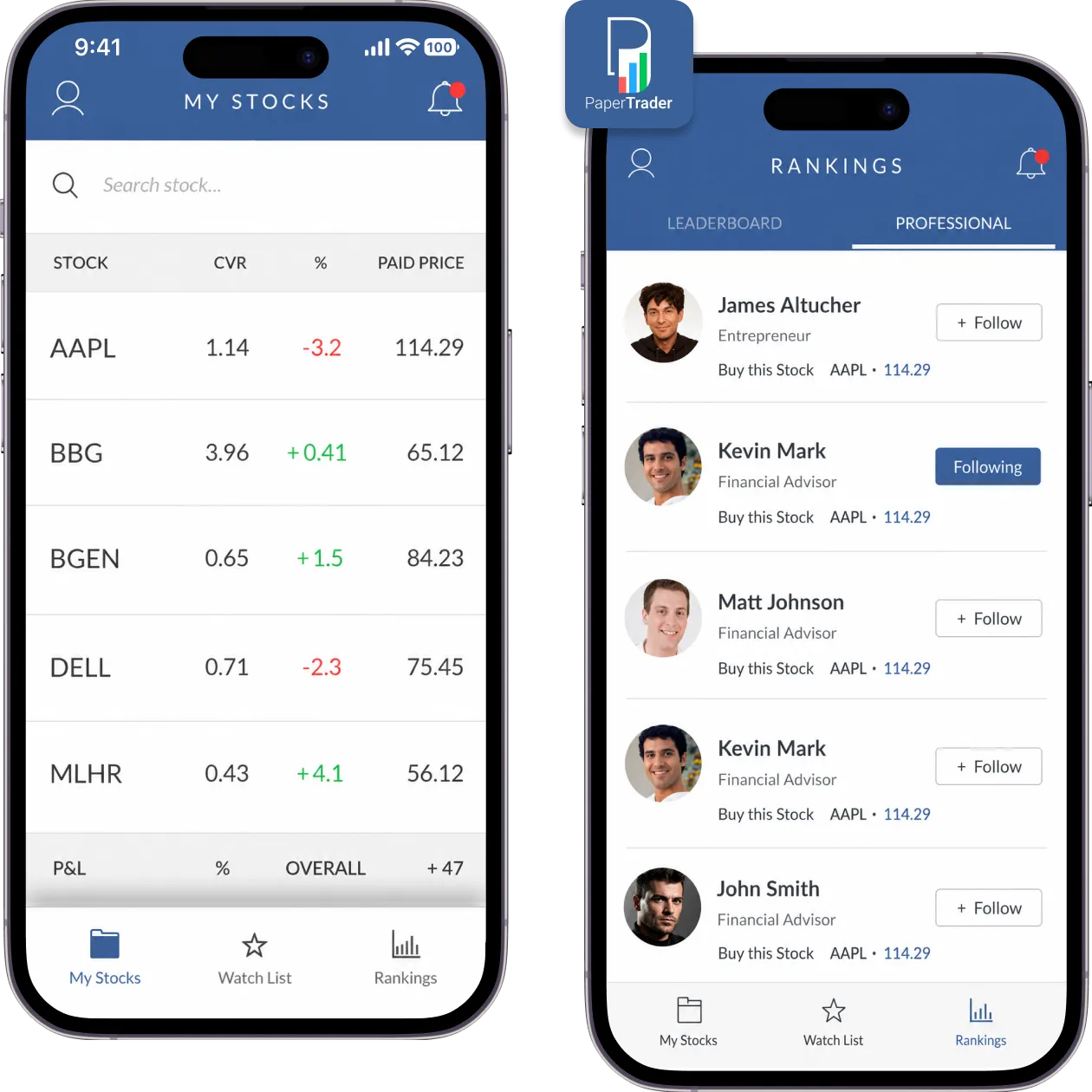
We added a profit and loss module that shows gains or losses per stock as a percentage and ranking across all positions, giving users portfolio analysis that turns Paper Trader into a real stock portfolio app.
Watch List
4
Requirement
Users wanted to track stocks they were interested in before committing a trade.
Solution
We built a stock watchlist app feature where users add any stock to their watch list for daily price updates and analysis.
Professional Advice & Following
5
Requirement
Beginners learn faster with guidance, so the client wanted a social layer around expert insight.
Solution
We let users follow professional analysts and other investors and receive their insights and market commentary as notifications, adding context and confidence.
Market Data Integration & Accounts
6
Requirement
A simulator is only credible if its prices are accurate and the experience is personalized.
Solution
We integrated an active stock market data source for live quotes and built user accounts that store each trader’s virtual balance, positions, watch list, and history across devices.
Key Features of Paper Trader
Real-Time Stock Search
Search and list real stocks with live data, the foundation of this real-time stock trading app.
Virtual Buy & Sell
Buy and sell stocks at real prices using virtual money, with no financial risk.
Profit & Loss Status
See profit and loss per stock by percentage and ranking across all your holdings.
Watch List
Track stocks you are interested in for daily updates, like a built-in stock watchlist app.
Professional Advice & Follow Investors
Follow professional analysts and get market insights and commentary as notifications, and follow other investors to learn from their moves in this social investment app.
Portfolio Analysis & Risk-Free Practice
Review your virtual portfolio and trade history to refine your strategy over time, and learn the market as a trading practice app and trading simulator app without losing real cash.
Who Uses This Stock Trading App
A virtual stock trading app suits anyone learning or testing the market, and the concept adapts to many fintech products, including:
Beginner Investors
Trading Students
Experienced Traders
Finance Educators
Investment Clubs
Hobbyist Traders
FinTech Startups
Market Learners
Technology Stack
iOS App
 Swift
Swift Objective-C
Android App
 Java
JavaBackend
 Node.js
Database
 MySQL
MySQLMarket Data & Charts
Push, Cloud & Analytics
 FCM / APNs
 AWS
AWS Firebase
Our Role in the Project
Space-O Canada served as the end-to-end design, development, and QA partner for Paper Trader, from UX through native iOS and Android delivery and App Store / Play Store launch.
FAQs About Stock Trading App Development
Most teams ask the same questions before they commit to a custom build. These are the ones we hear most often when planning stock trading app development.
What features are required to build a stock market trading app?
A custom stock trading app needs secure onboarding with KYC verification, a real-time market data feed, watchlists, interactive charts, an order placement and execution engine, and portfolio tracking. For a virtual or paper trading product you also need a simulation engine that mirrors live prices with fictional capital, leaderboards, and practice resets. Push notifications, price alerts, and a funding or wallet module round out the core set.
How much does it cost to develop a custom stock trading app from scratch?
A basic equity app with watchlists, charts, onboarding, and order placement typically runs $60,000 to $90,000. A full platform with live market data, algorithmic trading, and SEC/FINRA compliance usually lands in the $80,000 to $300,000 range, and a Robinhood-style product can reach $500,000 or more. A paper trading version is cheaper since it avoids real fund custody and broker-dealer overhead.
How long does it take to build a stock trading app?
A paper trading MVP with simulated orders and live data can be built in roughly 4 to 6 months. A fully regulated broker-dealer platform with KYC, AML, real-time data, and SEC/FINRA compliance generally takes 10 to 12 months. Timelines depend on the number of asset types, third-party integrations, and the depth of charting and analytics.
How do you build a stock market trading app, step by step?
The process starts with market and competitor research, then requirement gathering and compliance scoping. Next comes UX/UI design, backend architecture, and integration of a market data API and a brokerage or simulation engine, followed by building the trading, portfolio, and alert modules. The final phases are security hardening, QA, beta testing, and a phased launch with monitoring.
Why should you hire Space-O Canada to build a stock trading app?
Space-O Canada brings fintech experience, secure architecture practices, and familiarity with brokerage and market data integrations like Alpaca and DriveWealth. The team can scope a paper trading MVP or a fully regulated platform, advise on KYC/AML flows, and deliver native iOS and Android plus a web app. You get a single accountable partner from discovery through launch and support.
How does a stock trading app work and how does it make money?
The app pulls live or delayed prices from a market data API, displays them through charts and watchlists, and routes buy/sell orders to a connected broker-dealer or, for paper trading, a simulation engine. Revenue commonly comes from subscription tiers, premium data and analytics, payment for order flow, interest on idle balances, and commissions or spreads. Paper trading apps often monetize through subscriptions, ads, and upgrade funnels to a live brokerage.
Who needs a custom stock trading app, and why build custom instead of off-the-shelf?
Fintech startups, brokerages, and investor education platforms benefit most, since custom software lets them own the data, branding, compliance posture, and feature roadmap. Off-the-shelf white-label products limit differentiation and lock you into vendor fees and rules. A custom build is worth it when you need a unique trading experience, proprietary analytics, or tight control over the user funnel.
What real-time market data APIs can power a trading or paper trading app?
Common choices include Alpaca, which offers free real-time paper trading data and live equities, options, and crypto feeds, plus providers like Polygon, IEX Cloud, and Finnhub. Alpaca’s paper trading sandbox simulates the market in real time with virtual money, which is ideal for testing strategies and app logic. Selection depends on coverage, latency needs, exchange licensing, and cost per data tier.
What compliance and licensing does a real-money trading app require in the US?
A platform that connects retail users to securities markets must register with the SEC and FINRA or partner with a registered broker-dealer that handles execution. Becoming a broker-dealer yourself means FINRA membership, net capital of $250,000 or more, and ongoing compliance costs that can exceed $1M a year, so many startups integrate brokerage-as-a-service providers instead. You must also implement KYC under FINRA Rule 4512 and AML monitoring for suspicious activity.
What tech stack is best for building a stock trading app?
Native Swift for iOS and Kotlin for Android give the best performance for charts and live updates, while Flutter or React Native suit cross-platform MVPs. Backends often use Node.js, Go, or Java with WebSockets for streaming quotes, plus PostgreSQL or a time-series database for market data. Cloud hosting on AWS or GCP with strong encryption and secure key management supports scalability and compliance.
Other FinTech Solutions by Space-O Canada
See other fintech and custom platform projects built by Space-O Technologies for clients across North America.
-
AI-Powered Receipt Scanner App
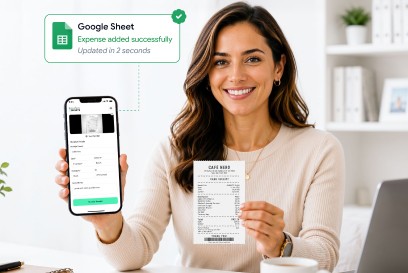
Space-O Canada developed Receipt2Sheets, an AI-powered receipt scanner app with OCR data extraction, Google Sheets integration, and expense tracking.
-
AI Document Processing Solution Development
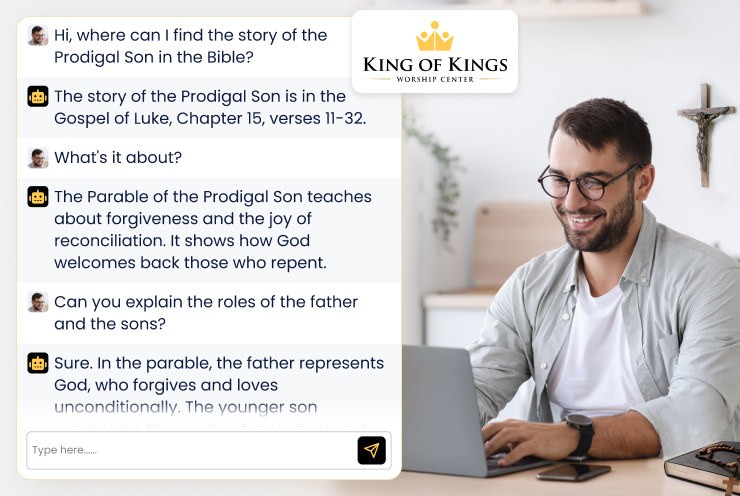
King of Kings is an AI-based document processing solution developed by Space-O Technologies using React.js, Node.js, PostgreSQL, OpenAI, and Pinecone.
-
Expense Tracker App Development
Want to develop an expense tracker app to track and manage expenses? We have developed an expense tracker app that helps users to manage daily expenses.
 All our projects are secured by NDA
100% Secure. Zero Spam
*All your data will remain strictly confidential.
Trusted by


Bashar Anabtawi 
Canada
“I was mostly happy with the high level of experience and professionalism of the various teams that worked on my project. Not only they clearly understood my exact technical requirements but even suggested better ways in doing them. The Communication tools that were used were excellent and easy. And finally and most importantly, the interaction, follow up and support from the top management was great. Space-O not delivered a high quality product but exceeded my expectations! I would definitely hire them again for future jobs!”

Canada Office
2 County Court Blvd., Suite 400,
Brampton, Ontario L6W 3W8
Phone: +1 (623) 335-2152
Email: sales@spaceo.ca