
- What Is EHR MVP Development and Why Does It Matter?
- The Real Pain Points Driving Healthcare Organizations to Build Custom EHR Solutions
- Why Should You Start with an MVP for Your Electronic Health Records Project?
- 1. Dramatically reduced financial exposure
- 2. Faster validation in a rapidly evolving healthcare technology market
- 3. Authentic clinical feedback before major investment in patient data management features
- 4. Healthcare investor and stakeholder confidence
- 5. Iterative compliance refinement for healthcare data security
- What are the Core Features Should Your EHR MVP Include?
- What Does the EHR MVP Development Process Look Like?
- Phase 1: Discovery, Requirements, and Clinical Workflow Analysis (2-4 weeks)
- Phase 2: Technical Architecture and UX Design (2-3 weeks)
- Phase 3: Agile Development Sprints (8-12 weeks)
- Phase 4: Testing, Security Validation, and Compliance Verification (2-4 weeks)
- Phase 5: Pilot Deployment and Clinical Validation (2-4 weeks)
- How Much Does EHR MVP Development Cost in 2026?
- What Mistakes Should You Avoid in EHR MVP Development?
- How Do You Transition from MVP to Full EHR Platform?
- Build Your EHR MVP with Space-O Technologies
- Frequently Asked Questions About EHR MVP Development
EHR MVP Development: How to Build Your Minimum Viable Product

 Last Updated: March, 31 2026
Do you have a vision for a healthcare software solution but feel overwhelmed by the complexity of building a full electronic health record system? You are not alone.
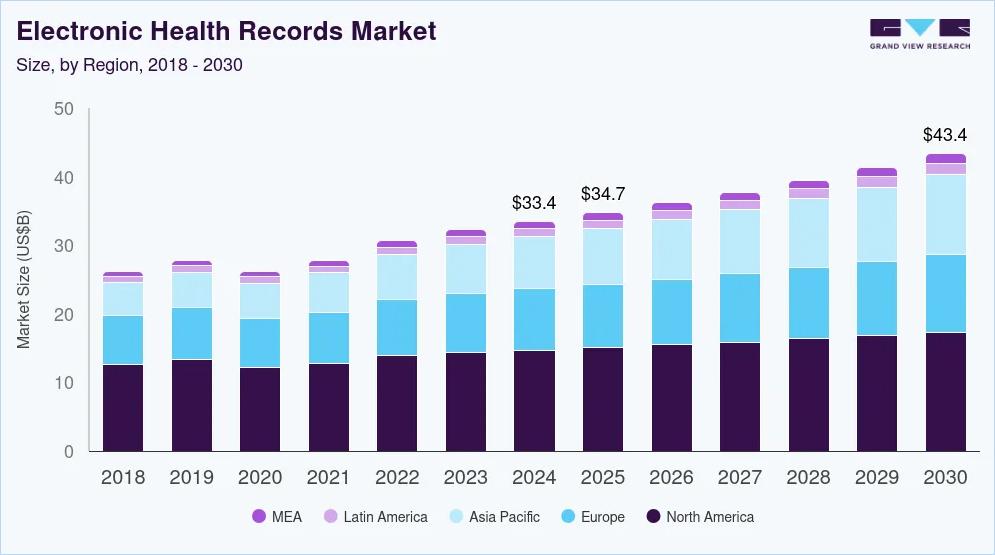
According to GrandViewResearch, with the global EHR market valued at USD $33.43 billion in 2024 and projected to reach $43.36 billion by 2030, the opportunity is substantial – but so are the risks of getting it wrong.
The reality is that 80-90% of healthcare startups faill, often because they try to build to much too soon [Forbes]. They spend 18 months and $500,000+ developing a feature-rich system, only to discover that clinicians do not want half the features they built.
Consider this scenario: A healthcare entrepreneur spends 18 months and $500,000+ developing a feature-rich medical practice management system with advanced population health analytics, comprehensive revenue cycle management, and a sophisticated patient engagement platform. They launch to discover that their target users—busy primary care physicians—only needed better clinical documentation tools and simpler appointment scheduling. The advanced features sit unused while the core workflows remain clunky.
This is where EHR MVP development changes the equation. In this comprehensive guide, you will learn:
- What EHR MVP development means and why it matters for healthcare startups
- The core features every EHR MVP must include (and which to defer)
- A step-by-step development process with realistic timelines
- Detailed cost breakdowns by complexity level
- Common mistakes that derail EHR MVP projects
- How to transition from MVP to a market-ready platform
Whether you are a healthcare entrepreneur launching a telehealth platform, a practice administrator modernizing outdated systems, or a digital health startup seeking investment, this guide provides the roadmap you need.
At Space-O Technologies, we have delivered 300+ healthcare software projects since 2010, helping organizations across North America transform clinical workflows with HIPAA-compliant solutions.
Our experience helping clients build an EHR system from the ground up informs the practical guidance throughout this article. Our experience building of developing custom EHR software soutions and healthcare platforms informs the practical guidance throughout this article.
What Is EHR MVP Development and Why Does It Matter?
EHR MVP development is the strategic process of building a foundational version of your electronic health records system that includes only the core clinical functionality needed to validate your healthcare software concept with real users.
Instead of spending 12-18 months building a comprehensive medical practice management platform with every feature imaginable, you launch with essential patient information management, clinical documentation capabilities, and health data security—typically within 3-6 months.
The MVP in software development originated in the technology startup ecosystem, but it has become particularly essential for health information technology development.
Why? Because healthcare software operates in an environment that is simultaneously complex, heavily regulated, and deeply unforgiving of poor clinical user experience.
A well-executed EHR MVP allows you to:
- Validate market demand for your specific healthcare IT solution before committing major development resources to patient data management features that may not resonate with your target clinical users
- Gather authentic clinician feedback from physicians, nurses, and medical office staff using your system in actual clinical encounters—feedback that directly shapes your health information system development priorities
- Demonstrate traction to healthcare investors and stakeholders with real usage metrics, clinical workflow adoption data, and testimonials from early-adopter healthcare providers
- Reduce financial exposure by testing assumptions about clinical documentation needs, patient engagement requirements, and care coordination workflows before building expensive integrations
- Accelerate time-to-market by 5x compared to full electronic medical records builds, allowing you to capture emerging opportunities in telemedicine software development, remote patient monitoring, or specialty-specific clinical software
According to industry data, 95% of U.S. office-based physicians have adopted an EHR system in 2024. This near-universal adoption means the market is mature – and competitive. Your MVP must solve a genuine pain point better than existing solutions, or it will not gain traction.
The key insight is this: your first version does not need to compete with Epic or Cerner. It needs to prove that your unique approach resonates with your target users.
The Real Pain Points Driving Healthcare Organizations to Build Custom EHR Solutions
Before diving into the technical aspects of EHR MVP development, it is essential to understand the specific frustrations that drive healthcare organizations to invest in custom electronic health records development rather than simply purchasing off-the-shelf medical practice management software.
1. Clinical documentation burden and physician burnout
The average physician performs over 4,000 clicks per 10-hour clinical shift within their EHR system. This excessive interaction with health information technology directly correlates with physician burnout, reduced patient face-time, and documentation that serves billing requirements rather than clinical decision-making.
Healthcare organizations building custom EHR solutions often target this specific pain point—creating streamlined clinical documentation workflows that reduce clicks, leverage voice-to-text clinical dictation, or implement intelligent template systems that adapt to specialty-specific encounter patterns.
2. Interoperability failures and health information exchange challenges
Despite years of meaningful use requirements and FHIR interoperability standards, many healthcare providers still struggle with fragmented patient health information spread across multiple disconnected systems. Referral networks cannot efficiently share clinical summaries. Lab results arrive via fax rather than structured HL7 messages. Patient histories remain incomplete because previous providers used incompatible electronic medical records platforms.
Organizations building custom healthcare IT solutions often focus on solving specific interoperability gaps—creating health information exchange bridges, implementing FHIR APIs for targeted data sharing, or building care coordination platforms that aggregate patient information from multiple sources.
3. Specialty-specific workflow mismatches
Generic EHR platforms designed for primary care often fail to accommodate the unique clinical workflows of specialty practices. Ophthalmologists need visual field test integration and retinal imaging connectivity. Behavioral health providers require progress note formats that support therapy documentation and outcome tracking.
Physical therapists need exercise prescription modules and functional assessment tools. These specialty-specific requirements drive demand for custom ambulatory EHR solutions that align with actual clinical workflows rather than forcing practices to adapt to software designed for different specialties.
4. Patient engagement and portal limitations
Standard patient portal functionality often fails to meet modern patient expectations or support value-based care models that require active patient participation. Healthcare organizations increasingly need patient engagement platforms that support secure messaging, appointment self-scheduling, digital intake forms, remote patient monitoring integration, and patient-reported outcome collection.
Building custom patient portal solutions allows organizations to create experiences that align with their patient population demographics and care model requirements.
5. Canadian regulatory compliance complexity
Canadian healthcare organizations face a layered compliance environment that includes federal PIPEDA requirements, provincial health information legislation (PHIPA in Ontario, HIA in Alberta, FIPPA in British Columbia), and Canada Health Infoway interoperability standards. Off-the-shelf EHR solutions designed primarily for U.S. HIPAA compliance may not adequately address Canadian privacy requirements, provincial health data reporting mandates, or integration with provincial health registries. This regulatory complexity creates demand for custom healthcare software development that addresses Canadian-specific compliance from the architecture level. Many organizations turn to healthcare IT outsourcing partners with proven expertise in navigating these layered requirements.
Ready to Validate Your EHR Concept?
Building an EHR MVP requires healthcare domain expertise and regulatory knowledge. Our team has delivered 300+ healthcare software projects with HIPAA compliance built in from day one.
Why Should You Start with an MVP for Your Electronic Health Records Project?
Building a full-scale electronic health records system from scratch represents one of the most complex software development undertakings in any industry. Development timelines of 12-18 months and budgets exceeding $500,000 are common for comprehensive medical practice management platforms. For healthcare startups and organizations with constrained resources, this investment represents enormous financial and operational risk.
Here is why the MVP approach—and partnering with experienced MVP development services – makes strategic sense for healthcare software development:
1. Dramatically reduced financial exposure
A focused EHR MVP typically starts from $20000—a fraction of full healthcare platform development costs for comprehensive platforms.
If your health information technology concept does not resonate with clinical users or your assumptions about workflow needs prove incorrect, you have invested months rather than years, and thousands rather than hundreds of thousands.
This financial protection is particularly valuable for healthcare entrepreneurs who may need multiple iterations before achieving product-market fit in the competitive health IT landscape.
2. Faster validation in a rapidly evolving healthcare technology market
The healthcare technology landscape evolves rapidly. Telehealth adoption accelerated dramatically during recent years, transforming patient care delivery expectations.
AI-powered clinical documentation and ambient listening technology is reshaping how physicians interact with electronic health records.
Remote patient monitoring and chronic care management platforms are creating new categories of health IT solutions.
An MVP approach gets your healthcare software to market in 3-6 months, allowing you to capture emerging opportunities before competitors and adapt to shifting regulatory requirements and clinical technology trends.
For a deeper understanding, explore our complete healthcare software development guide.
3. Authentic clinical feedback before major investment in patient data management features
The biggest risk in electronic health records development is building clinical features that physicians and nurses do not want, cannot integrate into their workflows, or will not use despite technical availability.
With an MVP deployed in real clinical environments, you observe actual healthcare providers using your medical records software during patient encounters.
You see where they struggle with clinical documentation, where they abandon workflows, and where they request capabilities you never anticipated.
This feedback—impossible to gather through surveys or focus groups alone—shapes your development roadmap based on demonstrated clinical needs rather than theoretical assumptions about health information management.
4. Healthcare investor and stakeholder confidence
Healthcare technology investors have seen too many well-funded health IT ventures fail despite impressive pitch decks and theoretical market analysis.
They want proof of concept before committing significant capital to EHR platform development.
An MVP with early-adopter healthcare facilities, documented usage metrics, clinical workflow adoption data, and testimonials from practicing physicians demonstrates product-market fit in ways that business plans cannot.
This validation significantly improves your positioning for Series A funding or strategic healthcare industry partnerships.
5. Iterative compliance refinement for healthcare data security
HIPAA compliance in U.S. markets and PIPEDA/provincial health information compliance in Canadian markets are non-negotiable requirements for any electronic health records system.
However, the specific implementation details of health data security controls, access management policies, and audit logging requirements can evolve based on your particular deployment model, user base characteristics, and clinical use cases.
An MVP approach allows you to establish core protected health information (PHI) security controls while refining your compliance posture based on real-world usage patterns, feedback from compliance officers at pilot sites, and guidance from healthcare regulatory consultants.
What are the Core Features Should Your EHR MVP Include?
Feature prioritization is the most critical decision in EHR MVP development. Include too few features, and clinicians cannot complete basic workflows. Include too many, and you defeat the purpose of building an MVP.
Based on our experience developing healthcare solutions and analysis of successful EHR MVPs, here are the essential features organized by priority:
1. Patient demographics and registration
Every EHR must capture and display basic patient information: name, date of birth, contact details, insurance information, and emergency contacts. This is foundational – without it, nothing else works.
Your MVP should include:
- Patient search and lookup
- Demographic data entry and editing
- Basic insurance information capture
- Patient list views with filtering
2. Clinical documentation
Physicians need to document patient encounters. For an MVP, focus on structured note templates rather than free-form documentation. SOAP notes (Subjective, Objective, Assessment, Plan) provide a proven framework.
Your MVP should include:
- Encounter note creation with basic templates
- Problem list management
- Medication list viewing (not necessarily e-prescribing in MVP)
- Allergy documentation
3. Appointment scheduling
While scheduling can be handled externally, basic appointment functionality keeps clinicians within your system and reduces friction. Organizations looking for standalone scheduling solutions can explore dedicated doctor appointment app development.
Your MVP should include:
- Calendar view of appointments
- Basic appointment creation and editing
- Patient appointment history
- Simple reminder notifications
4. User authentication and access control
HIPAA requires role-based access control from day one. Your MVP must include secure login, session management, and audit logging.
Your MVP should include:
- Secure user authentication (username/password minimum)
- Role-based access (physician, nurse, admin roles)
- Session timeout after inactivity
- Basic audit trail of user actions
5. Minimum viable reporting
Clinicians and administrators need basic visibility into system usage and patient data.
Your MVP should include:
- Patient encounter history
- Basic activity logs
- Simple search functionality
Features to defer to post-MVP phases
These features are important but can wait until you have validated your core concept:
| Feature | Why Defer |
|---|---|
| E-Prescribing (Surescripts/PrescribeIT) | Complex integration requirements, pharmacy network connectivity, Drug-Drug interaction databases, DEA/NAPRA controlled substance compliance |
| Laboratory Integration | Multiple lab vendor interfaces, HL7 message parsing, result normalization, critical value alerting logic |
| Medical Billing and Claims | Revenue cycle management complexity, clearinghouse connections, provincial billing code requirements, insurance adjudication workflows |
| Patient Portal | Additional PHI security surface, mobile app development, patient identity verification, secure messaging infrastructure |
| AI-Powered Clinical Features | Requires training data, clinical validation studies, regulatory considerations for clinical decision support, ongoing model maintenance |
| Full FHIR/HL7 Interoperability | Standards implementation complexity, testing with multiple healthcare information exchange partners, certification requirements |
The principle is simple: include features that let clinicians complete a basic patient encounter. Everything else can wait until you have proven your core value proposition.
What Does the EHR MVP Development Process Look Like?
Successful electronic health records MVP development follows a structured EHR development process that balances development speed with the rigorous requirements of healthcare software engineering, clinical workflow design, and regulatory compliance. Here is the phase-by-phase approach Space-O Canada uses for healthcare IT projects:
Phase 1: Discovery, Requirements, and Clinical Workflow Analysis (2-4 weeks)
Before writing any code for your health information system, you must deeply understand your target clinical users and their existing workflows. This discovery phase prevents the costly mistake of building healthcare software that makes technical sense but clashes with how physicians, nurses, and medical staff actually deliver patient care.
Discovery activities include:
- Clinical stakeholder interviews: Conduct structured interviews with physicians, nurses, medical assistants, front desk staff, practice managers, and billing personnel. Document their specific pain points with current systems, workflow bottlenecks, and unmet needs for patient data management.
- Clinical workflow mapping: Document the complete patient encounter workflow your MVP must support—from appointment scheduling and patient check-in through clinical documentation, treatment planning, and visit conclusion. Identify decision points, handoffs between staff roles, and documentation requirements.
- Regulatory requirements analysis: Identify which compliance frameworks apply to your EHR MVP. HIPAA is universal for U.S. deployments. Canadian implementations must address PIPEDA at the federal level plus applicable provincial legislation (PHIPA in Ontario, HIA in Alberta, FIPPA in British Columbia, etc.). Specialty-specific regulations may also apply.
- MVP scope definition: Create a prioritized feature list using the MoSCoW methodology (Must have, Should have, Could have, Will not have). Be disciplined—feature creep is the primary cause of healthcare software MVP timeline and budget overruns.
Phase 2: Technical Architecture and UX Design (2-3 weeks)
With clinical requirements defined, your healthcare software development team designs the system architecture, database schema, and user interface for your electronic health records MVP.
Architecture and design activities include:
- Technical stack selection: Choose technologies based on scalability requirements, team expertise, and healthcare-specific considerations. Cloud-based EHR deployments dominate over 83% of the market—plan for AWS, Azure, or Google Cloud deployment with HIPAA-eligible infrastructure from the start.
- Healthcare database design: Medical records data has unique structural requirements—longitudinal patient histories, temporal data versioning, audit trails for every record access and modification, encryption at rest, and robust backup and disaster recovery. Design your data model with PHI protection embedded at the schema level.
- Clinical UI/UX design: Create wireframes and interactive prototypes optimized for clinical efficiency. Healthcare providers demand minimal clicks—less than 5 clicks for common clinical tasks. Information density matters: vital signs, active diagnoses, current medications, and allergies must be visible on a single screen without scrolling.
- Health data security architecture: Define encryption standards (AES-256 for data at rest, TLS 1.3 for data in transit), authentication mechanisms, role-based access control models, and audit logging approaches. These PHI protection measures cannot be retrofitted—they must be foundational to your healthcare software architecture.
Phase 3: Agile Development Sprints (8-12 weeks)
Using agile methodology adapted for healthcare software development, your engineering team builds the EHR MVP in 2-week sprints. Each sprint delivers working clinical functionality that can be demonstrated to stakeholders and tested with clinical advisors.
At Space-O, we assign dedicated healthcare development teams that combine technical expertise with clinical domain knowledge.Our developers understand medical terminology, clinical documentation workflows, and the specific UX requirements that reduce physician click burden—insights gained from years of healthcare software development for hospitals, clinics, and digital health startups..
Development sprint activities include:
- Sprint planning and backlog prioritization: Break clinical features into user stories small enough to complete within a single sprint. Prioritize based on clinical workflow dependencies—patient registration must work before encounter documentation can be tested effectively.
- Continuous integration and automated testing: Implement automated testing and deployment pipelines that catch defects early. In healthcare software, bugs can have patient safety implications—quality assurance throughout the development cycle is essential, not optional.
- Regular clinical demonstrations: Show development progress to clinical stakeholders every 2 weeks. Their feedback on workflow usability, clinical terminology, and documentation patterns shapes subsequent sprints and prevents costly late-stage rework.
Phase 4: Testing, Security Validation, and Compliance Verification (2-4 weeks)
Before pilot deployment, rigorous testing ensures your healthcare IT MVP meets both functional requirements and regulatory compliance standards for protected health information handling.
Testing and validation activities include:
- Functional testing: Verify all clinical features work as specified across the complete patient encounter workflow. Test edge cases that occur in real clinical settings—incomplete data entry, interrupted workflows, concurrent user access to patient records.
- Security penetration testing: Conduct professional security assessment to identify vulnerabilities before deployment. Healthcare data breaches averaged $9.77 million in remediation costs in 2024—security testing investment is minimal compared to breach consequences.
- Compliance documentation: Review and document HIPAA technical safeguards (or PIPEDA/provincial requirements for Canadian deployments): encryption implementation, access control configurations, audit log completeness, session management policies, and backup procedures.
- Clinical usability testing: Observe real clinicians using the system with realistic patient scenarios. Measure task completion times, click counts, and user satisfaction. Identify workflow friction points before broader deployment.
Phase 5: Pilot Deployment and Clinical Validation (2-4 weeks)
Launch your electronic health records MVP with a limited group of early-adopter healthcare facilities. This controlled pilot allows you to identify real-world issues, gather authentic clinical feedback, and refine the system before broader release.
Pilot deployment activities include:
- Pilot site selection: Choose 2-5 healthcare facilities representing your target user base. Ensure pilot participants understand they are testing early-stage healthcare software and are willing to provide detailed feedback on clinical workflows.
- Clinical training: Provide comprehensive training for pilot users. Documentation burden is a primary complaint about EHR systems—ensure your training addresses efficient use of clinical templates and documentation shortcuts.
- Feedback collection systems: Establish clear channels for pilot users to report issues, request features, and share workflow improvement suggestions. Respond promptly to demonstrate commitment to clinical user needs.
- Rapid iteration: Use pilot feedback to refine the healthcare software MVP before wider deployment. The goal is learning, not perfection—each identified issue improves the product for subsequent users.
How Much Does EHR MVP Development Cost in 2026?
EHR development cost starts from $20000 for simple mvp development. For a comprehensive breakdown beyond MVPs, see our detailed guide on EHR software development cost. Here is a realistic breakdown based on current Canadian market rates and project complexity levels:
EHR MVP Development Cost by Complexity Level
| Complexity | Features Included | Timeline | Cost Range (CAD) |
|---|---|---|---|
| Simple MVP | Patient demographics, basic clinical documentation templates, appointment scheduling, user authentication, audit logging | 3-4 months | Starts from $20000 |
| Mid-Level MVP | Above + lab result viewing, comprehensive medication lists, clinical reporting, advanced role-based access, patient search optimization | 4-5 months | Starts from $40000 |
| Complex MVP | Above + e-prescribing integration, patient portal, telehealth video visits, clinical decision support alerts, advanced workflows | 5-7 months | Starts from $50000 |
Hidden Costs to Include in Your Healthcare IT Budget
Many electronic health records MVP projects exceed initial budget estimates because of overlooked expenses. When evaluating, transparency matters. Space-O provides detailed, itemized estimates that include compliance consulting, cloud infrastructure, and post-launch support—so you understand the complete investment before development begins.
Our fixed-price engagement model protects you from budget overruns common in healthcare IT projects.Plan for these additional costs:
- HIPAA/PIPEDA compliance consulting: $5,000 – $15,000 for professional security assessment, policy documentation, and compliance gap analysis
- HIPAA-eligible cloud infrastructure: $500 – $2,000/month for AWS, Azure, or Google Cloud hosting with Business Associate Agreements and appropriate security configurations
- Third-party healthcare integrations: $5,000 – $20,000 per integration for lab interfaces, e-prescribing networks, or health information exchange connectivity
- Ongoing maintenance and support: 15-20% of initial development cost annually for bug fixes, security updates, and minor enhancements
- Clinical training and documentation: $3,000 – $10,000 for user guides, training videos, and go-live support
Budget recommendation: Add 20-30% contingency to your healthcare software development budget for unforeseen requirements. Medical software engineering is complex, and scope refinement based on clinical feedback is normal and expected. Learn more about our healthcare software solutions tailored to different practice sizes.
Get an Accurate EHR MVP Cost Estimate
Every project is unique. Our team analyzes your requirements and provides detailed, obligation-free cost breakdowns within 48 hours.
What Mistakes Should You Avoid in EHR MVP Development?
Based on our experience and industry patterns, these are the most common mistakes that derail EHR MVP projects:
1. Building too many clinical features before validation
The most frequent mistake is feature creep. Stakeholders keep adding “just one more feature” until the MVP becomes a full product. Suddenly, your 4-month timeline becomes 12 months, and your $100,000 budget balloons to $300,000.
Solution: Create a strict feature freeze after requirements. Any new feature requests go into a post-MVP backlog. Use the MoSCoW method (Must have, Should have, Could have, Will not have) to maintain discipline.
2. Treating healthcare data security and compliance as afterthoughts
Some teams treat HIPAA compliance as an afterthought, planning to “add security later.” This approach backfires. Retrofitting security into an existing codebase adds 30-50% to your budget and introduces significant risk.
Solution: Build compliance in from day one. Encryption, access controls, audit logging, and secure development practices must be foundational, not add-ons.
3. Ignoring clinical workflow realities in healthcare software design
Developers without healthcare experience often build systems that make technical sense but clash with clinical workflows. Physicians will not change their practice patterns to accommodate your software – your software must adapt to them.
Solution: Involve clinicians throughout development. Conduct workflow observations. Test with real users early and often.
4. Choosing the wrong technology stack
Selecting trendy frameworks without considering long-term support, scalability, and healthcare-specific requirements creates technical debt that haunts future development.
Solution: Choose proven technologies with strong community support. Prioritize frameworks with healthcare industry adoption. Consider your team’s expertise – learning curves delay MVP delivery.
5. Skipping integration planning
Many MVPs launch as standalone systems with no integration capabilities. When users inevitably request connections to labs, pharmacies, and other systems, the architecture cannot accommodate them without significant rework.
Solution: Design for interoperability from the start. Even if your MVP does not include integrations, your architecture should support HL7 FHIR and REST APIs for future expansion.
6. Neglecting user experience
Healthcare software has a reputation for poor usability. Physicians already spend 4,000+ clicks per 10-hour shift. An MVP with confusing navigation or excessive data entry will fail regardless of its features.
Solution: Invest in UX design. Conduct usability testing with real clinicians. Measure click counts for common tasks and optimize ruthlessly.
How Do You Transition from MVP to Full EHR Platform?
Your MVP is not the end goal – it is the foundation for a comprehensive EHR platform. Here is how to plan the transition:
1. Gathering and prioritizing user feedback
During your pilot phase, systematically collect user feedback:
- Usage analytics: Which features are used most? Where do users struggle?
- Direct feedback: Scheduled interviews with pilot users
- Support tickets: Patterns in reported issues and requests
- Workflow observations: Watch users interact with the system
Use this data to prioritize your Phase 2 development roadmap. Features that users request repeatedly move up the list. Features you thought were essential but rarely get used may be deprioritized.
2. Scaling architecture for growth
Your MVP architecture may support 10-50 users effectively. Scaling to 500-5,000 users requires intentional planning:
- Database optimization: Query performance tuning, indexing strategies
- Caching layers: Reducing database load for frequently accessed data
- Load balancing: Distributing traffic across multiple servers
- CDN implementation: Faster content delivery for geographically distributed users
3. Expanding integration capabilities
Post-MVP phases typically add integrations that extend functionality:
Phase 2 integrations:
- E-prescribing via Surescripts
- Lab result interfaces (Quest, LabCorp, regional labs)
- Insurance eligibility verification
Phase 3 integrations:
- Health information exchanges (CommonWell, Carequality)
- Billing and claims clearinghouses
- Medical device connectivity
Building toward certification
If your goal is to sell to healthcare organizations broadly, ONC certification may be required. The certification process takes 9-18 months and requires comprehensive functionality beyond MVP scope. Plan your roadmap with certification requirements in mind.
Build Your EHR MVP with Space-O Technologies
EHR MVP development offers a strategic path to validate your healthcare software concept without the risk and expense of full-scale development. By focusing on core features, building compliance in from day one, and iterating based on real clinician feedback, you can launch a functional solution in 3-6 months starting from $20,000.
The keys to success are clear:
- Ruthless feature prioritization – include only what is essential for core workflows
- Compliance-first architecture – HIPAA requirements are not optional
- Continuous user involvement – clinician feedback shapes every phase
- Scalable foundation – design for future growth and integration
- Realistic budgeting – include contingency for healthcare complexity
Space-O Technologies brings a unique combination of healthcare domain expertise and technical excellence to EHR MVP projects. Since 2010, our Toronto-based team has delivered 300+ healthcare software solutions for organizations ranging from single-practice clinics to Fortune 500 healthcare enterprises.
What sets Space-O apart for EHR development
- Healthcare-First Development Team: Our developers understand clinical workflows medical terminology, and the specific UX patterns that reduce documentation burden. We do not just write code—we build tools that physicians actually want to use. Compliance Built In
- From Day One: Every Space-O healthcare project includes HIPAA and PIPEDA compliance as foundational architecture, not an afterthought. Our security-first approach has resulted in zero compliance incidents across 300+ healthcare deployments.
- Proven Delivery Track Record: We maintain a 5.0/5.0 rating on Clutch for healthcare projects. Clients consistently highlight our communication, technical expertise, and genuine commitment to their success.
- End-to-End Partnership: From initial discovery through pilot deployment and beyond, Space-O manages your complete healthcare software development lifecycle. We include 3 months of free maintenance with every project and offer ongoing support packages for continued optimization.
The healthcare software market is competitive, but opportunities remain for solutions that genuinely reduce clinician burden and improve patient care. An MVP approach lets you test your hypothesis, prove your value, and build toward a comprehensive platform with confidence.
Ready to transform your EHR concept into a validated, market-ready solution? Whether you need to hire dedicated EHR software developers or engage our full team, we will analyze your requirements, define your optimal MVP scope, and provide a detailed development roadmap within 48 hours.
Connect with Space-O Technologies for a free consultation. We will analyze your requirements, define your optimal MVP scope, and provide a detailed development roadmap within 48 hours.
Frequently Asked Questions About EHR MVP Development
How long does EHR MVP development take?
A typical EHR MVP takes 3-6 months from project kickoff to pilot deployment. Simple MVPs with basic functionality can launch in 3-4 months. Complex MVPs with integrations may require 5-7 months. Timeline depends on feature scope, team size, and stakeholder availability for feedback.
What is the minimum budget for an EHR MVP?
Realistic minimum budgets start at $20,000 CAD for a simple MVP with basic patient management and documentation. Most functional EHR MVPs require $40,000+. Budgets below $50,000 typically result in significant feature compromises or technical debt.
Can I build an EHR MVP without healthcare development experience?
While possible, it is not recommended. Healthcare software requires understanding of clinical workflows, regulatory requirements (HIPAA, PIPEDA), and healthcare data standards (HL7, FHIR). Teams without healthcare experience typically spend 30-50% more time on compliance and workflow issues. Partnering with experienced healthcare developers reduces risk significantly.
Do I need HIPAA compliance for an MVP?
Yes. There is no “MVP exception” for HIPAA. If your system handles Protected Health Information (PHI), you must implement appropriate safeguards from day one. This includes encryption, access controls, audit logging, and business associate agreements with vendors. Attempting to add compliance later is more expensive and risky than building it in from the start.
How do I find pilot users for my EHR MVP?
Start with your existing network – physicians, practice managers, or healthcare organizations who have expressed frustration with current solutions. Offer free or heavily discounted access during the pilot phase in exchange for detailed feedback. Healthcare conferences and professional associations can also connect you with potential early adopters.
Should I build or buy EHR functionality?
For startups and new market entrants, building custom EHR capabilities provides differentiation. For healthcare organizations looking to enhance existing systems, integration with established EHR platforms may be more cost-effective. The decision depends on your competitive strategy, available resources, and timeline requirements.


Planning to Build an EHR MVP Without Wasting Time and Budget?
 All our projects are secured by NDA
100% Secure. Zero Spam
*All your data will remain strictly confidential.
Trusted by


Bashar Anabtawi 
Canada
“I was mostly happy with the high level of experience and professionalism of the various teams that worked on my project. Not only they clearly understood my exact technical requirements but even suggested better ways in doing them. The Communication tools that were used were excellent and easy. And finally and most importantly, the interaction, follow up and support from the top management was great. Space-O not delivered a high quality product but exceeded my expectations! I would definitely hire them again for future jobs!”

Canada Office
2 County Court Blvd., Suite 400,
Brampton, Ontario L6W 3W8
Phone: +1 (602) 737-0187
Email: sales@spaceo.ca