
- What is Patient Portal Development Outsourcing?
- Why Should Healthcare Organizations Outsource Patient Portal Development?
- What is the Process of Outsourcing Patient Portal Development? [A Step-by-Step Guide]
- Phase 1: Discovery and requirements gathering (2-4 weeks)
- Phase 2: Vendor selection and contracting (2-3 weeks)
- Phase 3: Design and prototyping (3-6 weeks)
- Phase 4: Agile development (8-20 weeks)
- Phase 5: Testing and compliance validation (3-6 weeks)
- Phase 6: Deployment and post-launch support (2-4 weeks + ongoing)
- What are the Engagement Models for Outsourcing Patient Portal Development?
- How Much Does it Cost to Outsource Patient Portal Development?
- What Features Should Your Outsourced Patient Portal Include?
- What Compliance Requirements Must Your Outsourcing Partner Meet?
- How to Choose the Right Patient Portal Development Partner?
- What are the Risks of Outsourcing Patient Portal Development and How to Mitigate Them?
- Outsource Your Patient Portal Development to Space-O Technologies
- Frequently Asked Questions about Outsourcing Patient Portal Development
Outsource Patient Portal Development: A Complete Guide to Cost-Effective Healthcare Solutions

 Last Updated: March, 19 2026
Are you struggling to build a patient portal with limited in-house resources while managing rising development costs? You are not alone. Healthcare organizations across Canada face the same challenge: delivering secure, PIPEDA-compliant patient portals without the budget for full-time specialized developers.
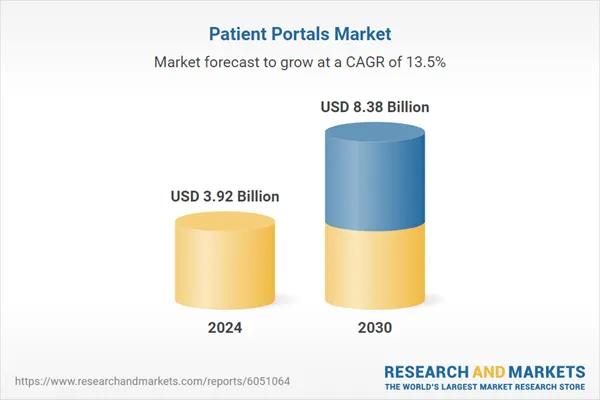
According to Yahoo Finance, the Patient Portals Market was valued at USD 3.92 billion in 2024, and is projected to reach USD 8.38 billion by 2030, rising at a CAGR of 13.50%. This rapid growth is driving demand for cost-effective development solutions that do not compromise on quality or compliance.
Outsourcing patient portal development offers healthcare organizations greater cost savings compared to in-house teams while providing access to specialized healthcare IT expertise. Organizations seeking a trusted healthcare software development company must evaluate whether building internally or partnering with an experienced development team delivers better value.
This guide breaks down everything you need to know about outsourcing patient portal development. You will learn the step-by-step process, engagement models, cost structures, essential features, EHR integration requirements, compliance considerations, and how to select the right development partner.
What is Patient Portal Development Outsourcing?
Patient portal development outsourcing involves partnering with an external software development company to build, integrate, and maintain your healthcare patient portal. Instead of hiring full-time developers, you engage a specialized team that handles everything from design and development to compliance validation and post-launch support.
This approach differs from in-house development, where you recruit, train, and manage a permanent development team. It also differs from staff augmentation, where you temporarily add external developers to your existing team.
Types of outsourcing models
Healthcare organizations can choose from three primary outsourcing models based on their location preferences and budget constraints.
Offshore outsourcing involves partnering with development teams in distant countries, typically offering the lowest hourly rates. Teams in India, Eastern Europe, and Southeast Asia typically charge $35–$70 per hour, compared to $120–$270 per hour for Canadian and US-based developers.
Nearshore outsourcing involves working with teams in similar time zones. For Canadian and US healthcare organizations, this often means partnering with development teams in Canada or Latin America. Space-O Canada offers nearshore advantages with time-zone alignment and cultural compatibility for North American clients.
Hybrid outsourcing combines elements of both approaches. You might have project management and architecture handled locally while development work happens offshore.
With the fundamentals clear, let’s explore the compelling reasons healthcare organizations are choosing to outsource patient portal development.
Why Should Healthcare Organizations Outsource Patient Portal Development?
Healthcare organizations face mounting pressure to deliver digital patient experiences while managing tight budgets and staffing challenges. Here’s why outsourcing patient portal development has become the preferred approach for hospitals, clinics, and health systems across North America.
1. Cost savings compared to in-house development
The financial case for outsourcing is compelling. Hiring in-house healthcare software developers involves substantial salaries, benefits, equipment, and overhead costs. Offshore and nearshore development partners offer equivalent expertise at significantly lower rates.
Building a mid-range patient portal with EHR integration typically requires a team of specialists working over several months. Outsourcing this project to an experienced development partner substantially reduces overall costs compared to assembling and maintaining a full in-house team.
Beyond direct salary savings, outsourcing eliminates recruitment costs, training expenses, employee benefits, and the risk of developer turnover mid-project. You pay only for the development work delivered.
2. Access to specialized healthcare IT expertise
Patient portal development requires specialized knowledge that general software developers rarely possess. Your development team needs expertise in FHIR and HL7 integration standards, HIPAA Security Rule implementation, healthcare workflow optimization, and medical terminology.
Finding developers with this specialized healthcare technology background is challenging. The healthcare IT talent shortage means qualified candidates are scarce and expensive. Outsourcing partners who specialize in healthcare software development maintain teams with this expertise readily available.
Organizations exploring custom software development for healthcare applications benefit from partners who understand the unique requirements of medical data handling.
3. Faster time-to-market with experienced teams
Established healthcare software outsourcing companies bring pre-built components, proven architectures, and refined processes to every project. They have solved common patient portal challenges before and can apply those solutions immediately.
An experienced outsourcing partner can deliver a functional patient portal MVP in 3-4 months. In-house teams building from scratch typically require 6-9 months to reach the same milestone. This acceleration comes from reusable code libraries, established EHR integration connectors, and streamlined compliance workflows.
Additionally, offshore and distributed teams enable round-the-clock development. While your local team sleeps, development continues in other time zones, compressing project timelines further.
Pro Tip: When evaluating outsourcing partners, prioritize healthcare domain expertise over general development skills. A team experienced in FHIR integration and HIPAA compliance will deliver a compliant portal faster than a team learning healthcare requirements mid-project.
Scale Patient Portal Development Resources On Demand
Space-O offers flexible engagement models that allow healthcare teams to scale development capacity based on project scope and timelines.
Understanding the benefits sets the foundation. Now let’s walk through the step-by-step process of outsourcing patient portal development.
What is the Process of Outsourcing Patient Portal Development? [A Step-by-Step Guide]
Successfully outsourcing patient portal development requires a structured approach that addresses technical requirements, compliance mandates, and organizational goals. Here’s the six-phase process that healthcare organizations should follow when working with an external development partner.
Phase 1: Discovery and requirements gathering (2-4 weeks)
The foundation of every successful patient portal project is comprehensive requirements documentation. During this phase, you work with your outsourcing partner to define exactly what your portal must accomplish.
Define portal objectives and target users. Identify whether your portal serves hospital patients, outpatient clinics, specialty practices, or multiple care settings. Document the specific user groups: patients, caregivers, clinical staff, and administrators.
Document feature requirements and priorities. List every feature your portal needs, then categorize them as must-have, should-have, and nice-to-have. This prioritization guides MVP development and phased rollouts.
Establish your compliance roadmap. Determine which regulations apply to your portal. US organizations need HIPAA compliance. Canadian organizations require PIPEDA compliance and potentially provincial regulations like PHIPA in Ontario. Document these requirements explicitly.
Select technology stack and integration approach. Work with your development partner to choose frontend frameworks, backend technologies, database solutions, and cloud platforms. Confirm compatibility with your existing EHR/EMR systems.
Phase 2: Vendor selection and contracting (2-3 weeks)
If you have not yet selected a development partner, this phase involves evaluating candidates and formalizing the engagement.
Evaluate vendors against healthcare IT criteria. Review portfolios for patient portal and healthcare software experience. Verify HIPAA compliance processes and certifications. Assess FHIR and HL7 integration capabilities.
Review portfolios and client references. Request case studies from similar healthcare organizations. Contact references to understand their experience with the vendor’s communication, quality, and delivery reliability.
Negotiate engagement model and pricing. Determine whether dedicated team, staff augmentation, or project-based pricing best fits your needs. Clarify payment milestones and what deliverables trigger each payment.
Execute legal agreements. Sign Business Associate Agreements (BAA) for HIPAA compliance. Execute Non-Disclosure Agreements (NDA) to protect patient data and proprietary information. Clarify intellectual property ownership in your contract.
Phase 3: Design and prototyping (3-6 weeks)
With requirements documented and contracts signed, the design phase transforms your specifications into visual and technical blueprints.
Conduct UX research with patient and provider personas. Understand how different users will interact with your portal. Elderly patients have different needs than younger users. Busy physicians require streamlined workflows.
Create wireframes and interactive prototypes. Develop low-fidelity wireframes showing screen layouts and user flows. Progress to high-fidelity prototypes that simulate the actual user experience. Gather stakeholder feedback before development begins.
Plan accessibility compliance. Design interfaces that meet WCAG 2.1 AA standards. Ensure screen reader compatibility, keyboard navigation, and appropriate color contrast. Accessibility is both a best practice and a legal requirement under ADA.
Design system architecture and security controls. Document the technical architecture, including microservices layout, API structure, database design, and cloud infrastructure. Define security layers including encryption, authentication, and access controls.
Phase 4: Agile development (8-20 weeks)
Development proceeds in iterative sprints, delivering functional increments every 2-4 weeks. This agile approach allows you to review progress regularly and adjust priorities as needed.
Sprint-based development with bi-weekly demos. Each sprint delivers working functionality that stakeholders can test and provide feedback on. This iterative approach catches issues early and ensures the final product meets expectations.
Frontend and backend development. Build the patient-facing interfaces using modern frameworks like React or Angular. Develop backend services using Node.js, Python, or .NET. Implement database schemas for patient data, appointments, and messages.
EHR/EMR integration using FHIR and HL7. Connect your portal to existing clinical systems. Implement FHIR R4 APIs for modern EHR systems. Use HL7 v2 connectors for legacy systems that have not yet adopted FHIR.
Security feature implementation. Build multi-factor authentication (MFA) required under 2025 HIPAA Security Rule updates. Implement AES-256 encryption for data at rest and TLS 1.3 for data in transit. Create role-based access control (RBAC) for different user types.
Organizations considering offshore software development benefit from partners who maintain rigorous security practices throughout the development lifecycle.
Phase 5: Testing and compliance validation (3-6 weeks)
Thorough testing ensures your portal works correctly, performs reliably, and meets all regulatory requirements before launch.
Execute comprehensive testing. Perform unit testing for individual components, integration testing for connected systems, and end-to-end testing for complete user workflows. Conduct load testing to verify performance under expected patient volumes.
Validate HIPAA and PIPEDA compliance. Verify that all required safeguards are implemented. Document compliance evidence for audit purposes. Address any gaps identified during testing.
Perform security penetration testing. Engage security specialists to attempt unauthorized access. Identify vulnerabilities before attackers do. Remediate all critical and high-severity findings before launch.
Conduct user acceptance testing (UAT). Have actual patients and clinical staff use the portal. Gather feedback on usability, workflow efficiency, and feature completeness. Make final adjustments based on real-world testing.
Phase 6: Deployment and post-launch support (2-4 weeks + ongoing)
The final phase transitions your portal from development to production and establishes ongoing support processes.
Deploy to the production environment. Launch your portal on production infrastructure with monitoring and alerting configured. Conduct a soft launch with limited users before full rollout.
Train staff and onboard patients. Provide training for clinical and administrative staff who will support portal users. Create patient-facing materials, including quick-start guides and video tutorials.
Establish ongoing maintenance. Plan for annual maintenance costs of 15-20% of development investment. This covers bug fixes, security patches, compliance updates, and feature enhancements. Space-O provides 3 months of free maintenance post-launch.
With the development process mapped out, choosing the right engagement model determines how you will work with your outsourcing partner.
What are the Engagement Models for Outsourcing Patient Portal Development?
Selecting the right engagement model impacts your project’s success, budget, and timeline. Each model offers distinct advantages depending on your organization’s needs, internal capabilities, and project scope.
1. Dedicated team model
The dedicated team model assigns a complete development team exclusively to your project. This team works only on your patient portal and operates as an extension of your organization.
Best for: Long-term, complex portal builds requiring deep domain knowledge. Health systems are building enterprise-grade portals with multiple facilities, extensive integrations, and ongoing development needs.
How it works: You work with the outsourcing partner to define team composition: project manager, UI/UX designers, frontend developers, backend developers, QA specialists, and DevOps engineers. The team ramps up and remains dedicated to your project throughout development and beyond.
Pricing structure: Monthly retainer based on team size and seniority. Typical costs range from $35,000-$100,000 per month, depending on team composition, seniority, and vendor location.
Advantages: Deep project knowledge accumulates over time. Team members understand your organization’s workflows and preferences. You maintain full control over priorities and resource allocation.
Organizations seeking to hire dedicated software development teams benefit from consistent collaboration and accumulated expertise.
2. Staff augmentation model
Staff augmentation adds specific, skilled resources to your existing team. You maintain project management and direction while the outsourced developers fill capability gaps.
Best for: Organizations with existing development teams that need specialized skills. Filling gaps in FHIR integration expertise, healthcare UX design, or security implementation.
How it works: Identify specific skill gaps in your team. Engage outsourced specialists to fill those gaps. They integrate with your team and follow your processes and tools.
Pricing structure: Hourly or part-time rates based on skill level and experience. Senior healthcare-focused developers typically cost $90-$180 per hour through augmentation arrangements.
Advantages: You retain direct control over development. Augmented resources transfer knowledge to your internal team. Flexible scaling up or down as project phases change.
3. Project-based (fixed price) model
The project-based model defines a specific scope, deliverables, timeline, and price upfront. The outsourcing partner commits to delivering the agreed scope for the agreed price.
Best for: Well-defined MVP development or specific feature additions. Organizations with clear requirements and limited tolerance for budget variability.
How it works: You provide detailed requirements. The vendor assesses scope and provides a fixed price quote. Development proceeds against defined milestones with payments triggered by deliverable acceptance.
Pricing structure: Fixed total cost based on scope. Typical patient portal MVPs range from $70,000-$200,000, depending on feature complexity and integration requirements.
Advantages: Budget certainty and predictability. Clear accountability for delivery. Lower risk for organizations new to outsourcing.
Once you have selected an engagement model, understanding the development cost structure helps you budget effectively.
How Much Does it Cost to Outsource Patient Portal Development?
Outsourcing patient portal development in Canada typically costs between CAD $40,000 and over $400,000, depending on complexity. Basic portals range from CAD $40,000–$135,000, while advanced systems with EHR integration and AI features can exceed CAD $400,000.
Understanding patient portal development costs helps you budget accurately and evaluate vendor proposals. Costs vary significantly based on feature complexity, integration requirements, compliance scope, and vendor location.
1. Cost breakdown by complexity tier
Basic portals ($40,000-$135,000): Standalone architecture with limited features. Includes patient registration, appointment scheduling, basic medical records access, and secure messaging. Simple EHR integration through standard APIs. Best suited for small practices, specialty clinics, and labs.
Mid-range portals ($135,000-$240,000): Standard features with comprehensive integrations. Adds prescription refills, billing and payments, telehealth capabilities, and document management. Deeper EHR integration with bidirectional data sync. Mobile-responsive design or dedicated mobile apps. Best suited for medium-sized practices and clinics.
Enterprise portals ($240,000-$400,000+): Full-featured, multi-facility solutions. Includes advanced analytics, AI-powered chatbots, wearable device integration, and population health tools. Complex integrations across multiple EHR systems, billing platforms, and laboratory systems. Best suited for hospitals, health systems, and large multi-specialty groups.
2. Factors that influence outsourcing costs
Feature complexity directly impacts development hours. Each additional feature adds design, development, and testing effort. Prioritize features based on patient and clinical value to control costs.
EHR integration requirements vary widely. Connecting to Epic, Cerner, or MEDITECH requires vendor-specific expertise. Integration with multiple EHR systems multiplies complexity. Budget $20,000-$70,000 per major EHR integration, depending on the vendor and depth of bidirectional data exchange.
Compliance scope affects development effort. HIPAA compliance is baseline. Adding PIPEDA compliance for Canadian operations, GDPR for European patients, or provincial regulations like PHIPA increases compliance implementation work.
Platform coverage multiplies development. Web-only portals cost less than web plus iOS plus Android. Cross-platform frameworks like React Native or Flutter reduce costs by 30-40% compared to building separate native apps.
Vendor location determines hourly rates. Canadian and US developers typically charge CAD 120-270 per hour. Eastern European developers often charge CAD 70-120 per hour. Indian and Southeast Asian developers generally charge CAD 35-80 per hour.
Organizations exploring patient portal development costs should request detailed breakdowns from potential vendors.
3. Ongoing costs and total cost of ownership
Development cost is only part of the total investment. Ongoing costs include hosting infrastructure, maintenance, and support.
Annual maintenance typically costs 15-20% of initial development. For a $200,000 portal, budget $30,000-$40,000 annually for maintenance and minor enhancements.
Hosting and infrastructure costs typically range from $700-$7,000 per month, depending on scale, redundancy requirements, and cloud provider selection. HIPAA-eligible cloud services from AWS, Azure, or Google Cloud add premium pricing.
Compliance maintenance is ongoing. Annual penetration testing costs $7,000-$20,000. Security and compliance risk assessments often cost $14,000-$34,000. Compliance updates when regulations change require development investment.
Over five years, total cost of ownership is typically 2-4 times initial development cost. A $200,000 portal may cost $450,000-$800,000 over five years, including all maintenance and updates.
Pro Tip: Request a detailed cost breakdown including post-launch maintenance estimates from every vendor. Hidden costs in ongoing compliance updates and security patches can significantly impact your total cost of ownership.
Reduce Development Costs by Outsourcing Patient Portal Projects
Space-O helps healthcare organizations optimize development spend by delivering scalable patient portals without the overhead of in-house teams.
With budgeting considerations covered, let’s examine the essential features your outsourced portal must include.
What Features Should Your Outsourced Patient Portal Include?
Defining the right feature set determines your portal’s value to patients and clinical staff. Prioritize features based on user needs, competitive requirements, and regulatory mandates.
1. Secure messaging and appointment scheduling
HIPAA-compliant two-way messaging lets patients ask questions, request refills, and receive care instructions without phone calls. Online appointment scheduling with automated email, SMS, and push notification reminders significantly reduces no-show rates and administrative burden for healthcare staff.
2. Medical records and prescription management
Patients access diagnoses, medications, allergies, immunizations, and lab results with reference ranges instantly. Downloadable records simplify sharing across providers. One-click prescription refill requests integrate directly with pharmacy systems, enabling electronic transmission and improving medication adherence.
3. Billing, payments, and telehealth integration
Itemized bill viewing, online payment processing, and insurance claims tracking improve revenue cycle efficiency. Integrated video consultations enable virtual urgent care, follow-ups, and specialist appointments directly within the portal workflow without requiring separate platforms.
4. AI chatbots and wearable device integration
AI-powered chatbots deliver round-the-clock patient support for appointment queries, medication refills, and symptom triage. Wearable integration connects devices like Apple Watch and continuous glucose monitors, aggregating patient-generated health data for ongoing clinical review.
5. Multi-language support
Dynamic language switching based on patient preference serves diverse populations effectively. This capability is particularly critical for Canadian healthcare organizations serving both French and English speakers alongside growing multilingual communities across provinces.
6. Compliance and security features
Multi-factor authentication, AES-256 encryption at rest, and TLS 1.3 in transit protect patient data comprehensively. Role-based access control limits data visibility to authorized users only. Audit logging with timestamps and user identification supports regulatory compliance and enables rapid breach notification.
Features define what your portal does, but regulatory compliance must be built into every aspect of your outsourced portal development.
What Compliance Requirements Must Your Outsourcing Partner Meet?
Regulatory compliance is non-negotiable for patient portal development. Your outsourcing partner must demonstrate a deep understanding of healthcare regulations and implement required safeguards throughout development.
1. Canadian compliance (PIPEDA and PHIPA)
Canadian healthcare organizations must comply with federal and provincial privacy regulations.
PIPEDA (Personal Information Protection and Electronic Documents Act) governs personal information handling for most Canadian organizations. Unlike HIPAA’s opt-out model, PIPEDA requires explicit consent for data collection and use.
Provincial health information regulations add additional requirements. Ontario’s PHIPA specifically governs personal health information. British Columbia and Alberta have their own privacy legislation.
Data residency requirements in some provinces prohibit storing personal information outside Canada. Your portal must offer Canadian hosting options to serve these organizations.
Organizations serving Canadian patients should partner with developers who understand PIPEDA compliance requirements and provincial health regulations.
2. Verifying vendor compliance credentials
Request documentation that verifies your potential partner’s compliance capabilities.
ISO 27001 certification demonstrates information security management system implementation. This international standard provides a framework for protecting sensitive data.
SOC 2 Type II reports verify that security controls operate effectively over time. Request reports covering security, availability, and confidentiality trust principles.
HITRUST CSF certification represents the healthcare industry’s most rigorous security framework. While not required, HITRUST certification signals strong healthcare compliance commitment.
Review audit history and ask about any compliance findings or breaches. A transparent partner discusses past issues and remediation openly.
After understanding the compliance requirements, let’s have a look at the things to consider while choosing a patient portal development partner.
How to Choose the Right Patient Portal Development Partner?
Selecting the right outsourcing partner determines whether your patient portal project succeeds or fails. Evaluate potential vendors systematically against criteria that matter for healthcare software development.
1. Healthcare domain expertise
Healthcare IT experience should top your evaluation criteria. General software developers lack context for patient portal development. Seek partners with documented healthcare project experience, understanding of clinical workflows, and familiarity with medical terminology. ISO 9001 and ISO 27001 certifications further indicate process maturity.
2. PIPEDA compliance track record
Ask potential partners about their compliance processes, employee training programs, and audit history. Request sample Business Associate Agreement language before engagement. Look for detailed answers covering secure development practices, code review procedures, testing protocols, and deployment security rather than general statements about data protection.
3. EHR integration experience
FHIR and HL7 integration expertise is essential for connecting portals with existing health record systems. Ask about specific integrations completed, challenges encountered, and approaches to compatibility testing. Evaluate their methodology for connecting with major platforms and their interface engine capabilities.
4. Red flags to watch for
No healthcare-specific experience signals a steep learning curve at your expense. Vague compliance processes indicate inadequate regulatory attention. Absence of client references prevents verification of claims. Hidden costs or unclear pricing creates budget surprises that derail projects later in development.
Understanding the benefits of custom software development helps evaluate when outsourcing delivers superior value compared to off-the-shelf alternatives.
Vendor selection is crucial, but understanding common outsourcing challenges helps you prepare for potential obstacles.
What are the Risks of Outsourcing Patient Portal Development and How to Mitigate Them?
Outsourcing patient portal development introduces risks that differ from in-house development. Understanding these risks and implementing mitigation strategies increases your chances of project success.
1. Communication and time zone challenges
Working across time zones can slow decision-making and create communication delays. Misunderstandings arise more easily without in-person interaction.
Mitigation strategies:
- Establish overlapping working hours for real-time collaboration. Even 2-3 hours of overlap enables daily standup meetings and issue resolution.
- Use asynchronous communication tools effectively. Detailed written updates, recorded video explanations, and thorough documentation reduce synchronous meeting needs.
- Choose nearshore partners like Space-O Canada that operate in compatible time zones and share cultural context.
2. Data security concerns
Sharing patient data with external parties expands your attack surface and creates compliance risks.
Mitigation strategies:
- Execute comprehensive Business Associate Agreements before any data sharing.
- Require encryption for all data in transit and at rest.
- Implement data minimization principles, sharing only necessary information.
- Specify data residency requirements in contracts, requiring Canadian hosting for Canadian patient data where regulations mandate.
- Conduct regular security audits of your outsourcing partner’s practices.
3. Quality control issues
Accepting deliverables that do not meet specifications wastes time and money.
Mitigation strategies:
- Define detailed acceptance criteria for every deliverable before development begins.
- Implement milestone-based payment structures that tie compensation to approved deliverables.
- Conduct code reviews of outsourced work, either internally or through independent reviewers.
- Maintain comprehensive test suites that outsourced code must pass before acceptance.
4. Intellectual property protection
Outsourcing creates questions about who owns the code and can use it.
Mitigation strategies:
- Specify clear IP ownership in contracts. Typically, the client should own all custom code developed for the project.
- Execute NDA agreements before sharing any proprietary information.
- Consider code escrow arrangements that provide access to source code if the vendor relationship ends.
- Avoid development partners who use significant amounts of their own proprietary code that you do not own.
Outsource Patient Portal Development Without Compromising Compliance
Space-O builds patient portals aligned with HIPAA and data security standards to protect sensitive health information.
Understanding risks prepares you for challenges. Now, discover how Space-O Technologies delivers trusted patient portal outsourcing solutions.
Outsource Your Patient Portal Development to Space-O Technologies
Outsourcing patient portal development helps healthcare organizations accelerate delivery, reduce operational complexity, and ensure compliance without expanding internal teams.
By partnering with an experienced healthcare software provider, organizations gain access to specialized skills in interoperability, security, and regulatory adherence while maintaining predictable costs and faster time to market.
Space-O Technologies team embeds PIPEDA and PHIPA compliance directly into every development phase, ensuring regulatory readiness from day one. The company delivers deep FHIR and HL7 integration expertise across EHRs such as Epic, Cerner, Athenahealth, and OSCAR, while offering flexible engagement models that fit MVPs and enterprise-scale initiatives alike.
Ready to outsource your patient portal development? Space-O Technologies provides free consultations to discuss your requirements, evaluate approaches, and provide preliminary estimates. Our healthcare specialists will help you define the right strategy for your organization.
Frequently Asked Questions about Outsourcing Patient Portal Development
How long does it take to build an outsourced patient portal?
Development timelines vary based on complexity and feature scope. A basic MVP with core features takes 3-4 months. Mid-complexity portals with EHR integration and telehealth require 4-6 months. Enterprise portals with advanced features and multiple integrations take 6-9+ months. These timelines assume dedicated team engagement and efficient stakeholder feedback.
What is the average cost to outsource patient portal development?
Outsourced patient portal development typically costs $70,000-$400,000+, depending on complexity. Basic standalone portals start around $40,000-$70,000. Mid-range solutions with EHR integration cost $135,000-$240,000. Enterprise portals with advanced features and multiple system integrations exceed $250,000. Offshore and nearshore partners offer significant savings compared to US-based development.
Can I integrate my existing EHR with an outsourced portal?
Yes. Experienced healthcare software partners integrate patient portals with major EHR systems, including Epic, Cerner, Athenahealth, and others. Integration uses FHIR R4 APIs for modern systems and HL7 v2 for legacy systems. Interface engines like Mirth Connect handle data translation and routing between systems.
What engagement model is best for a patient portal project?
Choose dedicated team engagement for complex, long-term projects requiring deep domain knowledge. Use staff augmentation when you have an existing team but need specialized healthcare IT skills. Select project-based engagement for well-defined MVPs with clear requirements and fixed budgets. Most healthcare organizations benefit from dedicated team models for initial development, transitioning to maintenance agreements post-launch.
How do I protect my IP when outsourcing patient portal development?
Protect intellectual property through clear contractual terms specifying client ownership of all custom code. Execute Non-Disclosure Agreements before sharing any proprietary information. Consider code escrow arrangements providing source code access if the vendor relationship ends. Avoid partners who incorporate significant proprietary code that you would not own.


Searching for Reliable Patient Portal Development Outsourcing Services?
What to read next
 All our projects are secured by NDA
100% Secure. Zero Spam
*All your data will remain strictly confidential.
Trusted by


Bashar Anabtawi 
Canada
“I was mostly happy with the high level of experience and professionalism of the various teams that worked on my project. Not only they clearly understood my exact technical requirements but even suggested better ways in doing them. The Communication tools that were used were excellent and easy. And finally and most importantly, the interaction, follow up and support from the top management was great. Space-O not delivered a high quality product but exceeded my expectations! I would definitely hire them again for future jobs!”

Canada Office
2 County Court Blvd., Suite 400,
Brampton, Ontario L6W 3W8
Phone: +1 (602) 737-0187
Email: sales@spaceo.ca