
- What is a SaaS Telemedicine Platform?
- What are the Benefits of Building a SaaS Telemedicine Platform?
- How to Build a SaaS Telemedicine Platform: Step-by-Step Process
- How multi-tenant architecture powers scalable telemedicine platforms?
- What are the Essential Features for SaaS Telemedicine Platform?
- What are the Compliance Requirements for SaaS Telemedicine?
- What are the Different Subscription and Pricing Models for SaaS Telemedicine?
- How Much Does It Cost to Build a SaaS Telemedicine Platform?
- How to Choose a SaaS Telemedicine Development Partner?
- SaaS Telemedicine Platform Development Expertise at Space-O Technologies
- Frequently Asked Questions about SaaS Telemedicine Platform Development
SaaS Telemedicine Platform Development: Architecture, Features, and Complete Guide

 Last Updated: January, 30 2026
Is your telemedicine software still locked into a costly one-time licensing model? More healthcare providers are moving to SaaS-based telemedicine platforms that replace upfront investments and maintenance headaches with flexible, subscription-based, cloud-hosted solutions that scale with demand.
This shift makes sense for everyone involved. Healthcare providers get lower entry costs and automatic updates. Platform owners get predictable recurring revenue and centralized control over their product.
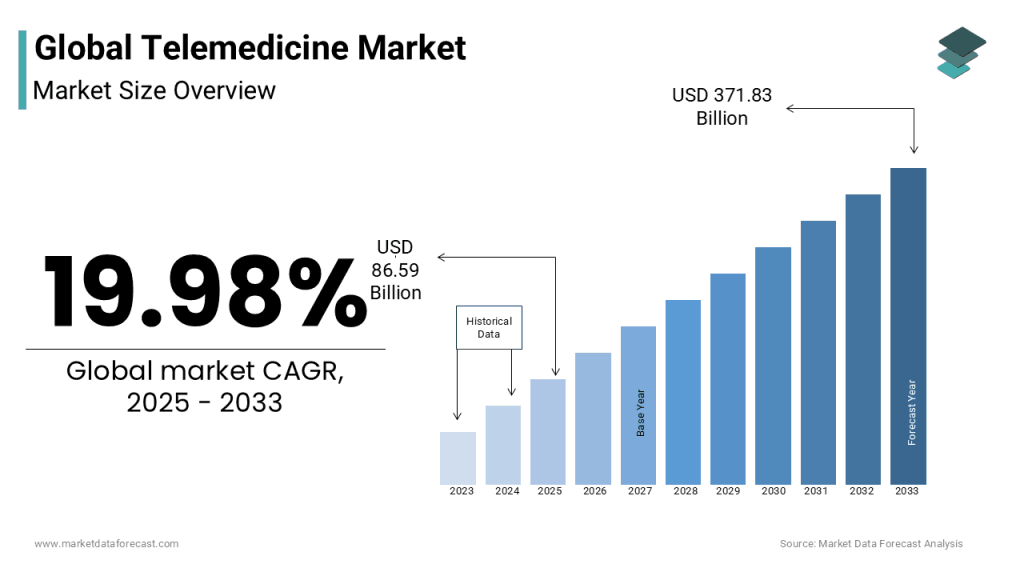
The market timing couldn’t be better. According to Market Data Forecast, the global telemedicine market reached USD 72.17 billion in 2024 and is projected to grow to USD 371.83 billion by 2033 at a CAGR of 19.98%.
Building a SaaS telemedicine platform requires careful planning around multi-tenant architecture, subscription billing, compliance across jurisdictions, and feature prioritization.
This guide walks you through everything you need to know about telemedicine app development in a SaaS context, from architecture decisions to cost breakdowns to choosing the right development partner.
What is a SaaS Telemedicine Platform?
A SaaS telemedicine platform is a cloud-hosted virtual healthcare solution that healthcare providers access through subscription payments rather than purchasing and installing software on their own servers. The platform owner handles all infrastructure, maintenance, security updates, and compliance, while healthcare organizations simply log in and use the service.
Think of it like the difference between buying Microsoft Office outright versus subscribing to Microsoft 365. With SaaS, healthcare providers pay monthly or annual fees based on usage tiers, number of providers, or consultation volume. They get immediate access to a fully functional telemedicine system without capital expenditure on servers, IT staff, or ongoing maintenance.
The business model creates recurring revenue for platform owners. Instead of one large payment followed by minimal ongoing income, you build a predictable revenue stream that grows as you add more healthcare organization clients (tenants) to your platform.
These business advantages translate into concrete benefits for both you as the platform owner and for your healthcare provider clients. Let’s examine what each party gains.
What are the Benefits of Building a SaaS Telemedicine Platform?
Building a SaaS telemedicine platform rather than traditional licensed software creates several strategic advantages for your business.
1. Predictable recurring revenue model
Subscription-based pricing generates consistent monthly recurring revenue that compounds as you onboard more clients. This financial predictability simplifies business planning and makes your company more attractive to potential investors compared to one-time licensing fees.
2. High client retention rates
Once healthcare organizations integrate your platform into daily workflows, switching becomes costly and disruptive. Well-executed healthcare SaaS platforms typically achieve annual retention rates exceeding 90%, reducing customer acquisition spending over time.
3. Effortless multi-tenant scalability
Adding new healthcare organizations to a multi-tenant architecture is largely automated. You can scale from dozens to hundreds of clients without proportionally increasing your team size or deploying separate infrastructure for each customer.
4. Centralized updates and maintenance
Fixing bugs or releasing features happens once and benefits all clients simultaneously. This eliminates the support burden of managing individual installations and ensures every organization runs the latest, most secure version.
5. Lower barrier to entry for clients
Healthcare providers can access your platform for predictable monthly fees instead of six-figure upfront investments. This expands your addressable market to include smaller practices and clinics previously priced out of telemedicine solutions.
6. Automatic compliance management
When HIPAA regulations evolve or security vulnerabilities emerge, you handle updates centrally. Clients remain compliant without dedicating internal resources to tracking regulatory changes or managing software patches themselves.
For deeper insights into the healthcare technology landscape, our guide on healthcare software development covers broader trends and opportunities.
Launch a SaaS Telemedicine Platform Designed for Recurring Revenue
Create a telehealth platform that supports flexible pricing models, onboarding automation, and reliable performance across tenants.
Understanding the benefits is one thing. Actually building a SaaS telemedicine platform requires a structured approach. Here’s the step-by-step process we recommend.
How to Build a SaaS Telemedicine Platform: Step-by-Step Process
Building a SaaS telemedicine platform follows a structured development lifecycle. Each phase builds on the previous one, and cutting corners early creates expensive problems later. Here’s how to approach each stage.
Phase 1: Discovery and planning (3-4 weeks)
This foundational phase determines everything that follows. Invest adequate time here.
Market research and competitor analysis. Study existing SaaS telemedicine platforms. What features do they offer? What do their customers complain about in reviews? Where are the gaps you can fill? Understanding the competitive landscape helps you differentiate.
Organizations can review healthcare software development companies to understand market standards and identify differentiation opportunities through competitor analysis.
Target customer profiling. Define your ideal customer precisely. Are you targeting small independent practices, specialty clinics, hospital systems, or mental health providers? Each segment has different needs, budgets, and buying processes. Trying to serve everyone usually means serving no one well.
Feature prioritization. Based on your target market, determine which features are essential for launch versus nice-to-have for later phases. Be ruthless. Every feature you add increases development time and cost.
Compliance requirements assessment. Determine which regulations apply based on your target markets. US customers require HIPAA compliance. Canadian customers require PIPEDA and potentially provincial health privacy laws like Ontario’s PHIPA.
Document these requirements thoroughly. Understanding HIPAA telehealth compliance requirements early in the planning phase prevents costly architectural changes later in development.
Technology stack selection. Choose your frontend frameworks, backend languages, database architecture, video APIs, and cloud infrastructure. These decisions should align with your team’s expertise, scalability requirements, and compliance needs.
Phase 2: UI/UX design (4-6 weeks)
Healthcare users need intuitive interfaces. Patients may be stressed or unwell. Providers are busy and impatient with clunky software. Great design directly impacts adoption and satisfaction.
User flow mapping. Document every step for key user journeys: patient registration, appointment booking, video consultation, provider onboarding, admin tenant management. Identify friction points before you start designing screens.
Wireframing. Create low-fidelity wireframes for all key screens across patient, provider, and admin interfaces. Focus on information hierarchy and user flow, not visual polish.
Prototype development. Build a clickable prototype using tools like Figma that simulates the user experience. This prototype becomes your primary tool for gathering feedback before expensive development begins.
User testing. Put your prototype in front of 5-10 target users from each persona (patients, providers, administrators). Watch them attempt key tasks. Where do they struggle? What do they expect that isn’t there?
Visual design. With validated wireframes, create the final visual design. Healthcare apps should feel clean, professional, and trustworthy. Avoid overly trendy designs that may feel unserious for medical contexts.
For detailed guidance on healthcare-specific design considerations, see our article on healthcare app design.
Phase 3: MVP development (12-16 weeks)
This phase transforms designs into a working platform. Focus on core functionality that proves your concept.
Multi-tenant architecture implementation. Build the foundational infrastructure that allows multiple healthcare organizations to use your platform while keeping their data isolated. This architectural decision affects everything else.
Core feature development. Implement the essential features identified in Phase 1: user authentication, video consultations, appointment scheduling, secure messaging, and basic admin functionality.
Video integration. Integrate a HIPAA-compliant video API (Twilio, Agora, or Vonage). Video quality directly impacts user satisfaction, so invest time in optimizing the experience across different network conditions.When implementing video consultation app development, focus on network resilience and quality optimization to ensure reliable performance across varying connection speeds and devices.
Subscription billing integration. Implement Stripe Billing or similar to handle subscription management, payment processing, and usage metering. This infrastructure is essential for your business model.
Initial testing. Conduct internal testing throughout development. Catch bugs early when they’re cheap to fix.
Phase 4: Compliance and security (4-6 weeks)
Healthcare software without proper compliance is a liability, not an asset. This phase ensures you meet regulatory requirements.
HIPAA/PIPEDA implementation. Implement all required technical safeguards: encryption in transit and at rest, access controls, audit logging, automatic session timeouts, and secure data handling procedures.
Building HIPAA compliant telemedicine apps requires implementing technical safeguards, administrative controls, and physical security measures that protect patient data across all platform components.
Security hardening. Review code for vulnerabilities. Implement security headers, input validation, and protection against common attacks (SQL injection, XSS, CSRF).
Penetration testing. Hire a qualified security firm to attempt to breach your platform. Fix any vulnerabilities they discover. This testing is often required for enterprise healthcare clients.
Compliance documentation. Create the policies and procedures documents required for HIPAA compliance: privacy policies, security policies, breach notification procedures, and Business Associate Agreement templates. For comprehensive compliance guidance, review our guide on HIPAA compliant software development to ensure your platform meets all regulatory requirements.
Phase 5: Testing and QA (4-6 weeks)
Thorough testing prevents embarrassing bugs and security issues in production.
Functional testing. Verify every feature works as specified across all user roles and scenarios.
Performance testing. Ensure the platform handles expected load. Simulate multiple concurrent video calls and verify quality doesn’t degrade.
Multi-tenant isolation testing. Critically important: verify that tenants cannot access each other’s data under any circumstances. Test edge cases and error conditions.
User acceptance testing. Have real users from your target market use the platform for actual consultations. Gather feedback and fix issues before public launch.
Phase 6: Launch and post-launch (ongoing)
Launching is just the beginning. Post-launch activities determine long-term success.
Deployment strategy. Deploy to production infrastructure with proper monitoring, alerting, and rollback capabilities.
Tenant onboarding process. Create streamlined workflows for adding new healthcare organizations. The easier onboarding is, the faster you can scale.
Monitoring and support setup. Implement application monitoring, error tracking, and customer support channels. You need visibility into platform health and user issues.
Iteration based on feedback. Collect user feedback continuously and prioritize improvements based on impact and feasibility.
For more details on development methodologies, our guide on the software development process provides comprehensive coverage.
The step-by-step process gives you a roadmap. Now let’s dive deeper into one of the most critical technical decisions: multi-tenant architecture.
How multi-tenant architecture powers scalable telemedicine platforms?
Multi-tenancy is what makes SaaS economically viable. Without it, you’re essentially running separate installations for each client, which defeats the purpose. Understanding architectural options helps you make informed decisions.
1. Understanding multi-tenant architecture
In a multi-tenant architecture, a single instance of your software serves multiple healthcare organizations (tenants) simultaneously. All tenants share the same application code, infrastructure, and often the same database, but their data remains logically isolated.
When Clinic A logs into your platform, they see only their patients, providers, and consultations. Clinic B’s data is invisible to them, even though both datasets might reside in the same database tables.
This approach offers massive efficiency gains. You maintain one codebase, one deployment, one set of servers. Updates apply to everyone instantly. Infrastructure costs are shared across all tenants rather than duplicated for each.
2. Types of multi-tenant architecture
Three primary approaches exist, each with tradeoffs.
Shared database with tenant identifiers
All tenants’ data lives in the same database tables. A “tenant_id” column on every table identifies which organization owns each record. Application logic filters queries to show only the current tenant’s data.
Separate databases per tenant
Each tenant gets their own database instance. The application routes connections to the appropriate database based on which tenant is logged in.
Hybrid approach
Combine both strategies. Small tenants share a database; enterprise tenants with strict requirements get dedicated databases. This balances cost efficiency with flexibility.
For most SaaS telemedicine startups, the shared database approach makes sense initially. You can migrate high-value enterprise clients to dedicated databases later as needed.
3. Key technical considerations
Several technical factors require careful attention in multi-tenant telemedicine platforms.
Tenant data isolation and security. This is non-negotiable in healthcare. Every database query must filter by tenant. Every API endpoint must verify the requesting user belongs to the tenant they’re trying to access. Implement defence in depth: application-level filtering, database-level row security policies, and regular audits.
Performance optimization across tenants. One tenant’s heavy usage shouldn’t degrade experience for others. Implement rate limiting, query optimization, and consider tenant-aware caching strategies. Monitor per-tenant resource consumption.
Customization capabilities per tenant. Healthcare organizations have different workflows. Allow configuration without code changes: custom fields, workflow rules, notification preferences, and branding. Draw clear lines between what’s configurable and what requires custom development.
For cloud architecture patterns, our guide on cloud-based application development covers infrastructure considerations in detail.
4. White-label capabilities
Many healthcare organizations want the telemedicine platform to appear as their own branded solution rather than showing your company’s branding.
Custom branding per healthcare organization. Allow tenants to upload their logo, set primary colours, and customize the visual appearance. Patients should feel they’re using their healthcare provider’s app, not a third-party platform.
Custom domain support. Enterprise tenants often want the platform accessible at their own domain (telehealth.theirhospital.com) rather than a subdomain of yours. Implement custom domain mapping with proper SSL certificate management.
Theming and UI customization options. Provide a configuration panel where tenant administrators can adjust colours, fonts, and layout options within your design system. Balance flexibility with maintaining a quality user experience.
Architecture decisions enable your platform. But healthcare providers and patients care about features. Here’s what your SaaS telemedicine platform needs to include.
What are the Essential Features for SaaS Telemedicine Platform?
Feature selection directly impacts development cost, timeline, and market fit. Include too few features and the platform isn’t useful. Include too many and you’ll never launch. Here’s how to prioritize.
1. Patient-facing features drive platform adoption
Core patient features include secure registration, provider search, appointment scheduling, HD video consultations, HIPAA-compliant messaging, and payment processing. Medical history profiles, prescription access, and push notifications enhance engagement while document upload capabilities enable comprehensive care delivery.
When building doctor on demand app development functionality, prioritizing instant provider matching and streamlined consultation workflows significantly improves patient satisfaction and platform adoption rates.
2. Provider tools determine platform success
Providers need intuitive dashboards, patient information access, video consultation interfaces, schedule management, and clinical documentation tools. E-prescribing, earnings tracking, and patient communication features reduce administrative burden and encourage consistent platform usage among healthcare professionals.
3. Admin controls enable multi-tenant operations
Platform owners require tenant management dashboards, subscription billing controls, usage analytics, compliance monitoring, and platform-wide reporting. These tools provide visibility into organizational performance, support pricing decisions, and ensure regulatory adherence across all healthcare tenants.
For patient engagement features, our guide on patient portal development covers additional capabilities.
4. SaaS infrastructure supports subscription models
Essential SaaS features include subscription billing integration with platforms like Stripe, usage-based metering for video minutes and storage, streamlined tenant onboarding workflows, API access management for integrations, and white-label configuration panels for brand customization.
5. Feature prioritization prevents scope creep
Critical features enable basic functionality while high-priority additions enhance user experience. Medium-priority features can wait for later phases. This tiered approach balances development costs, timeline constraints, and market fit requirements for successful platform launches.
6. Advanced features require proven market fit
AI symptom checkers, EHR integrations, remote patient monitoring, and multi-party video consultations add significant value but increase complexity substantially. Reserve these capabilities for Phase 2 development after initial launch validates core platform demand.
Organizations planning to integrate with electronic health records should review EHR software development companies to understand integration standards and partnership opportunities.
For platforms focused on behavioral health services, our guide on mental health app development covers specialized features for that segment.
Healthcare organizations looking to implement remote patient monitoring software development can add chronic disease management capabilities that differentiate their telemedicine offering and improve patient outcomes.
Reduce Time-to-Market With a Purpose-Built SaaS Telemedicine Platform
Design a lean, compliant platform that delivers core telehealth features quickly while supporting future expansion and integrations.
Features deliver value, but compliance keeps you out of legal trouble. Healthcare software without proper compliance protections is a liability. Here’s what you need to know.
What are the Compliance Requirements for SaaS Telemedicine?
Compliance isn’t optional in healthcare. Building a telemedicine platform without proper security and privacy controls exposes you to regulatory penalties, lawsuits, and reputational damage. Multi-tenant platforms face additional complexity because you’re responsible for protecting data from multiple organizations simultaneously.
1. HIPAA compliance (US market)
If your platform serves US patients or handles Protected Health Information (PHI) of US residents, HIPAA compliance is mandatory.
Privacy Rule requirements: Establishes standards for how PHI can be used and disclosed. Patients have rights to access their records, request corrections, and know how their information is used. Your platform must support these rights through appropriate interfaces and backend processes.
Business Associate Agreement (BAA) requirements: Any third-party vendor handling PHI must sign a BAA. For SaaS platforms, this includes your cloud provider (AWS, Azure, Google Cloud), video API provider (Twilio, Agora), payment processor, and any analytics tools that might access PHI. You’ll also need to sign BAAs with your healthcare organization clients.
Organizations building HIPAA compliant telehealth platforms must ensure Business Associate Agreements are in place with all vendors and service providers handling protected health information.
Multi-tenant compliance considerations: In a multi-tenant environment, you must ensure that HIPAA protections apply consistently across all tenants and that one tenant’s compliance failure doesn’t expose others.
2. Canadian regulations (PIPEDA/PHIPA)
Canadian healthcare data privacy operates under federal and provincial frameworks. Understanding both is essential for serving Canadian patients.
PIPEDA (Personal Information Protection and Electronic Documents Act): It is Canada’s federal privacy law governing how organizations handle personal information. It is based on 10 Fair Information Principles that require organizations to assign clear accountability through a designated privacy officer, define and communicate the purpose of data collection, obtain meaningful consent, and limit data collection, use, disclosure, and retention to stated purposes.
Provincial health privacy laws add additional requirements: Ontario’s PHIPA (Personal Health Information Protection Act) governs health information custodians specifically. Alberta’s Health Information Act and British Columbia’s PIPA have their own requirements.
Data residency considerations: Some Canadian healthcare organizations require that patient data remain within Canada. If serving Canadian clients, consider using Canadian cloud regions (AWS Canada Central, Azure Canada) for data storage.
For comprehensive healthcare development guidance, our healthcare app development guide covers regulatory considerations across markets.
3. Security best practices
Beyond regulatory requirements, implement security best practices that protect your platform and your clients’ data.
End-to-end encryption: Video consultations should be encrypted end-to-end so that even you as the platform operator cannot access the content. This provides an additional layer of protection and trust.
Role-based access control (RBAC): Define clear roles (patient, provider, tenant admin, platform admin) with appropriate permissions. Implement the principle of least privilege: users should have access only to what they need for their role.
Multi-factor authentication: Require MFA for all provider and administrator accounts. Offer it as an option for patients. SMS-based MFA is better than nothing, but authenticator apps or hardware keys are more secure.
Penetration testing: Conduct penetration testing before launch and annually thereafter. Use qualified security firms with healthcare experience. Fix all critical and high-severity findings before going live.
Compliance protects you legally. Pricing protects you financially. Here’s how to structure subscription models for your SaaS telemedicine platform.
What are the Different Subscription and Pricing Models for SaaS Telemedicine?
Your pricing model directly impacts revenue, customer acquisition, and long-term sustainability. Healthcare SaaS pricing requires balancing value delivery with market expectations.
1. Common pricing strategies
Several proven approaches work for SaaS telemedicine platforms.
- Per-provider/per-seat pricing. Charge based on the number of healthcare providers (doctors, nurses, therapists) using the platform. A clinic with 5 providers pays less than a hospital system with 50. This model is easy to understand and scales naturally with organization size.
- Per-consultation pricing. Charge a fee for each completed consultation, typically $2-$10 per visit. This aligns your revenue directly with client success and lowers barriers to entry. However, it can create unpredictable revenue.
- Tiered feature-based pricing. Offer packages (Basic, Professional, Enterprise) with increasing features at each level. Basic might include video consultations only; Professional adds scheduling and messaging; Enterprise adds EHR integration and analytics.
- Usage-based hybrid models. Combine a base subscription with usage components. For example, $500/month base plus $0.05 per video minute beyond 1,000 minutes. This captures value from high-volume users while keeping entry costs low.
2. Pricing tier examples
Here’s a sample pricing structure for a SaaS telemedicine platform:
| Tier | Monthly Price | Included Features | Best For |
|---|---|---|---|
| Starter | $299-$499 | 3 providers, 500 consults, basic scheduling, video, messaging | Solo practitioners, small clinics |
| Professional | $799-$1,499 | 10 providers, 2K consults, adv. scheduling, branding, priority support | Growing practices, specialties |
| Enterprise | $2,500-$5,000+ | Unlimited providers/consults, EHR integration, account mgr, SLAs | Hospitals, large groups |
| Custom | Contact for pricing | All Enterprise + custom dev, on-premise, dedicated infra | Large systems w/ specific needs |
3. Billing integration
Robust billing infrastructure is essential for subscription businesses.
- Stripe Billing handles most subscription needs: recurring payments, plan management, proration for upgrades/downgrades, failed payment retry logic, and customer portal for self-service management. Stripe also provides invoicing for enterprise clients who pay by invoice.
- Usage metering requires tracking billable events (consultations, video minutes, storage) and reporting them to your billing system. Stripe’s metered billing or dedicated solutions like Orb can handle complex usage-based pricing.
- Canadian payment considerations. For Canadian clients, ensure your payment processing supports CAD billing and Canadian payment methods. Integrations with Moneris and Interac expand your payment options for the Canadian market.
For payment integration options, our guide on best payment gateways in Canada covers Canadian-specific considerations.
Pricing determines your revenue potential. But what does it actually cost to build the platform in the first place? Here’s a detailed breakdown.
How Much Does It Cost to Build a SaaS Telemedicine Platform?
Building a multi-tenant telemedicine SaaS platform typically costs $200,000-$500,000+, broken down into key components like UI/UX ($15K-$40K), frontend/backend dev ($70K-$160K combined), video integration ($15K-$35K), compliance ($20K-$40K).
Understanding development costs helps you budget appropriately and set realistic expectations. SaaS telemedicine platforms require significant investment, but the recurring revenue model can deliver strong returns.
1. Cost breakdown by component
| Component | Cost Range | Notes |
|---|---|---|
| UI/UX Design | $15K-$40K | Patient, provider, admin interfaces |
| Frontend Development | $30K-$70K | Web app and/or mobile apps |
| Backend Development | $40K-$90K | Multi-tenant, APIs, business logic |
| Video Integration | $15K-$35K | Twilio/Agora, optimization |
| Multi-Tenant Infrastructure | $20K-$45K | Tenant isolation, white-label |
| Subscription Billing | $10K-$25K | Stripe, metering, invoicing |
| Compliance Implementation | $20K-$40K | HIPAA/PIPEDA, encryption, audit logging |
| Testing & QA | $15K-$35K | Security, performance testing |
| Project Management | 10-15% of total | Throughout development |
2. Cost by platform type
Basic SaaS telemedicine platform: $80,000-$150,000
Includes core features (video consultations, scheduling, messaging, payments), basic multi-tenant architecture, HIPAA compliance, and simple subscription billing. Suitable for validating your business model with early customers.
Mid-range SaaS platform: $150,000-$250,000
Adds advanced features (e-prescribing, provider analytics, white-label capabilities), sophisticated multi-tenant isolation, custom reporting, and API access for integrations. Suitable for scaling beyond initial customers.
Enterprise SaaS platform: $250,000-$400,000+
Full-featured platform with EHR integration, advanced analytics, dedicated tenant databases for enterprise clients, SOC 2 certification, and custom development capabilities. Suitable for selling to hospital systems and large medical groups.
3. Factors affecting cost
Several variables influence where your project falls within these ranges.
- Feature complexity. Each additional feature increases cost. AI symptom checkers, EHR integrations, and remote patient monitoring significantly impact budget.
- Multi-tenant architecture complexity. Basic shared-database multi-tenancy costs less than hybrid approaches supporting both shared and dedicated databases per tenant.
- Compliance requirements. HIPAA compliance adds approximately 30-40% to base development costs. Serving multiple jurisdictions (US and Canada) adds further complexity.
- Integration needs. Connecting with external systems (EHRs, pharmacy networks, insurance verification) requires significant development effort and often partnership negotiations.
- Geographic scope. Supporting multiple languages, currencies, and regulatory frameworks increases complexity.
For detailed cost analysis specific to telemedicine, see our comprehensive guide on telemedicine app development cost. Understanding cost of SaaS application development helps platform owners budget for subscription billing infrastructure, multi-tenant architecture, and ongoing operational expenses specific to SaaS business models.
4. Ongoing costs
Building the platform is just the beginning. Budget for ongoing operational costs.
| Cost Category | Monthly Range | Notes |
|---|---|---|
| Cloud Hosting | $2,000-$10,000 | AWS/Azure/GCP, scales with usage |
| Video API Usage | $1,000-$5,000 | $0.004-$0.01 per minute typically |
| Third-Party Services | $500-$2,000 | Monitoring, analytics, support tools |
| Maintenance & Updates | 15-20% annual of build | Bug fixes, security patches, minor features |
| Security Audits | $5,000-$15,000 annually | Pen testing, compliance audits |
| Customer Support | $2,000-$10,000 | Depends on tenants and support model |
Pro Tip: Budget conservatively for ongoing costs. Many SaaS startups underestimate operational expenses and find themselves cash-strapped even with growing revenue. Plan for at least 18 months of runway including operational costs.
You understand what to build and what it costs. The next critical decision is who builds it. Here’s how to evaluate development partners for SaaS telemedicine projects.
How to Choose a SaaS Telemedicine Development Partner?
Choosing the right development partner significantly impacts your project’s success. Healthcare SaaS requires specialized expertise that general software agencies may lack.
1. Healthcare domain expertise
Your partner should understand healthcare workflows, clinical terminology, and user requirements. Ask about previous healthcare projects specifically, not just general software experience, to ensure they grasp the nuances of medical environments.
2. Multi-tenant SaaS experience
Building multi-tenant platforms demands specific architectural knowledge. Evaluate their experience with tenant isolation, subscription billing integration, and white-label implementations to ensure scalable, secure infrastructure for multiple clients.
3. HIPAA/PIPEDA compliance knowledge
Compliance cannot be an afterthought in healthcare development. Your partner must demonstrate deep understanding of healthcare regulations and provide evidence of previously implemented compliant systems with proper documentation.
4. Video integration experience
Video consultations form the core of telemedicine platforms. Your partner should have proven experience with Twilio, Agora, or similar platforms, including optimization techniques for varying network conditions and connection quality.
5. Portfolio and reference review
Review past work critically beyond screenshots. Request live demos or client references you can contact directly. Focus specifically on healthcare and SaaS projects to verify relevant experience and successful delivery.
6. Engagement model selection
Choose between dedicated teams for complex long-term projects, project-based engagement for well-defined scopes, or staff augmentation if you have existing technical leadership. Each model suits different project requirements and budget structures.
For long-term healthcare platform development, the dedicated team model typically delivers the best results. Our guide on dedicated development team explains this model in detail.
Scale Telehealth Services Across Organizations With a SaaS Platform
Implement a telemedicine SaaS solution that supports multiple clients, locations, and care models without operational complexity.
Speaking of experienced partners, here’s how Space-O Technologies can help you build your SaaS telemedicine platform.
SaaS Telemedicine Platform Development Expertise at Space-O Technologies
Since 2018, Space-O Technologies has considerable experience and strong healthcare domain expertise in SaaS telemedicine platform development. We build scalable telehealth solutions, including telemedicine apps, patient portals, healthcare CRMs, and practice management systems, with a clear understanding of clinical workflows and provider expectations.
Our team specializes in multi-tenant SaaS architecture, delivering secure tenant isolation, subscription management, white-label capabilities, and infrastructure designed to scale with growing user bases. We embed HIPAA, PIPEDA, and provincial health privacy compliance into the development process from day one, ensuring regulatory readiness without last-minute fixes.
Using an Agile, transparent development approach, we provide regular updates, clear communication, and full project visibility. With time-zone–aligned teams and end-to-end delivery capabilities, Space-O Technologies supports your product from discovery to launch and beyond.
Our MVP development services help to validate market demand before committing to full-scale SaaS platform development.
Ready to discuss your SaaS telemedicine platform? Schedule a free consultation to explore your requirements, timeline, and budget.
Frequently Asked Questions about SaaS Telemedicine Platform Development
How long does it take to build a SaaS telemedicine platform?
A basic SaaS telemedicine platform with core features typically takes 6-9 months from discovery through launch. Mid-range platforms with advanced features require 9-12 months. Enterprise platforms with complex integrations may take 12-18 months. Timeline depends heavily on feature scope, compliance requirements, and integration complexity.
What is the difference between SaaS and white-label telemedicine solutions?
SaaS telemedicine platforms are subscription-based services where healthcare providers access your hosted solution. White-label refers to branding capabilities where the platform appears as the healthcare organization’s own product rather than yours. Most SaaS telemedicine platforms offer white-label features as part of higher subscription tiers. The terms aren’t mutually exclusive.
How do you ensure HIPAA compliance in a multi-tenant environment?
HIPAA compliance in multi-tenant environments requires multiple layers of protection: application-level tenant filtering on all database queries, database-level row security policies, encryption of all PHI both in transit and at rest, comprehensive audit logging per tenant, role-based access controls, and regular security testing. The architecture must ensure that no tenant can ever access another tenant’s PHI under any circumstances.
Can existing telemedicine software be converted to a SaaS model?
Yes, but it requires significant re-architecture. Single-tenant software typically needs multi-tenant database modifications, subscription billing integration, tenant onboarding workflows, and infrastructure changes for cloud deployment. The effort varies based on the existing codebase quality and architecture. Sometimes building fresh is more cost-effective than retrofitting.
How do you handle data migration when onboarding new tenants?
Data migration for new tenants involves several steps: mapping their existing data formats to your platform’s schema, validating data quality and completeness, migrating patient records and provider information while maintaining HIPAA compliance, verifying migration accuracy, and providing tenant administrators with tools to review and correct migrated data. Larger enterprise tenants often require dedicated migration support.


Develop a Secure and Compliant SaaS Telemedicine Platform With Space-O
What to read next

 All our projects are secured by NDA
100% Secure. Zero Spam
*All your data will remain strictly confidential.
Trusted by


Bashar Anabtawi 
Canada
“I was mostly happy with the high level of experience and professionalism of the various teams that worked on my project. Not only they clearly understood my exact technical requirements but even suggested better ways in doing them. The Communication tools that were used were excellent and easy. And finally and most importantly, the interaction, follow up and support from the top management was great. Space-O not delivered a high quality product but exceeded my expectations! I would definitely hire them again for future jobs!”

Canada Office
2 County Court Blvd., Suite 400,
Brampton, Ontario L6W 3W8
Phone: +1 (602) 737-0187
Email: sales@spaceo.ca