
- What is Sports Betting Website Development?
- What are the Key Features of a Sports Betting Website?
- How to Develop a Sports Betting Website? A Step-By-Step Guide
- How Does a Sports Betting Platform Work?
- What are the Regulatory Compliance and Licensing Requirements for Sports Betting Website Development?
- How Much Does it Cost to Build a Sports Betting Website?
- What are the Challenges in Sports Betting Website Development and How to Overcome Them?
- 1. Handling high traffic during major sporting events
- 2. Navigating multi-jurisdictional regulatory compliance
- 3. Preventing fraud and protecting financial transactions
- 4. Achieving system reliability users expect
- 5. Competing against established betting operators
- 6. Building user trust as a new platform
- What are the Benefits of Custom Sports Betting Website Development?
- Frequently Asked Questions About Sports Betting Website Development
Sports Betting Website Development: Features, Cost, and Step-by-Step Process Explained

 Last Updated: February, 13 2026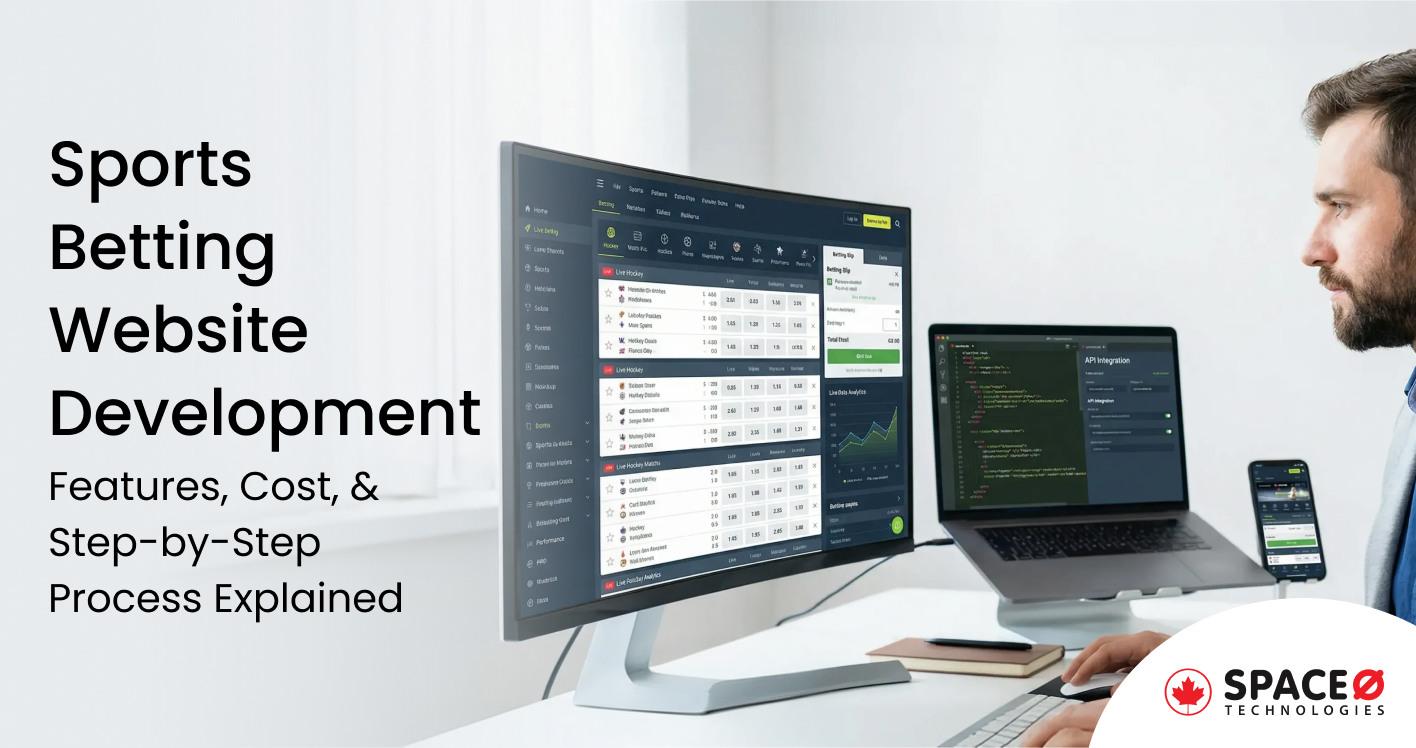
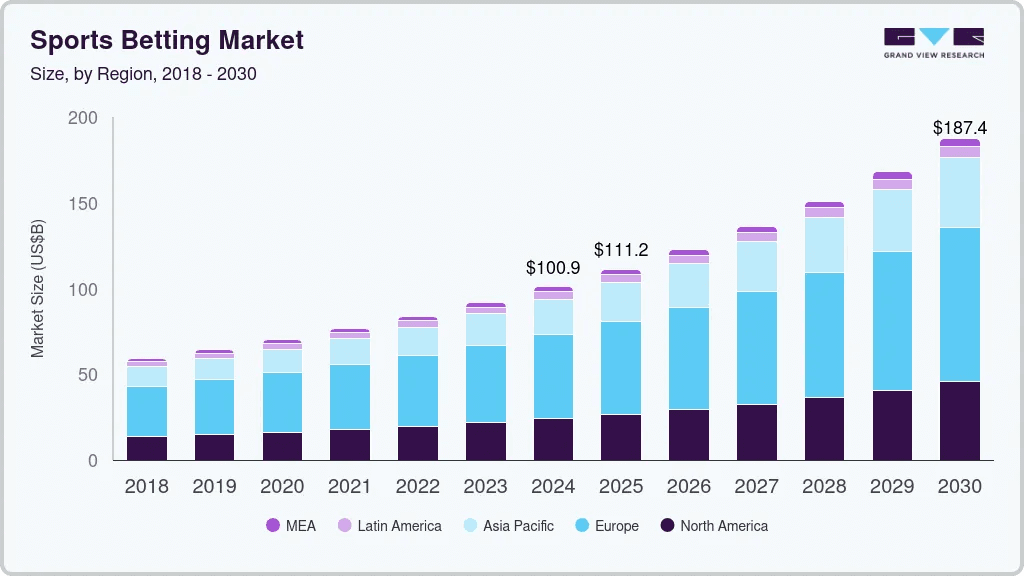
The online sports betting industry is experiencing unprecedented growth, transforming how millions of users engage with their favourite sports. According to Grand View Research, the global sports betting market was valued at USD 83.65 billion in 2023 and is projected to grow at a CAGR of 10.3% from 2024 to 2030. In Canada alone, the legalization of single-event sports betting in 2021 has opened a lucrative market opportunity for entrepreneurs and gaming operators.
However, building a successful sports betting platform is far from straightforward. Sports betting website development involves complex technical architecture, real-time data processing, stringent regulatory compliance, and robust security measures.
Whether you’re a startup founder entering the iGaming space or an established operator looking to expand digitally, understanding the complete development process is essential.
This guide covers everything you need to know about building a sports betting website—from core features and development steps to costs, regulatory requirements, and common challenges. If you’re considering professional website development services for your betting platform, this comprehensive resource will help you make informed decisions.
What is Sports Betting Website Development?
Sports betting website development is the process of building an online platform that allows users to place wagers on sporting events, access real-time odds, and manage their betting activities securely. Unlike traditional websites, sportsbook platforms require sophisticated real-time data processing, secure payment handling, and compliance with gaming regulations.
A sports betting website serves as the digital interface between bettors and the bookmaker, facilitating everything from account creation and deposits to bet placement and withdrawals. These platforms must handle thousands of concurrent users, especially during major sporting events, while maintaining sub-second response times for odds updates and bet confirmations.
In Canada, the sports betting landscape transformed significantly after Bill C-218 legalized single-event sports betting in August 2021. Provincial regulators like iGaming Ontario now oversee the licensing and operation of online betting platforms, creating both opportunities and compliance requirements for operators entering the Canadian market.
Organizations investing in website development consulting for betting platforms must prioritize scalability and compliance from the outset, as retrofitting these capabilities later proves significantly more complex and costly.
With the fundamentals clear, let’s explore the essential features that make a sports betting website successful and engaging for users.
What are the Key Features of a Sports Betting Website?
Building a competitive sports betting platform requires a comprehensive feature set that addresses user needs, operational requirements, and regulatory compliance. Space-O Technologies recommends categorizing these features into three distinct layers: user-facing features, admin panel capabilities, and backend functionality.
1. User-facing features
The user experience determines whether bettors stay on your platform or move to competitors. Essential user-facing features include:
User registration and KYC verification
A streamlined registration process with mandatory Know Your Customer (KYC) verification ensures compliance while minimizing friction. Users should be able to sign up using email, phone number, or social accounts, followed by identity verification through document uploads.
Multi-sport coverage and betting markets
Comprehensive sports coverage is non-negotiable. Your platform should support popular sports like football, basketball, hockey, soccer, tennis, and cricket, along with niche markets like esports, MMA, and table tennis. Each sport should offer multiple betting markets—match winner, over/under, handicaps, prop bets, and more.
Live betting (in-play) functionality
In-play betting has become the fastest-growing segment in sports wagering. Users expect to place bets during live events with odds updating in real-time based on game developments. This feature requires robust infrastructure capable of processing thousands of odds changes per second.
2. Admin panel features
Behind every successful betting platform is a powerful admin panel enabling operators to manage the business effectively:
User management dashboard
Administrators need comprehensive user oversight—viewing account details, verifying documents, managing balances, handling disputes, and monitoring suspicious activity.
Odds management and adjustments
While odds often come from third-party providers, operators need tools to adjust margins, suspend markets, and manually set odds for special events or promotions.
Risk management tools
Sophisticated risk management identifies potentially problematic bets, limits exposure on specific outcomes, and alerts operators to unusual betting patterns that might indicate match-fixing or arbitrage.
3. Backend features
The backend infrastructure determines platform performance and reliability:
Real-time data processing
High-performance systems capable of processing millions of data points per second, including odds updates, bet placements, and user sessions.
Secure payment gateway integration
Multiple payment options with bank-grade security—credit/debit cards, e-wallets, bank transfers, and increasingly, cryptocurrency.
Geolocation services
GPS and IP-based location verification ensures users are betting from legal jurisdictions, blocking access from restricted areas.
Pro Tip: When developing a sports betting platform, prioritize real-time performance—users expect odds updates within milliseconds, especially during live events. Space-O Technologies recommends using WebSocket connections and Redis caching to achieve sub-100ms latency.
Develop a Secure and Regulation-Ready Sports Betting Platform
Build a sports betting website that supports secure transactions, user verification, and region-specific compliance requirements.
Understanding these features is essential—now let’s walk through the step-by-step process of developing a sports betting website from concept to launch.
How to Develop a Sports Betting Website? A Step-By-Step Guide
Developing a sports betting website requires a structured approach that balances speed-to-market with platform quality and compliance.
A well-defined website development process is critical for regulated platforms. Space-O Technologies follows a proven eight-step process that has delivered successful betting platforms for clients across regulated markets.
Step 1: Market research and planning
Every successful sportsbook begins with thorough market research. This phase involves:
Competitive analysis: Study existing platforms in your target market. Identify their strengths, weaknesses, unique features, and pricing strategies. Understanding what works helps differentiate your offering.
Target audience identification: Define your ideal users—casual bettors, professional punters, or specific demographic groups. User personas guide feature prioritization and UX decisions.
Feature prioritization: Based on research and budget, determine which features are essential for launch versus future phases. An MVP (Minimum Viable Product) approach allows faster market entry.
Regulatory assessment: Identify licensing requirements in your target jurisdictions. In Canada, this means understanding provincial regulations, iGaming Ontario requirements, and FINTRAC compliance obligations.
Step 2: UI/UX design
User experience can make or break a betting platform. The design phase includes:
Wireframing and prototyping: Create low-fidelity wireframes showing page layouts, user flows, and information architecture. Interactive prototypes allow stakeholder feedback before development begins.
Mobile-first design approach: With over 70% of sports bets placed on mobile devices, designing for smartphones first ensures an optimal mobile experience. Desktop designs then scale up from the mobile foundation.
User journey mapping: Document every user interaction from registration to withdrawal. Identify friction points and optimize for conversion at each stage.
Betting slip optimization: The betting slip is the most critical UI component. Design for clarity, speed, and ease of use across all bet types.
Step 3: Platform architecture development
Technical architecture determines scalability, performance, and maintainability. Selecting the right web development technologies is fundamental to long-term platform success.
Database design: Choose database structures optimized for high-volume transactions. PostgreSQL handles transactional data reliably, while Redis provides caching for frequently accessed information.
API architecture: Design RESTful or GraphQL APIs for communication between frontend, backend, and third-party services. Clear API documentation facilitates integration and future development.
Microservices setup: Breaking the platform into independent services (user management, betting engine, payments, odds feed) enables scaling individual components based on demand.
Scalability planning: Design for peak loads—major sporting events can increase traffic 10-50x. Cloud infrastructure with auto-scaling ensures performance during traffic spikes.
Step 4: Core feature development
With architecture in place, development of core functionality begins:
User registration and authentication: Secure signup flows with email verification, two-factor authentication, and integration with KYC providers.
Betting engine development: The heart of the platform—processing bet placements, calculating payouts, managing bet settlement, and handling edge cases like voided bets or dead heats.
Odds management system: Receiving odds from data providers, applying margins, displaying to users, and automatically suspending markets when necessary.
Payment integration: Connecting deposit and withdrawal functionality with payment processors, implementing transaction limits, and ensuring PCI-DSS compliance.
If you’re exploring how structured development processes ensure project success, understanding the web development life cycle provides valuable insights for building robust betting platforms.
Step 5: Third-party integration
Modern betting platforms rely heavily on external services:
Sports data feed integration: Connecting with providers like Sportradar or Genius Sports for real-time scores, statistics, and odds.
Payment gateway setup: Integrating multiple payment options including Moneris and Interac for Canadian users, along with international options like Stripe and PayPal.
KYC/AML implementation: Integrating identity verification services like Jumio or Onfido for regulatory compliance.
Geolocation integration: Implementing GPS and IP-based location verification to ensure jurisdictional compliance.
Step 6: Testing and QA
Rigorous testing is critical before launch:
Functional testing: Verify every feature works as intended across all user scenarios and edge cases.
Load testing: Simulate peak traffic conditions to ensure platform stability during major sporting events. Space-O recommends testing at 2-3x expected peak loads.
Security testing and penetration testing: Identify and remediate vulnerabilities before malicious actors can exploit them.
Compliance validation: Verify responsible gambling tools function correctly and regulatory reporting generates accurate data.
Step 7: Deployment and launch
Careful deployment minimizes launch risks:
Cloud infrastructure setup: Configure production environments on AWS, Google Cloud, or Azure with proper security groups, load balancers, and monitoring.
Beta launch and feedback: Soft launch with limited users to identify issues in real-world conditions before full release.
Full market launch: Coordinated launch with marketing campaigns, customer support readiness, and monitoring for any issues.
Post-launch monitoring: 24/7 monitoring of platform performance, user behaviour, and potential issues during the critical early period.
Step 8: Maintenance and optimization
Launch is just the beginning:
Performance monitoring: Continuous monitoring of response times, error rates, and user experience metrics.
Feature updates: Regular releases adding new sports, betting markets, and user-requested features.
Compliance updates: Adapting to regulatory changes and new requirements as they emerge.
Ongoing security audits: Regular penetration testing and security reviews to maintain platform integrity.
Pro Tip: Start with an MVP covering 3-5 popular sports to validate market demand before investing in a full-featured platform with all sports and betting markets. Space-O Technologies helps clients prioritize features for maximum market impact with minimal initial investment.
Following this systematic process ensures solid development—now let’s understand how these components work together behind the scenes.
How Does a Sports Betting Platform Work?
Understanding the technical workflow of a sports betting platform helps stakeholders appreciate the complexity involved and make informed development decisions. Here’s how the key components interact from user registration to bet settlement.
1. User journey from registration to placing bets
When a new user arrives at your platform, they first complete registration by providing personal details—name, email, date of birth, and address. The system triggers KYC verification, sending documents to third-party services like Jumio for identity confirmation. Once verified, users can deposit funds using integrated payment gateways.
To place a bet, users browse available sports and markets, select outcomes, and add them to their betting slip. The frontend sends bet requests to the betting engine, which validates selections against current odds, checks user balance, applies any bonuses, and confirms the wager. All this happens within milliseconds.
2. How odds are calculated and displayed
Odds represent the probability of outcomes and determine potential payouts. Sports data providers like Sportradar calculate base odds using statistical models, historical data, and real-time factors. Your platform receives these odds via API, applies your margin (the bookmaker’s profit), and displays them to users.
For example, if true probability suggests even odds (2.00 in decimal), applying a 5% margin might display 1.90, with the difference representing potential profit. Odds update continuously based on betting volume, team news, injuries, and in-play developments.
3. Real-time data flow architecture
Real-time functionality requires sophisticated data architecture. WebSocket connections maintain persistent communication between users’ devices and your servers, enabling instant updates without page refreshes. Redis caching stores frequently accessed data like current odds, reducing database load.
During live events, data flows from sports data providers to your backend, through processing layers that update odds and market status, and finally to connected users—all within 50-100 milliseconds. Microservices architecture ensures that spikes in one area (like odds updates) don’t affect others (like payment processing).
4. Settlement and payout processes
After events conclude, settlement processes determine winning and losing bets. Your platform receives official results from data providers, matches them against placed bets, calculates winnings based on locked-in odds, and credits user accounts. Automated settlement handles standard outcomes, while edge cases (abandoned matches, disqualifications) may require manual review.
Users can then withdraw winnings through available payment methods. Withdrawal requests undergo fraud checks before processing, with payout times varying by payment method—e-wallets often process within hours, while bank transfers may take several days.
The platform’s functionality depends heavily on navigating regulatory requirements to ensure your platform operates legally across jurisdictions.
Launch a Sports Betting Website That Scales With User Demand
Create a betting website built to support peak traffic, live events, and rapid data updates without performance drops.
What are the Regulatory Compliance and Licensing Requirements for Sports Betting Website Development?
Operating a sports betting platform without proper licensing is illegal and exposes operators to severe penalties. Understanding and complying with regulatory requirements is non-negotiable for legitimate operators. Space-O Technologies builds compliance into every betting platform from the ground up.
1. Canadian regulatory landscape
Canada’s sports betting regulations operate at the provincial level, creating a patchwork of requirements:
Provincial gaming regulations
Each province regulates online gambling differently. Ontario launched its open iGaming market in April 2022, allowing private operators. Other provinces maintain provincial lottery corporation monopolies or are considering similar open models.
iGaming Ontario (iGO) requirements
Operators in Ontario must partner with iGaming Ontario and meet strict requirements, including:
- Registration and licensing through the Alcohol and Gaming Commission of Ontario (AGCO)
- Meeting responsible gambling standards
- Implementing player protection measures
- Regular auditing and reporting
- Technical standards compliance
Kahnawake gaming commission
Based in Quebec, the Kahnawake Gaming Commission has licensed online gaming operators since 1999. While jurisdiction is limited, it provides a licensing option for operators serving certain markets.
FINTRAC compliance
As a casino operator in Canada, you must register with FINTRAC (Financial Transactions and Reports Analysis Centre of Canada) and comply with anti-money laundering (AML) and know-your-customer (KYC) requirements. This includes:
- Verifying client identity
- Keeping records of transactions
- Reporting suspicious transactions and large cash transactions
- Implementing a compliance program
2. Responsible gambling requirements
All legitimate jurisdictions require robust responsible gambling measures:
Self-exclusion programs
Users must be able to voluntarily exclude themselves from gambling for specified periods. Self-exclusion should be easy to initiate but require a cooling-off period before reinstatement.
Deposit and betting limits
Mandatory tools allowing users to set daily, weekly, or monthly deposit limits. Once set, increases should require waiting periods while decreases take effect immediately.
Time limits and reality checks
Session duration limits and periodic notifications reminding users how long they’ve been gambling and their net position.
Problem gambling resources
Visible links to organizations like the Responsible Gambling Council, ConnexOntario, and Gamblers Anonymous. Some jurisdictions require funding contributions to problem gambling treatment.
3. Age verification and kyc
Preventing underage gambling is a fundamental regulatory requirement:
Identity verification requirements
Users must verify their identity before placing bets or withdrawing funds. This typically requires government-issued photo ID, proof of address, and in some cases, source of funds documentation.
Government ID validation
Integration with verification services that can validate Canadian driver’s licenses, passports, and provincial health cards against government databases.
Third-Party verification services
Services like Jumio and Onfido automate verification while maintaining compliance records required by regulators.
4. Data Privacy and Security
Operating in Canada requires compliance with privacy legislation:
PIPEDA compliance
The Personal Information Protection and Electronic Documents Act governs how businesses handle personal information. Requirements include:
- Obtaining consent for data collection
- Limiting the collection to necessary information
- Protecting data with appropriate security measures
- Providing access to personal information upon request
- Maintaining accurate records
Data encryption standards
Industry best practices require AES-256 encryption for data at rest and TLS 1.3 for data in transit. Payment data must meet PCI-DSS requirements.
Secure transaction processing
All financial transactions must occur over encrypted connections with proper audit logging for regulatory review.
Space-O Technologies has extensive experience building compliant platforms for regulated industries. Our approach to web portal development ensures compliance is built into the architecture rather than added as an afterthought.
With regulatory requirements understood, let’s examine the investment required for sports betting website development.
How Much Does it Cost to Build a Sports Betting Website?
Building a comprehensive sports betting platform costs $365,000–$720,000 initially, covering architecture, mobile apps, security, and more—depending on customization and scale
Understanding the full cost of sports betting website development helps operators plan budgets realistically and avoid unexpected expenses. For a broader perspective on website development cost, factors like complexity, integrations, and compliance requirements all play a role.
1. Development cost breakdown
| Component | Cost Range (USD) |
|---|---|
| Platform Architecture & Core | $150K–$300K |
| Mobile Apps (iOS/Android) | $80K–$150K |
| Admin Panel & Tools | $40K–$80K |
| Payment Gateway | $20K–$40K |
| Security & Compliance | $30K–$60K |
| UI/UX Design | $25K–$50K |
| Testing & QA | $20K–$40K |
| Total Initial Development | $365K–$720K |
These ranges reflect the complexity of sports betting platforms and the need for high-performance, secure systems. MVP versions focusing on essential features can reduce initial costs to $200,000-$350,000.
2. Licensing and legal costs
Regulatory compliance adds high costs:
Gaming license application
- iGaming Ontario registration: $50,000 – $100,000 (including legal fees)
- Kahnawake Gaming Commission: $25,000 – $50,000
- Other jurisdictions: $50,000 – $200,000+
Legal consultation
Specialized gaming lawyers charge $300-$600/hour. Budget $20,000-$50,000 for initial setup and ongoing consultation.
Ongoing regulatory compliance
Annual fees, audits, and compliance activities typically cost $10,000-$30,000 per year per jurisdiction.
3. Third-party services (Annual)
External services represent significant ongoing expenses:
Sports data feeds
- Basic coverage (5-10 sports): $60,000 – $150,000/year
- Comprehensive coverage (20+ sports): $200,000 – $600,000/year
- Official league data partnerships: Premium pricing
KYC/AML services
Based on verification volume:
- Low volume (10,000 users): $30,000 – $50,000/year
- Medium volume (50,000 users): $75,000 – $150,000/year
- High volume (200,000+ users): $150,000+/year
Hosting and infrastructure
Cloud hosting with proper redundancy and scaling:
- Startup phase: $3,000 – $8,000/month
- Growth phase: $8,000 – $20,000/month
- Enterprise scale: $20,000+/month
4. Factors affecting cost
Several variables significantly impact total investment:
Feature complexity
Basic pre-match betting costs less than platforms with live betting, live streaming, and cash-out functionality. Each advanced feature adds development time and third-party integration costs.
Number of sports and markets
Covering 5 popular sports is far less expensive than comprehensive 30+ sport coverage. Each sport requires data feed licensing and market configuration.
Geographic coverage
Single-jurisdiction platforms are simpler than multi-country operations requiring multiple licenses, currencies, languages, and compliance frameworks.
Compliance requirements
Stricter jurisdictions (like Ontario) require more robust compliance features than lighter regulatory environments.
Customization level
White-label solutions offer faster, cheaper market entry but limit differentiation. Fully custom platforms cost more but provide competitive advantages.
Pro Tip: Start with an MVP covering 3-5 popular sports, then expand based on user demand—this reduces initial investment while validating market fit. Space-O Technologies helps clients phase development to manage costs while building toward full-featured platforms.
Understanding costs helps with planning, but awareness of development challenges and their solutions ensures a smoother development journey.
What are the Challenges in Sports Betting Website Development and How to Overcome Them?
Every sports betting project faces obstacles that can derail timelines, inflate budgets, or compromise platform quality. Understanding common challenges and proven solutions helps operators and development teams navigate these hurdles successfully. Space-O Technologies has encountered and resolved these challenges across multiple betting platform projects.
1. Handling high traffic during major sporting events
Challenge: When millions of users place bets simultaneously during championship games or tournament finals, servers can crash and response times spike dramatically. This leads to failed transactions, frustrated users, and significant revenue loss during the most profitable moments.
Solution: Implementing a microservices architecture paired with auto-scaling cloud infrastructure through AWS or Google Cloud addresses this effectively. Load balancers distribute traffic across multiple server instances while designing systems to handle three to five times the expected peak load ensures stability during unexpected surges.
2. Navigating multi-jurisdictional regulatory compliance
Challenge: Sports betting operates under vastly different legal frameworks across states and countries. Each jurisdiction has unique licensing requirements, tax structures, and operational restrictions that create significant complexity for platforms seeking broader market reach.
Solution: Partnering with legal experts specializing in gaming law from project inception establishes a strong compliance foundation. Building modular compliance systems that can be configured per jurisdiction while maintaining relationships with regulatory consultants in each target market creates a sustainable and adaptable approach.
3. Preventing fraud and protecting financial transactions
Challenge: Betting platforms attract sophisticated fraudsters attempting account takeovers, bonus abuse, multi-accounting schemes, and payment fraud. These activities drain revenue and undermine platform integrity if left unchecked.
Solution: Implementing AI-powered fraud detection that analyzes behavioral patterns catches suspicious activity early. Deploying multi-layer verification for high-risk transactions combined with partnerships with specialized gaming fraud prevention services creates robust protection while dedicated fraud investigation teams handle complex cases.
4. Achieving system reliability users expect
Challenge: Bettors demand near-perfect uptime, especially during live events where seconds matter for placing wagers. Even brief outages during critical moments destroy user trust and drive customers to competitors permanently.
Solution: Designing multi-region redundancy with automatic failover ensures continuous availability across geographic locations. Comprehensive monitoring through tools like DataDog or New Relic enables proactive issue detection while detailed runbooks for common failure scenarios allow teams to respond rapidly when problems occur.
5. Competing against established betting operators
Challenge: New entrants face significant disadvantages against brands with years of market presence, massive marketing budgets, and established user bases. Breaking through requires strategic positioning rather than direct confrontation.
Solution: Focusing on niche sports or underserved regional markets initially creates space to grow without direct competition from giants. Offering superior user experience through innovative features builds differentiation while excellent customer service and targeted marketing establish brand recognition organically over time.
6. Building user trust as a new platform
Challenge: First-time users hesitate to deposit money with unfamiliar betting apps given the sensitive nature of financial transactions involved. Overcoming skepticism requires demonstrating credibility through multiple trust signals.
Solution: Obtaining proper licensing and displaying credentials prominently signals legitimacy immediately to cautious visitors. Showcasing security certifications alongside responsible gambling commitments demonstrates operational maturity while transparent bonus terms and responsive multi-channel customer support convert skeptical visitors into confident users.
Pro Tip: Proactive planning for scalability during the architecture phase prevents costly re-engineering when user traffic spikes during major sporting events like the Super Bowl or World Cup. Space-O Technologies designs for scale from day one, saving clients significant costs and headaches as their platforms grow.
For complex development projects requiring specialized expertise, consider working with a dedicated software development team that can focus exclusively on your platform’s success.
What are the Benefits of Custom Sports Betting Website Development?
Investing in custom sports betting website development delivers advantages that white-label or turnkey sportsbook solutions cannot match. Here’s what you gain from a purpose-built betting platform.
1. Capture more high-value bettors
Custom sportsbook platforms optimize every touchpoint for player acquisition and retention. Strategic placement of welcome bonuses on registration pages, free bet prompts on live event feeds, and deposit incentives during major tournaments ensures you capture bettor information at peak engagement moments. A/B testing lets you refine promotional offers, parlay builders, and cash-out prompts based on actual player behavior.
Unlike white-label platforms used by dozens of competing operators, your custom sportsbook can offer unique engagement tools like personalized bet suggestions, accumulator builders, and tiered loyalty programs that attract and retain serious bettors.
2. Stand out in a crowded sportsbook market
White-label betting platforms make every operator look identical. Bettors notice generic interfaces and associate them with less trustworthy or less established brands. Custom design lets you reflect your brand identity, betting philosophy, and target market through every visual element, animation, and interaction.
For operators targeting niche segments like esports betting, regional leagues, or premium high-roller experiences, a tailored brand presentation directly impacts perceived credibility and long-term player loyalty.
3. Scale as your betting volume grows
Custom architecture supports your growth without platform restrictions. Expand into new jurisdictions, add sports and betting markets, introduce live streaming or cash-out functionality, or launch companion mobile apps as your user base grows. White-label platforms eventually hit performance ceilings and feature limitations, forcing costly and disruptive migrations during critical growth periods.
Planning scalability from the start through microservices architecture, auto-scaling cloud infrastructure, and optimized database design ensures your platform handles Super Bowl-level traffic spikes without downtime or degraded performance.
4. Own your player data and betting intelligence
On third-party or white-label platforms, you’re a tenant. Platform changes, revenue share adjustments, or policy updates can disrupt your operations without warning. Custom development gives you complete ownership of your player data, betting patterns, financial records, and operational analytics.
This ownership enables deeper insights into bettor preferences, personalized odds boosts, targeted retention campaigns, and proprietary risk management models that leverage your unique data to maximize margins and reduce exposure.
5. Deliver a seamless betting experience across devices
Custom development tailors every interaction to how your specific bettors engage with sports. Understanding whether your audience prioritizes live in-play betting, pre-match parlays, or quick single bets allows you to design interfaces built for their habits rather than generic compromises.
Performance optimization ensures odds update in real time without lag. Touch-friendly betting slips work flawlessly on mobile. Persistent login and quick deposit flows reduce friction between the decision to bet and confirmed wager placement, directly improving conversion rates.
6. Gain a lasting edge over competing sportsbooks
Unique features tailored to your market create differentiation that competitors using off-the-shelf solutions cannot replicate. Whether through AI-powered bet recommendations, exclusive prop bet builders, social betting features, or innovative cash-out mechanics, custom development enables strategic advantages that strengthen your market position over time.
Organizations exploring [enterprise web development] approaches gain sportsbook platforms that support long-term competitive positioning rather than short-term cost savings.
Build a Custom Sports Betting Website With Space-O’s Experts
Space-O’s development team helps design and build betting platforms optimized for performance, security, and long-term scalability.
Partner with Space-O Technologies for Scalable Sports Betting Web Solutions
Sports betting website development represents both a significant opportunity and a complex undertaking. The global market’s continued growth, combined with Canada’s evolving regulatory landscape, creates favourable conditions for well-executed platforms.
Space-O Technologies specializes in building high-performance platforms for regulated industries, including iGaming and sports betting.
Our team has a proven track record of delivering scalable, compliance-ready solutions for operators across North American markets. Since 2018, we have delivered 300+ software solutions across industries, including regulated sectors requiring robust compliance frameworks.
For sports betting website development, Space-O delivers end-to-end expertise with strong Canadian regulatory knowledge, including PIPEDA compliance. The team builds scalable real-time platforms, manages development from MVP to full-scale solutions, ensures transparent communication, provides reliable post-launch support, and offers flexible engagement models to match different project needs.
Whether you’re launching a new sportsbook, modernizing an existing platform, or expanding into Canadian markets, choosing from the right website development companies is essential.
Space-O Technologies provides the technical expertise and industry knowledge to bring your vision to life.
Ready to start your sports betting platform project? Schedule a free consultation with Space-O Technologies to discuss your requirements and receive a detailed proposal tailored to your specific needs.
Frequently Asked Questions About Sports Betting Website Development
How long does it take to develop a sports betting website?
Development timelines vary based on scope and technical complexity. An MVP platform with essential features and support for 3–5 sports typically takes 6–9 months. A full-featured platform covering 15+ sports usually requires 12–18 months, while an enterprise-grade solution with multi-jurisdiction compliance and white-label capabilities can take 18–24 months to complete.
Do I need a gaming license to launch a sports betting website in Canada?
Yes, operating a sports betting platform in Canada requires proper licensing. In Ontario, operators must register with iGaming Ontario and be licensed by the Alcohol and Gaming Commission of Ontario (AGCO). Other provinces currently operate through provincial lottery corporations, though regulations continue evolving.
What is the difference between a sportsbook and a betting exchange?
Sportsbook (Traditional): Users bet against the house. The operator sets odds, accepts bets, and pays winnings from their own funds. Profit comes from the margin built into odds.
Betting Exchange: Users bet against each other. The platform matches opposing bets and takes a commission (typically 2-5%) on winning bets. Operators have no exposure to outcomes.
Most platforms start as traditional sportsbooks due to simpler operations and more predictable economics.
Can I add casino games to my sports betting platform?
Yes, many operators run integrated sportsbook and casino platforms. This setup requires separate casino and sports betting licenses, integrations with providers like NetEnt or Evolution Gaming, and dedicated responsible gambling tools. While development and compliance costs increase, the hybrid model significantly improves engagement and revenue potential.
How do I ensure responsible gambling compliance?
Ensure compliance by implementing deposit, loss, and wagering limits, session time controls, reality checks, and self-exclusion options. Enforce cool-off periods for limit changes, display problem gambling resources, train staff to identify risks, and use monitoring systems to flag concerning player behavior early.


Build a Custom Sports Betting Website With Space-O’s Experts
What to read next


 All our projects are secured by NDA
100% Secure. Zero Spam
*All your data will remain strictly confidential.
Trusted by


Bashar Anabtawi 
Canada
“I was mostly happy with the high level of experience and professionalism of the various teams that worked on my project. Not only they clearly understood my exact technical requirements but even suggested better ways in doing them. The Communication tools that were used were excellent and easy. And finally and most importantly, the interaction, follow up and support from the top management was great. Space-O not delivered a high quality product but exceeded my expectations! I would definitely hire them again for future jobs!”

Canada Office
2 County Court Blvd., Suite 400,
Brampton, Ontario L6W 3W8
Phone: +1 (602) 737-0187
Email: sales@spaceo.ca