
- Quick Overview of Healthcare Website Development Costs
- What are the Key Factors That Affect Healthcare Website Development Cost
- 1. Design complexity (custom vs. template)
- 2. Number of pages and content requirements
- 3. Compliance requirements (PIPEDA, PHIPA)
- 4. EHR/EMR integration complexity
- 5. Telemedicine and virtual care features
- 6. Patient portal functionality
- 7. Third-party integrations
- 8. Development team location and expertise
- Healthcare Website Development Cost Breakdown by Project Phase
- What are the Ongoing Costs After Launching a Healthcare Website?
- Healthcare Website vs. Healthcare App: Cost Comparison
- How to Reduce Healthcare Website Development Costs (Without Compromising Quality)
- How to Choose a Healthcare Website Development Partner?
- How Space-O Technologies Helps Healthcare Organizations Succeed Digitally
- Frequently Asked Questions About Healthcare Website Development Cost
Cost of Healthcare Website Development: A Detailed Breakdown

 Last Updated: April, 6 2026
The cost of healthcare website development in Canada ranges from $25,000 CAD for a basic clinic website to $250,000+ for a comprehensive platform with patient portals, telemedicine, and EHR integration. Understanding these costs is crucial for budget planning and securing stakeholder approval.
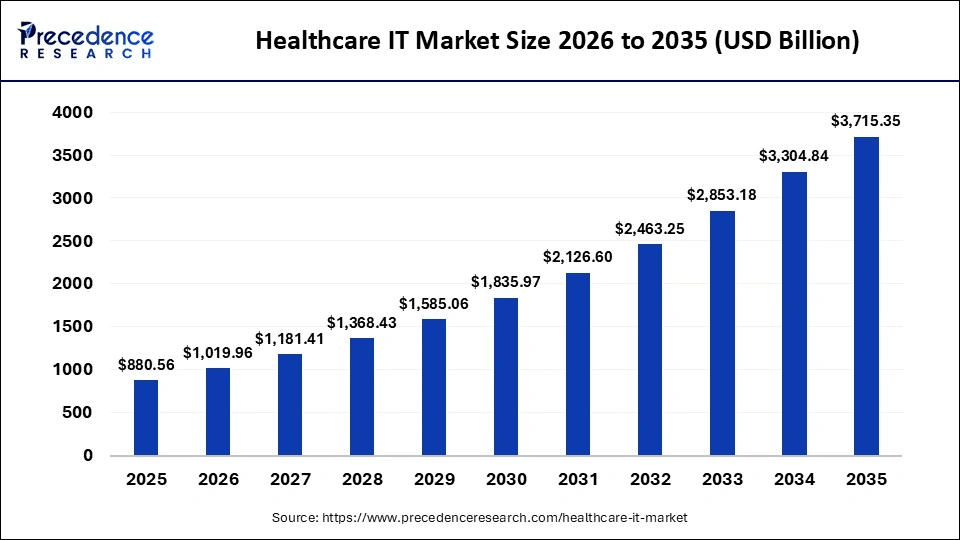
According to Precedence Research, the global healthcare IT market is projected to grow from USD 880.12 billion in 2025 to USD 3,257.26 billion by 2034. This rapid digital transformation means patients now expect the same seamless online experience from healthcare providers that they receive from banks and retailers. A well-designed healthcare website is no longer optional—it’s essential for patient acquisition, retention, and operational efficiency. Our comprehensive guide to healthcare website development covers the features, compliance, and process in detail.
Whether you’re developing a new website or you’re a clinic owner, hospital administrator, IT director, or telehealth startup founder in Canada, this guide provides a complete cost breakdown to help you plan your investment.
With this guide, you will understand healthcare website costs, pricing factors, feature-specific expenses, post-launch costs, cost-saving strategies, and how to choose the right development partner.
Quick Overview of Healthcare Website Development Costs
Healthcare website costs range from $25K–$60K CAD for basic clinic sites to $100K–$250K+ for enterprise platforms with patient portals and telehealth—tailored to your practice size.
Before diving into the details, here’s a comprehensive overview of what healthcare organizations typically invest in website development.
These ranges reflect Canadian market rates and include PIPEDA/PHIPA compliance requirements.
| Website Type | Cost Range (CAD) | Timeline | Best For |
|---|---|---|---|
| Basic Healthcare Website | $25K–$60K | 10-14 weeks | Small clinics, single-location, dental offices |
| Patient Portal Integration | $50K–$120K | 14-20 weeks | Multi-provider/specialty practices, established clinics |
| Comprehensive Platform | $100K–$250K+ | 20-30 weeks | Hospitals, telehealth, multi-location networks |
What’s included in each tier?
Basic Healthcare Website ($25,000–$60,000) includes informational pages, provider directory, appointment request forms, contact functionality, mobile-responsive design, and foundational PIPEDA compliance. This tier suits private practices and small clinics looking to establish a professional online presence.
Patient Portal Integration ($50,000–$120,000) adds secure patient login, EHR/EMR integration, online appointment scheduling, secure messaging, prescription refill requests, and bill pay functionality. This tier is ideal for established practices ready to improve patient engagement and operational efficiency.
Comprehensive Healthcare Platform ($100,000–$250,000+) includes everything above plus telemedicine capabilities, multi-location support, advanced analytics, custom integrations, mobile app connectivity, and enterprise-grade security. Health systems and telehealth startups typically require this level of investment.
Pro Tip: Start by identifying which tier aligns with your immediate needs. Many Space-O Technologies clients begin with a basic or mid-tier website and expand functionality as patient adoption grows—this phased approach optimizes your investment over time.
Understanding these baseline costs is just the starting point—let’s examine the specific factors that determine where your project falls within these ranges.
What are the Key Factors That Affect Healthcare Website Development Cost
Healthcare website development costs vary significantly based on several critical factors. Understanding these variables helps you anticipate expenses and make informed decisions during the planning phase.
1. Design complexity (custom vs. template)
The design approach you choose significantly impacts your budget. Here’s how different design options compare:
| Design Approach | Cost Range (CAD) | Timeline | Best For |
|---|---|---|---|
| Template (Customized) | $5K–$15K | 2–4 weeks | Budget-focused, quick launches |
| Semi-Custom | $15K–$30K | 4–6 weeks | Brand differentiation on a budget |
| Fully Custom | $30K–$60K | 6–10 weeks | Unique identity for large organizations |
Custom designs provide complete control over user experience and brand presentation but require greater investment. For healthcare organizations, custom design often delivers better patient trust and engagement—critical factors for patient acquisition.
Space-O Technologies recommends a custom design for healthcare websites because patients associate a professional, unique design with quality care. Template-based sites can appear generic and reduce patient confidence.
2. Number of pages and content requirements
Page count directly affects development time and cost. Healthcare websites typically require more content than standard business websites due to service explanations, provider profiles, and patient resources.
| Page Count | Cost Impact (CAD) | Typical Use Case |
|---|---|---|
| 5–15 | Base pricing | Small single-specialty practice |
| 15–30 | +$5K–$15K | Multi-specialty clinic |
| 30–50 | +$15K–$30K | Hospital/health system |
| 50+ | +$30K+ | Enterprise healthcare network |
Content migration from an existing website adds $2,000–$10,000 depending on volume and complexity. Professional medical copywriting costs $300–$800 per page if you need content created from scratch.
3. Compliance requirements (PIPEDA, PHIPA)
Compliance is non-negotiable for healthcare websites in Canada. Building PIPEDA and PHIPA compliance into your website requires specialized expertise and adds to development costs.
| Compliance Element | Cost Range (CAD) | What’s Included |
|---|---|---|
| Basic PIPEDA | $5K–$10K | Privacy policy, consent, data protocols |
| PHIPA (Ontario) | $8K–$15K | Health info protection, breach notice, access controls |
| Full Package | $10K–$20K | PIPEDA+PHIPA, audit documentation |
Provincial regulations vary across Canada. Ontario requires PHIPA compliance, Alberta has HIA (Health Information Act), and British Columbia follows PIPA. Space-O Technologies has experience navigating these provincial differences for healthcare clients across Canada.
Pro Tip: Never treat compliance as an afterthought. Retrofitting PIPEDA or PHIPA compliance into an existing website costs 2-3x more than building it into the foundation. Space-O Technologies integrates compliance checkpoints throughout our website development process.
4. EHR/EMR integration complexity
Connecting your website with Electronic Health Record (EHR) or Electronic Medical Record (EMR) systems enables appointment scheduling, patient portal functionality, and data synchronization. Integration complexity significantly impacts cost.
| Integration Type | Cost Range (CAD) | Timeline | Common Systems |
|---|---|---|---|
| Basic API | $10K–$25K | 3–5 weeks | Single EHR, limited data |
| Standard | $25K–$45K | 5–8 weeks | Appt sync, patient demographics |
| Advanced | $45K–$60K | 8–12 weeks | Full bidirectional exchange |
Modern healthcare integrations use HL7 FHIR (Fast Healthcare Interoperability Resources) standards. Organizations seeking comprehensive clinical system connectivity should explore our specialized healthcare web development capabilities.
5. Telemedicine and virtual care features
The demand for virtual care has transformed telemedicine from nice-to-have to essential. With AI increasingly embedded in healthcare delivery, understanding the cost of implementing AI in healthcare helps organizations plan for future-ready telemedicine capabilities. Telemedicine features add significant value but also complexity.
| Telemedicine Feature | Cost Range (CAD) | Complexity |
|---|---|---|
| Basic Video | $15K–$30K | Medium |
| Full Platform | $40K–$70K | High |
| Custom Virtual Care | $70K–$100K | Very High |
Telemedicine development includes PHIPA-compliant video platforms, virtual waiting rooms, prescription integration, screen sharing for reviewing results, and session recording for documentation.
6. Patient portal functionality
Patient portals serve as the digital hub for patient engagement. Portal complexity directly correlates with development cost.
| Portal Level | Cost Range (CAD) | Features Included |
|---|---|---|
| Basic | $15K–$40K | Secure login, appt view, basic messaging |
| Standard | $40K–$60K | Records access, refills, bill view |
| Advanced | $60K–$80K | Full records, secure msg, bill pay, family accts |
Space-O Technologies builds patient portals that integrate seamlessly with major EHR systems while maintaining strict PIPEDA and PHIPA compliance. Our teams work extensively on dental website development and tailor it to each practice type.
7. Third-party integrations
Beyond EHR systems, healthcare websites often require connections with payment processors, insurance verification services, and marketing tools.
| Integration Type | Cost Range (CAD) | Examples |
|---|---|---|
| Payment Processing | $3K–$8K | Moneris, Interac, Stripe |
| Insurance Verification | $5K–$15K | Eligibility checking services |
| Marketing Automation | $3K–$10K | HubSpot, Mailchimp, CRMs |
| Analytics & Reporting | $5K–$12K | Custom dashboards, GA4 |
Canadian payment integration requires familiarity with local processors. Space-O Technologies has experience integrating Moneris and Interac for Canadian healthcare clients.
8. Development team location and expertise
Where your development team is located, and their healthcare-specific expertise significantly impacts cost.
| Team Location | Hourly Rate (CAD) | Healthcare Expertise |
|---|---|---|
| Canada (Local) | $80–$150 | High availability, strong regulatory knowledge |
| United States | $100–$175 | Similar standards, good timezone match |
| Eastern Europe | $40–$80 | Variable healthcare experience |
| Asia | $25–$50 | Limited Canadian compliance expertise |
While offshore rates appear attractive, healthcare projects require specialized knowledge of Canadian regulations, compliance requirements, and integration standards. Space-O Technologies combines competitive pricing with deep Canadian healthcare expertise—our Toronto-based team understands PIPEDA, PHIPA, and provincial requirements that generic developers may lack.
If you’re considering building your development team, explore our options to hire web developers with healthcare experience.
Plan Healthcare Website Costs With Regulatory and Clinical Context
Space-O’s experts guide teams in aligning website budgets with HIPAA, accessibility, and patient engagement requirements from the start.
Now that you understand what drives costs, let’s break down the investment required for each development phase.
Healthcare Website Development Cost Breakdown by Project Phase
Healthcare website development follows a structured process with distinct phases. Understanding the cost and timeline for each phase helps you plan resources and set expectations.
Space-O Technologies follows a proven web development methodology adapted specifically for healthcare projects.
Phase 1: Discovery and requirements ($3,000–$10,000)
Every successful healthcare website project begins with comprehensive discovery. This phase establishes the foundation for all subsequent work. It includes stakeholder interviews with administrators, clinicians, and IT staff, along with patient journey mapping to identify digital improvement opportunities.
The team conducts a compliance requirements assessment covering PIPEDA, PHIPA, and provincial regulations, as well as integration needs analysis for EHR/EMR and third-party systems. Competitive analysis of peer healthcare organizations and technical requirements documentation round out this critical phase. This phase prevents costly surprises during development.
Space-O Technologies recommends investing adequately in discovery—every dollar spent here saves multiple dollars during development.
Phase 2: UI/UX design ($8,000–$25,000)
Design transforms requirements into visual prototypes that stakeholders can evaluate before development begins. This phase encompasses information architecture and site mapping, wireframing for all page types, and accessibility-first design with WCAG 2.1 Level AA compliance.
The team creates mobile-responsive layouts for all screen sizes and patient-centric interface design, followed by stakeholder review and feedback cycles that culminate in final design specifications for development. Healthcare website design requires special attention to accessibility. Partnering with a dedicated healthcare website design team ensures these standards are met from the start. Patients with diverse abilities must access your services—designing with AODA (Accessibility for Ontarians with Disabilities Act) compliance from the start ensures inclusivity.
Phase 3: Development ($40,000–$150,000)
Development transforms approved designs into functional software. This phase represents the largest investment in your project. It covers frontend development for the user-facing interface and backend development for server-side infrastructure, alongside EHR/EMR system integration and patient portal implementation.
Security feature implementation, including encryption, authentication, and audit logging is essential, as is API development for third-party services and content management system setup. Space-O Technologies employs modern web development technologies like React, Vue.js, and Laravel to create fast, secure, and maintainable healthcare websites.
Phase 4: Testing and compliance audit ($8,000–$25,000)
Thorough testing ensures your website works correctly and meets all regulatory requirements before launch. This phase includes functionality and usability testing, security and penetration testing, and PIPEDA/PHIPA compliance audits. Accessibility testing with WCAG validation and performance testing under load verifies the system meets standards, while cross-browser and device testing ensure broad compatibility. Organizations planning advanced data capabilities can explore how predictive analytics in healthcare informs post-launch optimization and patient engagement strategies. Bug fixes and refinements complete the process.
Pro Tip: Never skip penetration testing for healthcare websites. Patient data is a high-value target for cyberattacks. Space-O Technologies engages qualified security professionals to identify vulnerabilities before launch.
Phase 5: Deployment and training ($3,000–$8,000)
Careful deployment minimizes disruption and ensures staff readiness. This phase includes staged deployment progressing from internal testing to limited patient access and finally full launch. Staff training on administrative tools and patient portal training materials prepares your team, while documentation and user guides provide ongoing reference. Go-live support with heightened availability and post-launch monitoring ensures a smooth transition.
Beyond these development phases, it’s important to understand the ongoing investment required after your website launches.
What are the Ongoing Costs After Launching a Healthcare Website?
Healthcare website development doesn’t end at launch. Ongoing investment ensures continued security, compliance, and performance. Many organizations underestimate these costs during initial planning.
| Cost Category | Monthly Range (CAD) | Annual Range (CAD) | What’s Included |
|---|---|---|---|
| PHIPA Hosting | $500–$2K | $6K–$24K | Secure servers, Canada data residency, backups/SSL |
| Maintenance & Security | $2K–$5K | $24K–$60K | Updates, patches, monitoring, support |
| Compliance Monitoring | $500–$1.5K | $6K–$18K | Policy/audit prep, regulatory tracking |
| Content Updates | $500–$2K | $6K–$24K | Provider info, services, health resources |
| Total Ongoing | $3.5K–$10.5K | $42K–$126K | Full post-launch support |
Why ongoing maintenance is critical
Healthcare websites face unique risks that make maintenance non-negotiable:
Security risks: Healthcare data commands premium prices on dark web markets. Outdated software creates vulnerabilities that attackers exploit. Regular security patches close these gaps before breaches occur.
Compliance requirements: PIPEDA and PHIPA requirements evolve. Privacy policies, consent mechanisms, and data handling procedures need periodic updates to remain compliant.
Patient experience: Broken features, slow performance, and outdated content frustrate patients and damage your reputation. Regular maintenance ensures optimal user experience.
EHR integration stability: EHR vendors release updates that can break integrations. Ongoing monitoring catches and resolves these issues quickly.
Cost of neglecting maintenance
Organizations that skip ongoing maintenance face significantly higher costs:
- Security breach remediation: $50,000–$500,000+
- PIPEDA violation fines: Up to $100,000 per violation
- Emergency fixes: 2-3x standard maintenance rates
- Reputation damage: Incalculable patient trust loss
Space-O Technologies offers ongoing maintenance packages that provide peace of mind. Our packages include security monitoring, regular updates, compliance tracking, and priority support—typically at lower cost than building an internal team. Choosing an experienced website development company ensures reliable long-term support.
Hosting requirements for healthcare
Standard web hosting doesn’t meet healthcare requirements. PHIPA-compliant hosting must provide:
- Canadian data residency (data stored on Canadian servers)
- Encryption at rest and in transit
- Regular automated backups
- Access logging and audit trails
- Disaster recovery capabilities
- 99.9%+ uptime guarantees
Budget $500–$2,000 monthly for compliant hosting, depending on traffic volume and redundancy requirements.
Get a Detailed Cost Estimate for Your Healthcare Website
Space-O Technologies provides transparent, itemized estimates for healthcare website projects. Discuss your requirements with our team and receive a detailed breakdown.
Understanding the total cost of ownership helps with budgeting—but how does healthcare website development compare to building mobile applications?
Healthcare Website vs. Healthcare App: Cost Comparison
Many healthcare organizations wonder whether to invest in a website, mobile app, or both. Here’s how the costs compare:
| Factor | Healthcare Website | Healthcare Mobile App | Both Platforms |
|---|---|---|---|
| Initial Development | $50K–$200K | $60K–$150K | $100K–$300K |
| Timeline | 14–30 weeks | 16–32 weeks | 20–40 weeks |
| Ongoing (Annual) | $42K–$126K | $50K–$120K | $80K–$200K |
| Maintenance | Moderate | High (app store updates) | High |
| Patient Reach | All devices (browser) | iOS/Android only | Maximum |
| Feature Limits | Some device features | Full device access | Best of both |
1. When to build the website first
Start with a website if:
- You’re establishing your initial digital presence
- Budget is limited and needs prioritization
- Your patient demographic spans all age groups
- You want faster time-to-market
- You need to test features before mobile investment
Websites work on all devices through browsers, require no app store approval, and update instantly without user action.
2. When a native app adds value
Add a mobile app if:
- Your patients need offline access to health information
- Push notifications are critical for engagement
- You require device features (camera, GPS, biometrics)
- Patient portal usage is high and growing
- Telemedicine is a core service offering
3. Progressive Web App (PWA) as a middle ground
Progressive Web Apps offer app-like experiences through browsers—providing push notifications, offline functionality, and home screen installation without app store distribution. As the future of healthcare technology evolves toward more connected patient experiences, PWAs offer a cost-effective bridge between websites and native apps.
PWA development costs $30,000–$60,000 and can serve as a bridge between website and native app investment.
Pro Tip: Most Space-O Technologies healthcare clients start with a responsive website, achieve strong patient adoption, then add native mobile apps as usage justifies the investment. This approach optimizes ROI while building toward a comprehensive digital presence.
With cost expectations set, let’s explore practical strategies to optimize your healthcare website investment.
How to Reduce Healthcare Website Development Costs (Without Compromising Quality)
Strategic decisions during planning can significantly reduce costs without sacrificing quality or compliance. Here are proven approaches that Space-O Technologies recommends to healthcare clients.
1. Start with an MVP approach
Launch with only essential features like appointment scheduling, provider directory, and basic patient resources before expanding. This approach reduces initial investment by 40-60% while validating assumptions through real patient feedback. Spreading investment over time minimizes the risk of building unused features and allows adoption data to guide priorities.
2. Prioritize compliance from day one
Building compliance into your foundation costs far less than retrofitting later. Compliance-first development requires $10,000–$20,000 initially with minimal ongoing adjustments, while retrofitting costs $25,000–$50,000 or more for remediation. PIPEDA violations can result in fines up to $100,000 per violation, making an upfront investment worthwhile.
3. Choose integrations wisely
Not every integration needs to happen at launch. Prioritize connections delivering immediate patient value, like EHR/EMR, for appointment scheduling and payment processing for bill pay. Secondary integrations, including insurance verification, marketing automation, and advanced analytics, can wait for Phase 2 when manual processes suffice initially.
4. Leverage proven frameworks and platforms
Avoid custom-building standard features that proven platforms handle well. Use enterprise CMS like Drupal for healthcare-grade content management security. Integrate established video platforms such as Zoom Healthcare or Doxy.me for telemedicine capabilities. Leverage existing payment gateways rather than custom processing to reduce development time significantly.
5. Partner with experienced healthcare developers
Inexperienced teams cost more through extended timelines from learning healthcare requirements mid-project. They create compliance gaps requiring expensive remediation, integration failures with EHR systems, and security vulnerabilities from healthcare-naïve development practices. Space-O Technologies uses proven technology stacks that reduce development time while maintaining quality and security.
Pro Tip: The cheapest quote rarely delivers the best value for healthcare projects. Evaluate partners on healthcare experience, compliance knowledge, and total cost of ownership—not just initial development price.
Before finalizing your budget, you’ll need to decide on the right development partner—here’s what to consider.
How to Choose a Healthcare Website Development Partner?
Selecting the right development partner impacts both project cost and outcome. Healthcare websites require specialized expertise that general web developers may lack.
1. Verify healthcare industry experience
Generic web developers lack understanding of healthcare’s unique challenges. Look for partners with proven healthcare portfolios demonstrating PIPEDA, PHIPA, and provincial compliance expertise. Ask for case studies showing EHR integrations, patient portal implementations, and accessibility solutions. Healthcare-specific experience translates directly into fewer development problems and regulatory complications.
2. Assess technical capabilities and modern frameworks
Evaluate the technology stack your potential partner uses for healthcare projects. Whether you’re building in-house or planning to outsource web development, modern frameworks like React, Vue.js, and Laravel deliver better performance and maintainability. Ensure they understand secure coding practices, API development for healthcare integrations, and mobile-responsive design principles essential for patient-facing applications across all devices.
3. Evaluate compliance and security expertise
Healthcare websites demand rigorous security and regulatory adherence. Your partner should demonstrate deep knowledge of Canadian privacy laws, encryption standards, and audit logging requirements. Ask about their penetration testing protocols and how they handle security vulnerabilities. A partner lacking compliance expertise puts your organization at significant risk.
4. Review communication and project management processes
Successful healthcare projects require transparent communication between all stakeholders. Assess how potential partners manage projects, report progress, and handle change requests. Look for structured methodologies, regular status updates, and clear escalation paths. Poor communication during development leads to missed requirements, budget overruns, and frustrated clinical staff.
5. Consider long-term support and maintenance capabilities
Your healthcare website requires ongoing attention after launch. Evaluate whether partners offer comprehensive maintenance plans covering security updates, compliance monitoring, and feature enhancements. Ask about response times for critical issues and their approach to evolving regulatory requirements. A reliable long-term partner protects your investment.
6. Request references from healthcare clients
Speaking directly with previous healthcare clients reveals insights no portfolio can provide. Ask references about timeline adherence, budget management, and post-launch support quality. Inquire specifically about compliance handling and how the partner addressed unexpected challenges during development. Genuine testimonials validate marketing claims effectively.
Want to Optimize Your Healthcare Website Investment?
Space-O Technologies helps healthcare organizations maximize value within budget constraints. Get a free consultation to discuss MVP approaches and cost optimization strategies.
With partner selection criteria clear, let’s address the most common questions healthcare organizations have about website development costs.
How Space-O Technologies Helps Healthcare Organizations Succeed Digitally
Understanding healthcare website development enables organizations to plan effectively, align stakeholders, and make informed digital investments. Healthcare websites must support patient engagement, integrate with clinical systems, and meet strict privacy and security regulations while remaining reliable over time.
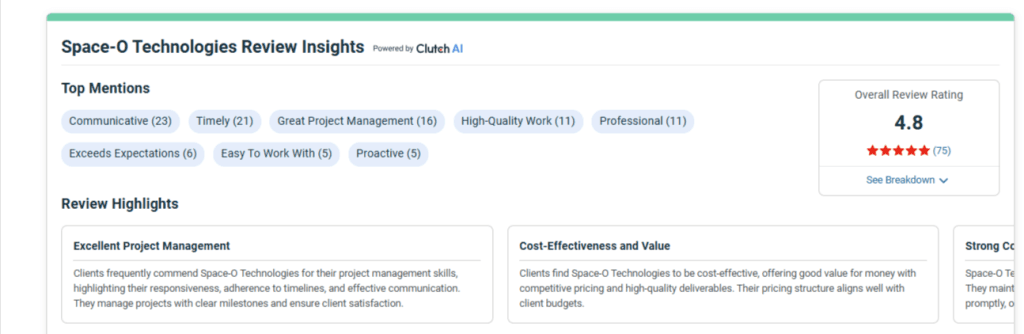
Space-O Technologies, a Toronto-based custom software development company rated 4.8/5 on Clutch from 75 verified reviews, helps healthcare organizations plan, build, and scale secure, compliant, and patient-focused websites.
Since 2018, our team has worked with clinics, hospitals, and health-tech companies across Canada, delivering healthcare platforms that meet PIPEDA and PHIPA requirements from day one.
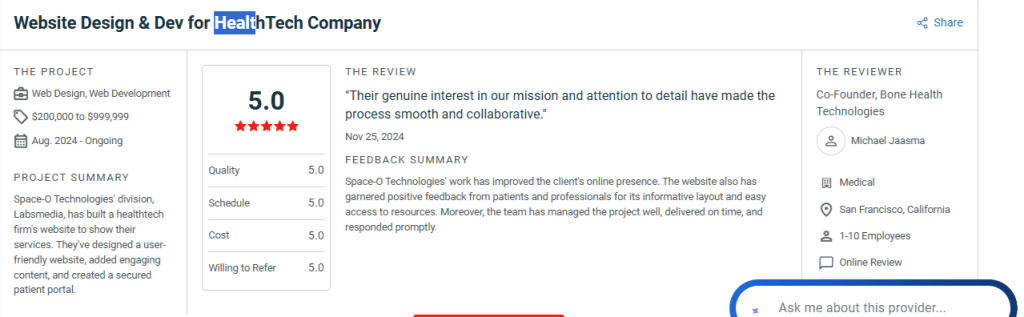
Space-O Technologies designed and developed a user-friendly healthcare website for Bone Health Technologies, including engaging content and a secured patient portal — delivering improved online presence and positive feedback from patients and professionals.
We design websites that integrate seamlessly with EHR/EMR systems, support patient portals and telemedicine workflows, and maintain high standards for performance, accessibility, and data security. Ready to start your healthcare website development project? with Space-O Technologies to discuss your requirements and receive a detailed, compliance-ready proposal tailored to your organization’s clinical, regulatory, and operational needs.
Frequently Asked Questions About Healthcare Website Development Cost
What is the minimum cost for a healthcare website in Canada?
The minimum cost for a basic healthcare website with PIPEDA compliance is approximately $25,000 CAD. This includes informational pages, provider directory, contact forms, mobile-responsive design, and foundational compliance features. More advanced functionality like patient portals and EHR integration requires investment starting at $50,000.
How much does it cost to maintain a healthcare website annually?
Annual healthcare website maintenance costs range from $42,000 to $126,000 CAD, covering PHIPA-compliant hosting ($6,000–$24,000), security updates and patches ($24,000–$60,000), compliance monitoring ($6,000–$18,000), and content updates ($6,000–$24,000). Organizations that skip maintenance face significantly higher costs from security breaches, compliance fines, and emergency remediation.
How long does it take to build a healthcare website?
Healthcare website development timelines vary based on project complexity. A basic healthcare website typically takes 10–14 weeks, platforms with patient portal integration require 14–20 weeks, and comprehensive healthcare platforms with advanced features and integrations usually take 20–30 weeks to complete.
Is PIPEDA compliance mandatory for healthcare websites?
Yes. PIPEDA (Personal Information Protection and Electronic Documents Act) applies to all Canadian healthcare organizations handling patient information. Additionally, provincial legislation like Ontario’s PHIPA provides extra protections for personal health information. Non-compliance can result in fines up to $100,000 per violation and significant reputational damage.
Can I integrate my existing EHR system with a new website?
Yes. Space-O Technologies has experience integrating healthcare websites with major EHR systems used across Canada, including OSCAR, Accuro, Telus Health, QHR Accuro, and Meditech. Integration complexity and cost vary based on your specific EHR and required data exchange—basic connections start around $10,000 while advanced bidirectional integration can reach $60,000.
Should I build a website or a mobile app first?
For most healthcare organizations, we recommend starting with a responsive website. Websites work on all devices, require no app store approval, and update instantly. Once you’ve established strong patient adoption and validated feature priorities, adding native mobile apps makes strategic sense. This approach optimizes investment while building toward a comprehensive digital presence.
How much does PHIPA-compliant hosting cost?
PHIPA-compliant hosting with Canadian data residency typically costs $500–$2,000 monthly ($6,000–$24,000 annually). This includes secure servers, automated backups, encryption, access logging, and disaster recovery capabilities. Standard web hosting doesn’t meet healthcare requirements—dedicated compliant hosting is essential.


Get a Detailed Cost Estimate for Your Healthcare Website
 All our projects are secured by NDA
100% Secure. Zero Spam
*All your data will remain strictly confidential.
Trusted by


Bashar Anabtawi 
Canada
“I was mostly happy with the high level of experience and professionalism of the various teams that worked on my project. Not only they clearly understood my exact technical requirements but even suggested better ways in doing them. The Communication tools that were used were excellent and easy. And finally and most importantly, the interaction, follow up and support from the top management was great. Space-O not delivered a high quality product but exceeded my expectations! I would definitely hire them again for future jobs!”

Canada Office
2 County Court Blvd., Suite 400,
Brampton, Ontario L6W 3W8
Phone: +1 (602) 737-0187
Email: sales@spaceo.ca