
- What is Travel Portal Development?
- What are the Different Types of Travel Portals?
- What Features Does a Travel Portal Need?
- How is a Travel Portal Developed? [A Step-by-Step Guide]
- How Much Does Travel Portal Development Cost?
- How Do You Choose a Travel Portal Development Company?
- What are the Latest Trends in Travel Portal Development?
- Build a Future-Ready Travel Portal with Space-O Technologies
- Frequently Asked Questions about Travel Portal Development
Travel Portal Development: Complete Guide to Building Your Online Travel Platform

 Last Updated: March, 19 2026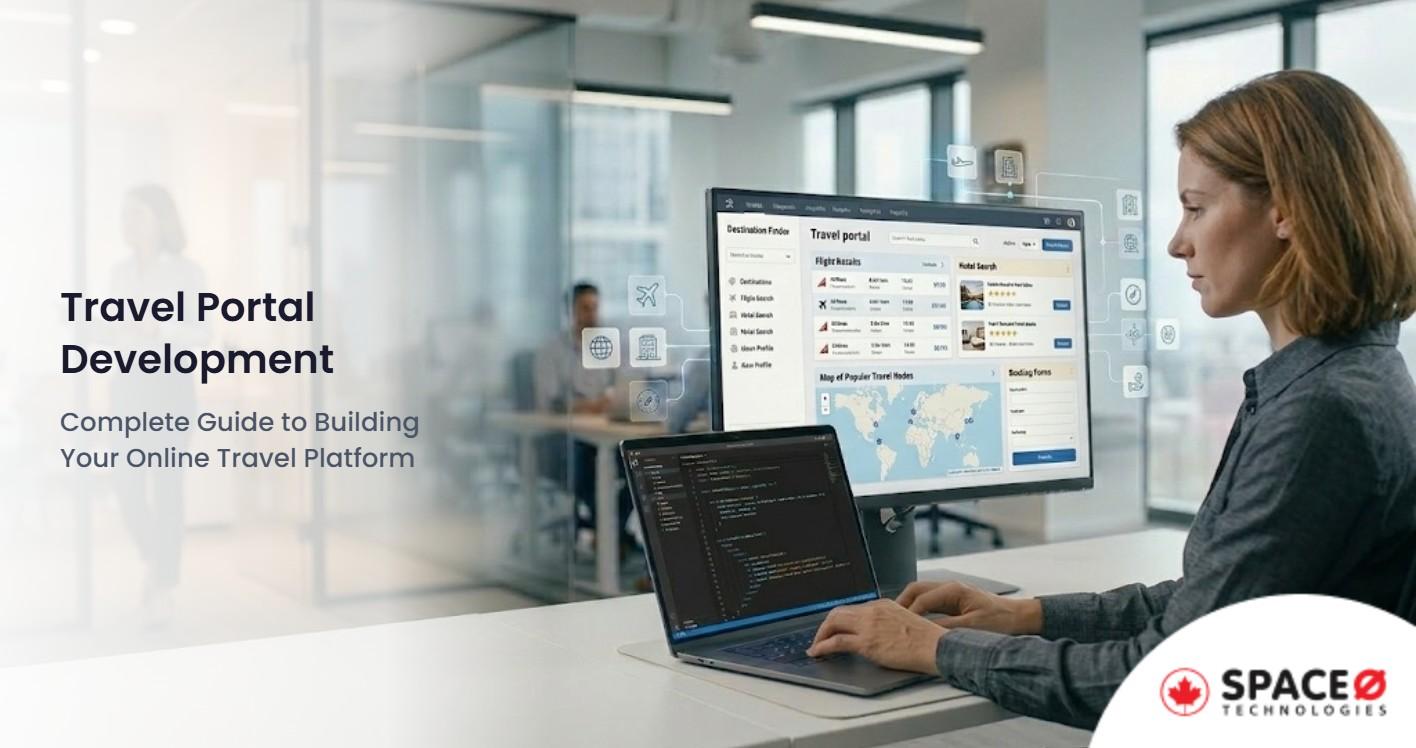
Do you want to build a travel portal for your business? The online travel industry is booming, and having a robust booking platform is no longer optional – it is essential for competing in this lucrative market.
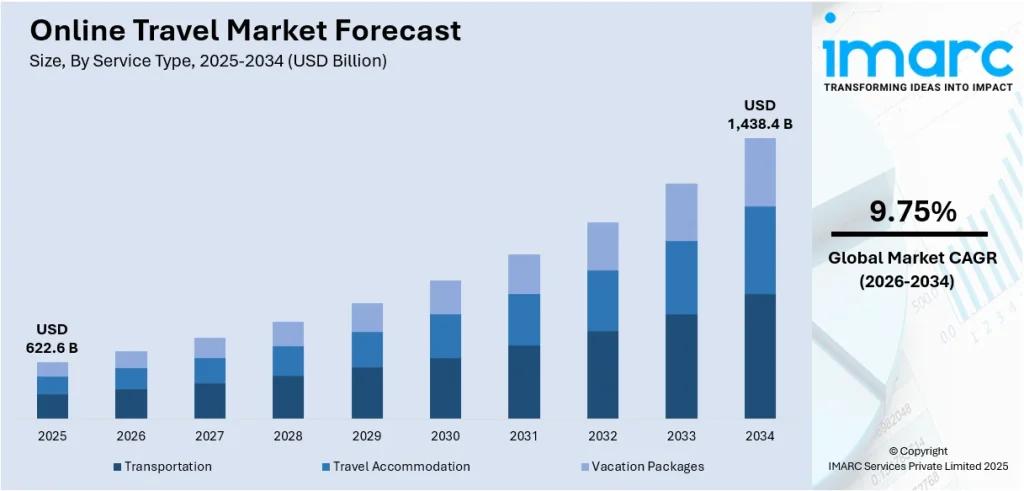
According to IMARC Group, the global online travel market is projected to reach $1,438.4 billion by 2034, growing at a CAGR of 9.75%. This presents a massive opportunity for travel agencies, tour operators, and entrepreneurs looking to establish their digital presence.
Whether you are a traditional travel agency looking to go digital or a startup entering the travel industry, understanding travel portal development is crucial to your success. At Space-O Canada, we specialize in web portal development and have helped businesses build scalable, feature-rich travel booking platforms.
This guide covers travel portal development fundamentals, portal types, key features, development steps, cost considerations, partner selection, and emerging trends for 2026.
Let’s start by understanding exactly what travel portal development means and why it matters for your business.
What is Travel Portal Development?
Travel portal development is the process of building a comprehensive online platform that enables users to search, compare, and book travel services such as flights, hotels, car rentals, and vacation packages. Unlike a simple travel website that displays static information, a travel portal is a dynamic, database-driven platform with real-time booking capabilities.
A travel portal connects travelers with multiple service providers through integrated APIs and Global Distribution Systems (GDS), offering a one-stop solution for all travel needs. It handles complex operations, including inventory management, payment processing, booking confirmations, and customer account management.
Travel portals serve as digital intermediaries, connecting travelers with airlines, hotels, car rental companies, and tour operators through a unified interface. They automate the entire booking process, from search to confirmation, providing instant gratification to users while generating revenue through commissions and markups.
Now that you understand what travel portal development involves, let’s explore the different types of portals and which one suits your business model.
What are the Different Types of Travel Portals?
Choosing the right type of travel portal is fundamental to your business strategy. Each portal type serves different audiences and operates on distinct business models. Here is a breakdown of the main types of travel portals you can develop.
1. B2C travel portals
Business-to-Consumer (B2C) travel portals are designed for direct consumer bookings. These are the platforms that everyday travelers use to book their flights, hotels, and vacation packages. Examples include Expedia, Booking.com, and Kayak. B2C portals focus heavily on user experience, offering intuitive search interfaces, price comparison tools, and seamless checkout processes.
2. B2B travel portals
Business-to-Business (B2B) travel portals cater to travel agents, tour operators, and corporate travel managers. These platforms provide wholesale rates, agent-specific tools, and white-label solutions.B2B portals typically offer features like sub-agent management, markup controls, and bulk booking capabilities. They operate on commission-sharing models and often provide better rates than consumer-facing platforms.
3. B2B2C travel portals
The B2B2C model combines both approaches, allowing travel agents to sell directly to consumers through a shared platform. This hybrid model is popular among travel technology companies that serve both agents and end-users. These portals provide agents with branded storefronts while maintaining a central inventory and booking engine. They offer flexibility for businesses that want to serve multiple market segments.
4. Corporate travel portals
Corporate travel portals are designed specifically for business travel management. They include features like travel policy enforcement, expense tracking, approval workflows, and reporting dashboards. These portals integrate with corporate systems like HR software and expense management tools, ensuring compliance with company travel policies while providing employees with self-service booking capabilities. The same enterprise web development approach applies to large-scale corporate travel platforms.
5. White-label travel portals
White-label travel portals are ready-made solutions that businesses can brand as their own. They offer a faster time-to-market for travel agencies that want to establish an online presence without building a platform from scratch. These portals come with pre-built features and API integrations, requiring only customization of branding and configuration of business rules. The same white-label concept is used in insurance portal development where agencies need branded platforms without building from scratch.
Understanding portal types helps you choose the right model. Next, let’s examine the essential features your travel portal needs to compete effectively.
What Features Does a Travel Portal Need?
The success of your travel portal depends largely on the features it offers. A well-designed portal should provide a seamless booking experience while giving you the tools to manage operations efficiently. Here are the essential features every travel portal should include.
1. Multi-service booking engine
The booking engine is the heart of your travel portal. It should support multiple travel services, including flights, hotels, car rentals, transfers, and activities. A robust booking engine provides real-time availability, instant confirmations, and the ability to create dynamic packages. Your booking engine should integrate with multiple suppliers through APIs and GDS connections, ensuring comprehensive inventory coverage.
2. Search and filter functionality
Travelers need powerful search tools to find exactly what they are looking for. Your portal should offer multi-criteria search with filters for price range, star rating, amenities, departure times, airlines, and more. Advanced features like flexible date search, map-based hotel selection, and price alerts enhance the user experience.
3. Payment processing
Secure and flexible payment processing is crucial for any travel portal. Your platform should support multiple payment methods, including credit cards, debit cards, digital wallets, and bank transfers. For Canadian businesses, integration with local payment processors like Moneris and Interac is essential. Payment features should include multi-currency support, split payments, deposit options, and PCI-DSS compliance. Following web application security best practices ensures sensitive traveler data and financial transactions remain protected.
4. User account management
A comprehensive user account system improves customer retention and streamlines the booking process. Users should be able to create profiles, save traveler details, view booking history, manage upcoming trips, and track loyalty points. Account features should also include saved payment methods, favorite searches, and personalized recommendations based on booking history.
5. Admin dashboard
The admin dashboard is your command center for managing the entire portal. It should provide real-time insights into bookings, revenue, inventory, and customer activity. Key admin features include:
- Booking management and modifications
- Inventory and pricing controls
- Markup and commission settings
- Agent and user management
- Financial reporting and reconciliation
- Content management for destinations and promotions
Create a Travel Portal Designed for High Traffic and Seasonal Demand
Space-O Technologies plans scalable portal architectures that handle peak traffic, real-time availability, and growing user volumes without performance issues.
With features defined, let’s walk through the step-by-step development process for building your travel portal.
How is a Travel Portal Developed? [A Step-by-Step Guide]
Developing a travel portal requires a structured approach to ensure all components work together seamlessly. At Space-O Canada, we follow a proven development process that minimizes risks and delivers results. Here is a detailed breakdown of each phase.
Step 1: Requirement analysis and planning (2-4 weeks)
What happens: This phase involves detailed discovery sessions to understand your business model, target audience, competitive landscape, and technical requirements. Our team works closely with you to define the project scope and create a comprehensive roadmap.
Key activities:
- Business model analysis and revenue strategy planning
- Target audience research and user persona development
- Competitor analysis to identify market gaps
- Feature prioritization based on business goals
- Technical feasibility assessment for API integrations
- Project timeline and milestone definition
Deliverables: Business requirements document (BRD), project scope document, technical specifications, timeline estimates, and project budget.
Why it matters: A thorough planning phase prevents costly changes during development. By understanding your requirements upfront, we can make informed decisions about architecture, technology, and feature implementation. This structured approach mirrors the broader web development life cycle that ensures each phase feeds into the next.
Step 2: UI/UX design (3-5 weeks)
What happens: Our design team creates the visual blueprint of your travel portal, focusing on user experience and conversion optimization. We design every screen and user flow to ensure travelers can find and book services effortlessly.
Key activities:
- User journey mapping for different traveler types
- Information architecture and navigation design
- Wireframe creation for all key pages and flows
- High-fidelity mockups with brand integration
- Interactive prototype development
- Usability testing with target users
- Responsive design for mobile and tablet devices using modern web development frameworks
Deliverables: User flow diagrams, wireframes, UI design mockups, clickable prototype, design system and style guide, and mobile-responsive layouts.
Why it matters: Travel portals require intuitive search flows and frictionless booking experiences. Research shows that 88% of online users will not return to a website after a bad experience. Poor design directly impacts conversion rates – even a one-second delay in page load can reduce conversions by 7%. Investing in UX design pays dividends through higher bookings and customer satisfaction.
Step 3: Development and integration (8-16 weeks)
What happens: Our development team builds the frontend interface and backend infrastructure while integrating third-party services. This is the most intensive phase where your portal comes to life.
Key activities:
- Frontend development with responsive UI components
- Backend development including booking logic and database design
- API integrations with GDS providers (Amadeus, Sabre, Travelport)
- Hotel API integrations (Booking.com, Expedia, HotelBeds)
- Payment gateway setup (Stripe, PayPal, Moneris)
- Admin panel development with reporting features
- User authentication and security implementation
- Performance optimization and caching
Deliverables: Functional travel portal with all core features, integrated booking engine, admin dashboard, user portal, and API documentation.
Why it matters: The quality of development determines your portal’s performance, scalability, and reliability. A well-architected portal can handle thousands of concurrent users and millions of search queries. The right web development team makes a measurable difference in achieving this level of performance.
Step 4: Testing and quality assurance (2-4 weeks)
What happens: Our QA team rigorously tests every aspect of the portal to ensure flawless performance before launch. We simulate real-world scenarios to identify and fix issues proactively.
Key activities:
- Functional testing of all booking flows and features
- Payment processing verification across all methods
- API integration testing with live data
- Performance testing under various load conditions
- Security testing, including penetration testing
- Cross-browser and cross-device compatibility testing
- User acceptance testing (UAT) with stakeholders
- Regression testing after bug fixes
Deliverables: Bug-free portal ready for launch, comprehensive test reports, performance benchmarks, security audit reports, and UAT sign-off.
Why it matters: A single bug in the booking or payment flow can result in lost revenue and damaged reputation. Travel portals handle sensitive customer data and financial transactions – there is no room for error. Thorough testing ensures your portal works flawlessly from day one, building customer trust and confidence.
Step 5: Deployment and launch (1-2 weeks)
What happens: Your portal goes live with proper server configuration, security protocols, and monitoring systems in place. We ensure a smooth transition from development to production.
Key activities:
- Production server setup and configuration
- SSL certificate installation and security hardening
- Database migration and optimization
- DNS configuration and domain setup
- CDN implementation for global performance
- Monitoring and alerting system setup
- Final smoke testing in the production environment
- Soft launch with a limited user base
Deliverables: Live travel portal, deployment documentation, server configuration guides, monitoring dashboards, and launch checklist verification.
Why it matters: Proper deployment ensures your portal can handle real traffic and provides a smooth experience from day one. We implement redundancy and failover systems to minimize downtime and ensure business continuity.
Step 6: Post-launch support and maintenance (ongoing)
What happens: After launch, we provide continuous monitoring, updates, and improvements to keep your portal competitive and secure. The travel industry evolves rapidly, and your portal needs to keep pace.
Key activities:
- 24/7 performance monitoring and alerting
- Security patches and vulnerability updates
- Bug fixes and issue resolution
- Feature enhancements based on user feedback
- API updates as providers release new versions
- Performance optimization and scaling
- Regular backups and disaster recovery testing
- Analytics review and conversion optimization
Deliverables: Monthly maintenance reports, uptime guarantees as per SLA, regular feature updates, and ongoing technical support.
Why it matters: The travel industry changes constantly with new APIs, regulations, and customer expectations. Ongoing maintenance ensures your portal stays current, secure, and competitive. At Space-O Canada, we offer 3 months of free post-launch support with all our projects.
Understanding the development process helps with planning. Now, let’s discuss the investment required to build your travel portal.
How Much Does Travel Portal Development Cost?
Travel portal development in CAD ranges from $30,000–$50,000 for basic B2C (3-4 months) to $200,000+ for enterprise platforms (9-12 months), scaling with multi-service complexity and B2B/B2C features.
One of the most common questions we receive is about web portal development cost. The investment required for a travel portal depends on several factors including complexity, features, integrations, and design requirements.
1. Cost breakdown by portal type
Here is a realistic cost breakdown based on our experience developing travel portals:
| Portal Type | Complexity | Timeline | Cost Range (CAD) |
|---|---|---|---|
| Basic B2C Portal | Simple (flight + hotel) | 3-4 months | $30,000 – $50,000 |
| Standard Travel Portal | Medium (multi-service) | 4-6 months | $50,000 – $100,000 |
| Advanced Multi-Service Portal | Complex (B2B + B2C) | 6-9 months | $100,000 – $200,000 |
| Enterprise Travel Platform | Enterprise (full-featured) | 9-12 months | $200,000+ |
2. Factors affecting cost
Portal complexity: A basic B2C portal with flight and hotel booking costs significantly less than an enterprise platform with multiple services, agent management, and advanced analytics.
Number of features: Each feature adds to development time and cost. Starting with core features and adding more in subsequent phases is a cost-effective approach.
API integrations: GDS integrations (Amadeus, Sabre) and hotel APIs have licensing costs in addition to development time. More integrations mean higher initial investment but better inventory coverage.
Design requirements: Custom UI/UX design with unique branding costs more than template-based solutions. However, investing in design improves user experience and conversion rates.
Development location: Hourly rates vary significantly by region. Canadian developers charge $60-$100/hour, while businesses that outsource web development to offshore teams may pay $30-$50/hour.
3. Ongoing costs
Beyond initial development, you should budget for ongoing operational costs:
| Cost Category | Monthly Estimate |
|---|---|
| Hosting and Infrastructure | $500 – $2,000 |
| API Subscription Fees | $1,000 – $5,000 |
| Maintenance and Support | $1,000 – $3,000 |
| Marketing and SEO | $2,000 – $10,000 |
| Payment Processing Fees | 2-3% of transactions |
Formula for Quick Calculation:
Total Travel Portal Cost = Development Cost + (Monthly Ongoing Costs x 12 months)
For a standard travel portal with $75,000 development cost and $5,000 monthly operating costs, your first-year investment would be approximately $135,000.
Avoid Hidden Costs in Travel Portal Development
Space-O Technologies identifies early cost drivers such as booking engine integrations, third-party APIs, scalability for peak travel seasons, and ongoing platform maintenance.
Cost is one factor; choosing the right development partner is equally important for your portal’s success.
How Do You Choose a Travel Portal Development Company?
Selecting the right development partner can make or break your travel portal project. Here are the key factors to consider when evaluating potential partners.
1. Industry experience
Look for companies that have successfully delivered travel portals or booking platforms previously. Review their case studies carefully and ask for references from travel industry clients to verify their expertise and track record in building similar solutions. Evaluating top web development companies based on their portfolio helps narrow down the right partner.
2. Technical expertise
Your development partner should have experience with GDS integrations, travel APIs, and payment gateways for building scalable portals. Ask specifically about their experience with Amadeus, Sabre, or Travelport integrations to ensure technical competency for your project. Knowing how to hire web developers with the right API integration skills is critical for travel portal success.
3. Development methodology
Agile development with regular sprints and demos ensures you stay involved throughout the process and can provide timely feedback. Avoid waterfall approaches for complex travel portal projects as they limit flexibility and increase project risks significantly.
4. Post-launch support
Travel portals require ongoing maintenance and updates to remain competitive and functional. Ensure your development partner offers comprehensive support packages and has a proven track record of maintaining long-term client relationships beyond initial project delivery.
5. Client reviews
Check platforms like Clutch, GoodFirms, and Google Reviews for verified client feedback about potential development partners. Look for consistency in positive reviews across multiple projects to identify reliable companies with proven delivery capabilities and client satisfaction records.
6. Compliance knowledge
Your development partner should understand PCI-DSS requirements for secure payment processing, GDPR regulations for European travelers, and PIPEDA for Canadian data protection. Companies experienced in regulated industries like healthcare web development often bring stronger compliance expertise to travel portal projects.
Now, let’s explore the emerging trends shaping the future of travel portal development.
What are the Latest Trends in Travel Portal Development?
The travel industry is constantly evolving, and your portal needs to keep pace with emerging technologies and changing traveler expectations. Here are the key trends shaping travel portal development in 2026.
1. AI-powered recommendations
Artificial intelligence is transforming how travelers discover and book trips. AI-powered applications can analyze user behavior, preferences, and past bookings to deliver personalized recommendations. Modern travel portals use machine learning for dynamic pricing, demand forecasting, and personalized search results.
2. Voice-enabled bookings
Voice search is becoming increasingly popular, with travelers using smart assistants like Alexa and Google Assistant to research and book travel. Portals that integrate voice capabilities can capture this growing segment. Voice-enabled features include hands-free search, booking confirmations, and itinerary management.
3. AR/VR experiences
Augmented and virtual reality are enhancing the travel planning experience. Travelers can take virtual tours of hotels, explore destinations in 360 degrees, and preview experiences before booking. While still emerging, AR/VR features are becoming more accessible and can significantly improve conversion rates by helping travelers make confident booking decisions.
4. Blockchain for payments
Blockchain technology offers secure, transparent, and low-cost payment processing. It also enables smart contracts for automated refunds and cancellations based on predefined conditions. Early adopters are using blockchain for loyalty programs, reducing fraud, and enabling cryptocurrency payments for international travelers.
Understanding trends prepares you for the future. Let’s address some common questions about travel portal development.
Turn Your Travel Portal Into a Long-Term Digital Asset
Space-O Technologies builds travel portals with flexibility, scalability, and maintainability in mind to support evolving travel business models.
Build a Future-Ready Travel Portal with Space-O Technologies
Travel portal development offers a powerful opportunity to tap into the rapidly expanding online travel market. As digital bookings continue to rise and customer expectations shift toward seamless, self-service experiences, a strong travel portal is no longer optional—it’s essential for capturing demand and scaling sustainably.
The travel industry is also evolving at speed, driven by AI-powered personalization, voice search, sustainable travel features, and modern payment technologies. A scalable, well-architected travel portal allows your business to adapt to these trends without constant rework, helping you stay competitive as user behavior and technology change.
At Space-O Technologies, we bring together deep technical expertise and practical travel industry insight to build high-performance travel portals that drive bookings and operational efficiency.
Since 2018, our team has supported travel agencies, tour operators, and hospitality businesses with secure, scalable solutions designed for growth. From strategy and development to integrations and post-launch support, Space-O Technologies helps you launch a travel portal built for today—and ready for what’s next.
Frequently Asked Questions about Travel Portal Development
How much does it cost to develop a travel portal?
The cost of travel portal development ranges from $30,000 for a basic B2C portal to $200,000+ for an enterprise platform. The final cost depends on features, API integrations, design complexity, and development location. At Space-O Canada, we provide detailed cost estimates after understanding your specific requirements.
How long does it take to build a travel portal?
A standard travel portal takes 4-6 months to develop, including planning, design, development, and testing phases. Basic portals can be completed in 3-4 months, while complex enterprise platforms may take 9-12 months. Timeline also depends on the number of API integrations and custom features required.
What is GDS integration in travel portal development?
Global Distribution Systems (GDS) like Amadeus, Sabre, and Travelport are computerized networks that provide real-time inventory from airlines, hotels, and car rental companies. GDS integration connects your portal to this inventory, enabling real-time search, availability checking, and instant booking confirmation.
Can I start with a basic portal and add features later?
Yes, starting with an MVP (Minimum Viable Product) is a recommended approach. You can launch with core booking features and add advanced functionality like loyalty programs, mobile apps, or additional API integrations based on user feedback and business growth. This phased approach reduces initial investment and risk.
Do I need a mobile app along with the travel portal?
While a responsive web portal works on mobile devices, a dedicated mobile app offers advantages like push notifications, offline access, and a better user experience. We recommend starting with a responsive web portal and developing a travel app once you have established a user base and booking volume.
What are the ongoing costs of running a travel portal?
Ongoing costs include hosting ($500-$2,000/month), API subscription fees ($1,000-$5,000/month), maintenance and support ($1,000-$3,000/month), and marketing. Payment processing typically costs 2-3% of transaction value. Budget approximately $5,000-$15,000 monthly for operational costs, depending on your portal’s scale.


Want to develop a Travel Portal?
What to read next
 All our projects are secured by NDA
100% Secure. Zero Spam
*All your data will remain strictly confidential.
Trusted by


Bashar Anabtawi 
Canada
“I was mostly happy with the high level of experience and professionalism of the various teams that worked on my project. Not only they clearly understood my exact technical requirements but even suggested better ways in doing them. The Communication tools that were used were excellent and easy. And finally and most importantly, the interaction, follow up and support from the top management was great. Space-O not delivered a high quality product but exceeded my expectations! I would definitely hire them again for future jobs!”

Canada Office
2 County Court Blvd., Suite 400,
Brampton, Ontario L6W 3W8
Phone: +1 (602) 737-0187
Email: sales@spaceo.ca