
- What is Mobile App Market Research?
- Why is Mobile App Market Research Important?
- How to Do Market Research for a Mobile App: Step-by-Step Process
- 1. Define your app idea and core value proposition
- 2. Identify and segment your target audience
- 3. Analyze the competitive landscape
- 4. Estimate your market size using TAM, SAM, and SOM
- 5. Validate demand through surveys, interviews, and beta testing
- 6. Analyze app store trends and category performance
- 7. Evaluate monetization models and revenue potential
- What are the Best Available Tools for Mobile App Market Research?
- What are the Common Mistakes to Avoid in Mobile App Market Research?
- How Space-O Technologies Used Market Research to Deliver Successful Apps
- When Should You Invest in Professional App Market Research?
- 1. You are entering an unfamiliar or highly competitive market
- 2. Your app requires significant development investment
- 3. You need data-driven evidence for investors or stakeholders
- 4. You are targeting a new geographic market or audience segment
- 5. Your app operates in a regulated or compliance-heavy industry
- What is the Mobile App Market Research Checklist To Follow?
- How Space-O Technologies Can Help With Mobile App Market Research
- Frequently Asked Questions about Mobile App Market Research
Mobile App Market Research: A Complete Guide to Validating Your App Idea

 Last Updated: March, 17 2026
Building a mobile app without understanding your market is like navigating without a map. You might move forward, but reaching your intended destination becomes unlikely.
The scale of competition makes this even more critical. According to Precedence Research, the global mobile application market was valued at approximately $330.61 billion in 2025. With millions of apps competing for user attention, launching without structured research leads to wasted time and budget.
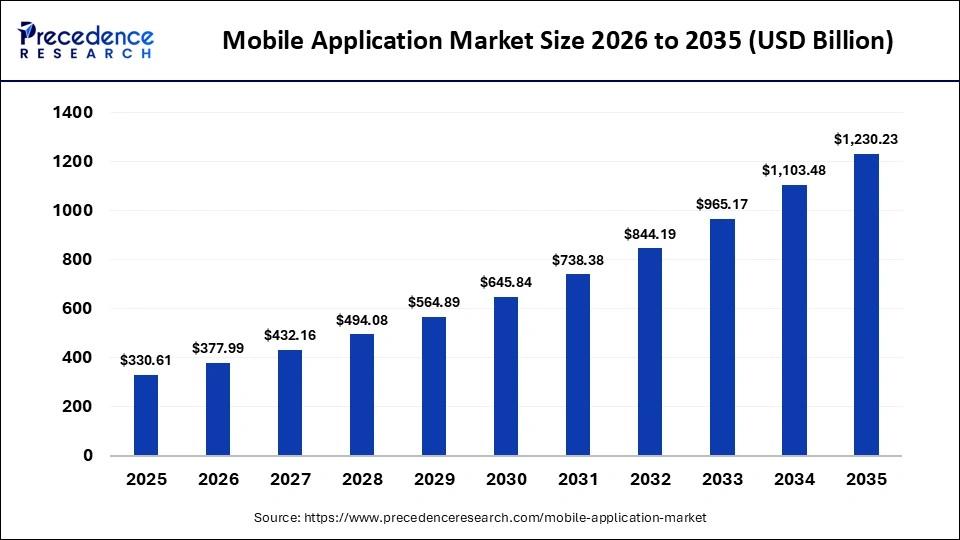
Mobile app market research is the systematic process of analyzing your target audience, competitors, and market demand. It takes place before mobile app development begins and turns assumptions into data-backed decisions.
This complete guide covers the market research process for mobile apps step by step. You will learn how to identify your audience, analyze competitors, estimate market size, and validate demand.
What is Mobile App Market Research?
Mobile app market research is the process of collecting, analyzing, and interpreting data about your target market, competitors, and user needs before building an app. It gives you the insights needed to make informed development, design, and business model decisions.
Think of it as the foundation of your entire app project. Without it, you are building on guesswork. With it, you are building on evidence.
- Primary research vs. secondary research for mobile apps
Primary research involves collecting new data directly from potential users. This includes surveys, one-on-one interviews, focus groups, and usability testing with prototypes. The advantage is specificity — you get answers tailored to your exact app concept.
Secondary research uses existing data from published sources. Industry reports, app store analytics, competitor reviews, and market forecasts all fall into this category. It is faster and more affordable, but less specific to your unique product.
Most effective app market research combines both approaches. Start with secondary research to understand the landscape. Then use primary research to validate your app idea with real users.
- When to use qualitative vs. quantitative methods
Qualitative research answers “why” and “how” questions. It helps you understand user motivations, frustrations, and decision-making processes through open-ended conversations and observations.
Quantitative research answers “how many” and “how often” questions. Surveys with structured responses, app analytics, and market size calculations provide measurable data that support business decisions.
Use qualitative methods early in your research to explore ideas. Switch to quantitative methods when you need to validate patterns at scale and build a business case.
| Pro Tip: Don’t treat market research as a one-time activity. Revisit your findings quarterly after launch and update your competitive analysis regularly. Markets shift, and apps that adapt to new data outperform those that rely on initial assumptions. |
With the fundamentals in place, let’s explore the specific reasons why market research is essential before you invest in app development.
Why is Mobile App Market Research Important?
Skipping mobile app market research is the most expensive shortcut a business can take. Here are four reasons why this step matters more than most founders realize.
1. It reduces development risk and prevents costly failures
Most app failures are not caused by bad code. They happen because the product did not solve a real problem for a real audience. Market research identifies these misalignments before you spend months and thousands of dollars on development.
Understanding your market early helps you avoid building features nobody needs. It also helps you uncover technical and regulatory issues before they become mobile app development challenges that delay your launch.
2. It validates market demand before you invest
A great app idea is not the same as a viable business opportunity. Market research tells you whether enough people are willing to pay for your solution — and at what price.
Demand validation through surveys, beta tests, and competitor revenue analysis gives you confidence before committing your app development cost. This is especially critical for startups where every dollar of development budget counts.
3. It helps you identify untapped market opportunities
Market gap analysis reveals what competitors are missing. By studying app store reviews, user complaints, and underserved segments, you can position your app where demand exists, but supply falls short.
These gaps are where the strongest product-market fit opportunities live. They give you a competitive advantage that is difficult to replicate because you discovered it through systematic research, not luck.
4. It guides your feature prioritization and roadmap
Not every feature belongs in your first release. Market research tells you which features your target audience values most, helping you build a focused MVP instead of an overloaded product.
This data-driven prioritization reduces development timelines and helps you launch faster. You can then iterate based on real usage data, guided by a clear mobile app development process roadmap.
Validate Your App Idea With Structured Market Research
Space-O Technologies helps analyze target audiences, competitive landscapes, and demand signals before development begins.
Understanding why research matters leads to the practical question — here is a step-by-step process for conducting mobile app market research effectively.
How to Do Market Research for a Mobile App: Step-by-Step Process
Effective app market research follows a structured sequence. Each step builds on the previous one, creating a comprehensive picture of your opportunity. Whether you handle this process in-house or outsource mobile app development to an experienced partner, these steps remain the same.
1. Define your app idea and core value proposition
Start by clearly defining the problem your app solves and who it solves it for. Write your core value proposition in one sentence. This clarity shapes every research decision that follows.
If you have an idea for an app but have not defined its unique angle, your research will lack direction. Identify the specific pain point, the target user, and how your solution differs from what already exists.
2. Identify and segment your target audience
Define who will actually use your app by creating detailed user profiles. Break your audience into segments based on demographics, behavior patterns, and specific needs.
Build user personas that include age, location, income level, mobile usage habits, and core pain points. Mobile user demographics vary significantly across app categories. The more precise your target audience research, the stronger your product-market fit.
3. Analyze the competitive landscape
Study apps that solve the same or similar problem. Download the top five competitors and evaluate their features, user experience, pricing, and app store reviews.
Read reviews carefully, they reveal what users love and what frustrates them. Conduct a mobile app SWOT analysis to map competitor strengths and weaknesses against yours. This competitive benchmarking highlights market gaps you can exploit.
4. Estimate your market size using TAM, SAM, and SOM
Calculate the total revenue opportunity for your app idea. TAM represents the total addressable market globally. SAM narrows this to the segment you can realistically serve based on geography and capability.
SOM defines the share you can capture in the near term. Investors expect these numbers before making funding decisions. Use industry reports and credible market data from sources like Grand View Research to build reliable estimates.
5. Validate demand through surveys, interviews, and beta testing
Primary research confirms whether real users want your app. Run targeted surveys to gauge interest and willingness to pay. Conduct user interviews to uncover needs that secondary data misses.
If possible, build a prototype and gather beta testing feedback from a small group. Focus groups add qualitative depth. This app’s demand validation step prevents you from building features nobody asked for.
6. Analyze app store trends and category performance
Study how apps in your target category perform across the App Store and Google Play. Look at app download trends, user ratings, review volumes, and revenue estimates.
Identify which popular categories of apps are growing and which are declining. Pay attention to app store ranking factors that influence visibility. This analysis shows where the market is heading.
7. Evaluate monetization models and revenue potential
Research how similar apps generate revenue. The most common app revenue models include freemium, subscription, in-app purchases, and advertising. Each model suits different app categories and user behaviors.
Analyze competitor pricing and user willingness to pay within your segment. Your revenue model directly impacts feature decisions and user acquisition strategy. Choose a model that aligns with your target audience’s expectations.
Following these steps gives you a solid research foundation — now let’s explore the essential tools that make mobile app market analysis faster and more reliable.
What are the Best Available Tools for Mobile App Market Research?
The right tools accelerate your research and improve the quality of your insights. Here are the most effective platforms across three key categories.
1. App store intelligence platforms
Platforms like data.ai (formerly App Annie) and Sensor Tower provide detailed insights into competitor downloads, revenue estimates, keyword rankings, and category trends. These tools let you track how competing apps perform over time and identify emerging patterns in your target category.
Use them to benchmark competitor performance and spot opportunities that manual research would miss.
2. Audience research and survey tools
Google Trends helps you gauge search interest for specific app-related queries over time. SurveyMonkey and Typeform allow you to run structured surveys that capture user preferences, willingness to pay, and feature priorities.
Combine these tools to understand both broad market interest and specific user needs within your target segment.
3. Competitive analysis tools
SimilarWeb provides traffic and engagement data for competitor apps and websites. SEMrush and Ahrefs help you understand what keywords competitors rank for and where content gaps exist.
Together, these tools reveal how competitors acquire users and where their strategies fall short.
With the right tools in hand, let’s look at the common mistakes that can undermine even the most thorough research efforts.
What are the Common Mistakes to Avoid in Mobile App Market Research?
Even experienced teams make research mistakes that lead to flawed conclusions. Here are four pitfalls to watch for during your mobile app market analysis.
1. Skipping competitor analysis entirely
Some founders assume their idea is unique and skip competitor research altogether. In reality, almost every app concept has direct or indirect competitors. Ignoring them means missing critical insights about user expectations, pricing benchmarks, and feature standards in your category.
2. Relying only on secondary data without primary validation
Industry reports and market forecasts provide useful context. However, they cannot confirm that your specific audience wants your specific solution. Always supplement secondary research with direct user feedback through surveys, interviews, or prototype testing.
3. Ignoring user feedback and app store reviews
App store reviews are one of the richest sources of unfiltered user feedback. Ignoring them means missing insights about what competitors do well and where they fall short. Mine these reviews systematically to identify recurring complaints and unmet needs.
4. Overestimating market size without proper segmentation
Claiming a billion-dollar TAM without narrowing it to your serviceable and obtainable market misleads both your team and your investors. Proper segmentation requires an honest assessment of your reach, capability, and competitive positioning. Track realistic mobile app KPIs instead of vanity metrics.
| Pro Tip: Space-O Technologies recommends starting competitor analysis by reading one-star and two-star reviews of the top five apps in your category. These reviews reveal the exact pain points your app can solve better. |
Reduce Product Risk Through Data-Driven Market Analysis
Space-O Technologies evaluates user behavior, competitor gaps, and monetization potential to guide smarter development decisions.
Avoiding these mistakes positions your research for success — but how does Space-O Technologies apply this research in real client projects? Here are three examples.
How Space-O Technologies Used Market Research to Deliver Successful Apps
Market research is not just theoretical. It drives real business results. Here are three projects where Space-O Technologies used structured app market research to guide development decisions and deliver measurable outcomes.
1. SkillHub — identifying a gap in the professional networking market
The client approached Space-O Technologies with an idea for a professional networking platform. Market gap analysis revealed that existing platforms focused heavily on job searching but underserved skill-based professional connections.
This insight shaped the core feature set. Instead of competing directly with established players, the app targeted an underserved niche — driving stronger product-market fit from day one.
2. Niche delivery app — validating demand in a regulated market
Before building a marijuana weed delivery app, Space-O conducted extensive market research into regulatory requirements, user demand, and competitive positioning within the emerging legal cannabis delivery space.
This research identified specific compliance requirements that most competitors were ignoring. Addressing these gaps early in development gave the app a differentiated position in a highly regulated market.
3. Storage marketplace — adapting a proven model to a new vertical
When a client wanted to build a custom Airbnb for storage, the team conducted competitive benchmarking of existing storage marketplace apps. Research revealed pricing model opportunities that existing competitors had overlooked.
The market research also validated user willingness to pay for peer-to-peer storage. This data-driven approach reduced development risk and helped the client enter the market with confidence.
These case studies show how structured research leads to measurable outcomes — next, discover when you should invest in professional market research versus handling it internally.
When Should You Invest in Professional App Market Research?
Not every app project requires outside research help. However, there are specific situations where professional market research significantly improves your chances of success.
1. You are entering an unfamiliar or highly competitive market
If you lack deep knowledge of your target market or industry, professional researchers bring expertise that accelerates your learning curve. They have access to premium data sources and proven methodologies that deliver insights faster than starting from scratch.
2. Your app requires significant development investment
When your MVP app development budget exceeds $50,000, the cost of thorough research is a fraction of what you stand to lose from building the wrong product. Professional feasibility studies and demand validation protect your investment and reduce risk.
3. You need data-driven evidence for investors or stakeholders
Investors expect credible market data, not assumptions. Professional market research delivers properly sourced TAM/SAM/SOM calculations, competitive positioning analysis, and demand validation that strengthen your pitch.
If you decide to work with a partner, make sure you choose a mobile app development company that integrates market research into their discovery process — not one that skips straight to development.
4. You are targeting a new geographic market or audience segment
If you are expanding into a new region or customer segment, professional researchers help you validate demand before committing resources. They analyze local user behavior, pricing sensitivity, and competitive dynamics to ensure your strategy aligns with real market conditions.
5. Your app operates in a regulated or compliance-heavy industry
If your application falls under industries such as healthcare or fintech, professional researchers assess regulatory requirements and feasibility early. They identify compliance risks, integration constraints, and legal considerations before development begins, reducing costly revisions later.
Whether you research independently or work with a partner, a structured approach makes all the difference — here is a quick-reference checklist to guide your efforts.
What is the Mobile App Market Research Checklist To Follow?
Use this checklist to ensure your mobile app market research covers all critical areas before development begins.
1. Market definition and sizing
Clearly define your app concept and articulate a strong value proposition that explains who the app serves and why it matters. Quantify the opportunity by calculating Total Addressable Market (TAM), Serviceable Available Market (SAM), and Serviceable Obtainable Market (SOM) using credible industry reports, government databases, and market intelligence platforms. Review industry growth trends, digital adoption rates, and multi-year forecasts to confirm that the market shows sustainable expansion rather than short-term hype.
2. Target audience research
Develop detailed user personas backed by demographic, geographic, behavioral, and psychographic data. Segment your audience based on usage patterns, purchasing behavior, and device preferences. Identify real customer pain points, unmet needs, and workflow inefficiencies through surveys, interviews, or community analysis. Validate that the problem is frequent, urgent, and significant enough to justify adoption.
3. Competitive analysis
Identify and analyze the top five direct and indirect competitors operating in your target segment. Conduct a structured SWOT analysis to evaluate their strengths, weaknesses, opportunities, and threats. Examine app store listings, feature sets, pricing strategies, user acquisition methods, and monetization models. Mine competitor app store reviews to uncover recurring complaints, feature requests, and performance issues. Document market gaps where customer expectations remain unmet.
4. Demand validation
Conduct structured user surveys, interviews, or focus groups to validate real demand before investing in development. If possible, release a prototype or beta version to gather early feedback. Measure engagement levels, usability friction, and feature interest. Assess willingness to pay through pricing experiments, pre-launch signups, or landing page validation tests to confirm revenue potential.
5. Business model research
Evaluate multiple revenue models such as freemium, subscription, in-app purchases, advertising, or hybrid approaches. Analyze competitor pricing tiers to understand positioning and customer expectations. Estimate unit economics, including customer acquisition cost (CAC), lifetime value (LTV), churn rate, and break-even timelines to ensure financial viability.
6. App store research
Analyze performance trends within your intended app category to understand competition intensity and download potential. Review app store ranking factors, algorithm considerations, and optimization best practices. Study seasonal demand patterns and geographic download trends to plan launch timing and expansion strategy effectively.
This checklist aligns with the app development timeline followed by experienced development teams. Complete it before writing your first line of code.
Build a Market-Ready App With Clear Competitive Positioning
Space-O Technologies combines industry research and technical planning to create apps designed for real-world adoption.
With this checklist as your guide, let’s wrap up with how Space-O Technologies can support your mobile app market research from start to finish.
How Space-O Technologies Can Help With Mobile App Market Research
Effective mobile app market research is the difference between launching a product that grows and launching one that struggles to find users. The process covered in this guide — from audience analysis and competitive benchmarking to demand validation and market sizing — gives you the foundation to make every development decision with confidence.
Space-O Technologies integrates market research into the discovery phase of every app project. With 100+ successful client projects, Space-O helps businesses validate ideas, define target audiences, and build roadmaps based on real market data.
Whether you are a startup validating your first app concept or an enterprise expanding into mobile, Space-O’s app development consulting team brings the strategic expertise and technical capability to turn research findings into launch-ready products. With a 98% on-time delivery rate and 65% repeat business, the results speak for themselves.
Ready to validate your app idea with structured market research? Schedule a free consultation to discuss your project and build a data-backed plan for success.
Frequently Asked Questions about Mobile App Market Research
How long does market research for an app take?
Mobile app market research timelines depend on depth and objectives. A quick validation study using surveys or market data may take a few days to one week. A structured research process that includes competitor benchmarking, user interviews, and market opportunity analysis typically requires two to six weeks.
What tools are best for mobile app market analysis?
Several specialized tools help founders and product teams analyze mobile app markets. Platforms like Data.ai and Sensor Tower provide app store intelligence and performance insights. Google Trends and SurveyMonkey help gather audience data, while SimilarWeb and Statista support competitor research, industry analysis, and market size estimation.
Can a mobile app development company help with market research?
Yes. Many experienced mobile app development companies conduct market research during the discovery phase of a project. This process often includes competitor benchmarking, target audience analysis, product feasibility studies, and technical validation to ensure the idea has real demand before development begins.
What is the difference between TAM, SAM, and SOM?
TAM, SAM, and SOM are key frameworks used to estimate market opportunity for a product. TAM represents the total possible demand for a solution. SAM defines the segment your product can realistically target, while SOM estimates the share your business can capture within that reachable market.
How much does mobile app market research cost?
Mobile app market research costs vary depending on scope and methodology. Founders can conduct basic validation using free tools like Google Trends or surveys at minimal cost. However, professional research that includes competitor analysis, user interviews, and market sizing typically ranges from $5,000 to $25,000.


What to read next
 All our projects are secured by NDA
100% Secure. Zero Spam
*All your data will remain strictly confidential.
Trusted by


Bashar Anabtawi 
Canada
“I was mostly happy with the high level of experience and professionalism of the various teams that worked on my project. Not only they clearly understood my exact technical requirements but even suggested better ways in doing them. The Communication tools that were used were excellent and easy. And finally and most importantly, the interaction, follow up and support from the top management was great. Space-O not delivered a high quality product but exceeded my expectations! I would definitely hire them again for future jobs!”

Canada Office
2 County Court Blvd., Suite 400,
Brampton, Ontario L6W 3W8
Phone: +1 (602) 737-0187
Email: sales@spaceo.ca